Info
Often called the Smaller Carpenter Ant, Camponotus nearcticus is a sleek, midnight-black architect that behaves like a shy woodland neighbor. While its name often causes alarm for homeowners, this species is far less destructive than its giant cousins, preferring to live in the quiet shadows of trees rather than the structural beams of your house.
🔍 How to Identify
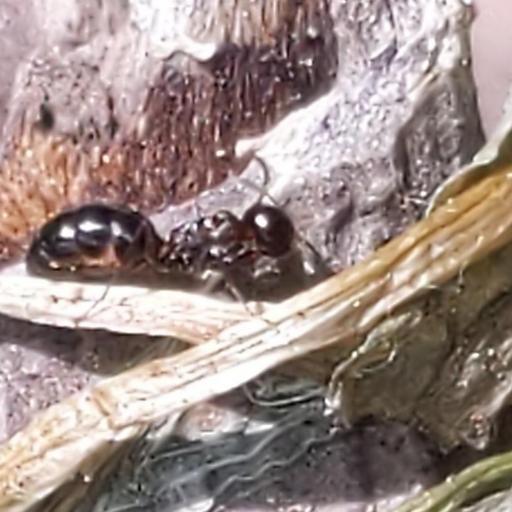
- 🐜 Glossy Finish: These ants possess a highly polished, jet-black or dark reddish-brown exoskeleton that looks like it has been buffed to a mirror shine.
- 📏 Compact Size: Unlike the "Giant" Carpenter Ants that can reach massive proportions, these are relatively small, typically measuring between 4mm and 8mm in length.
- 🌙 Smooth Silhouette: If you look at them from the side, their thorax (mid-section) forms one perfectly smooth, continuous curve, lacking the lumps or spines found on other common garden ants.
🌲 Habitat & Ecology
- 🪵 Deadwood Dwellers: You won't find these ants digging deep underground. They prefer nesting in hollow twigs, under loose tree bark, or in old galls left behind by wasps. They are "opportunistic" nesters, moving into pre-existing cavities rather than carving out massive new ones.
- 🍯 Aphid Ranchers: They play a vital role in the ecosystem as "farmers." They protect aphids from predators in exchange for honeydew, a sugary liquid the aphids secrete, which serves as the ants' primary energy source.
⚠️ Safety & Toxicity
- 🛡️ Non-Aggressive: This species is notably timid. If you disturb their nest, their first instinct is to scatter and hide rather than swarm or attack.
- 👄 Bite over Sting: They do not have a stinger. While they can deliver a tiny, sharp pinch with their mandibles if handled, it is rarely enough to break human skin. They may spray a microscopic amount of formic acid into the pinch, which can cause a very mild, fleeting tingle.
- 🐾 Pet Safety: They are completely harmless to curious cats and dogs. Because they don't have a venomous sting, they pose no threat to your furry friends.
✨ Fun Fact
Unlike many other ant species that have a "soldier" class, Camponotus nearcticus colonies are mostly made up of "minor" workers that all look roughly the same size, working together in a quiet, synchronized harmony.
More Details








