Info
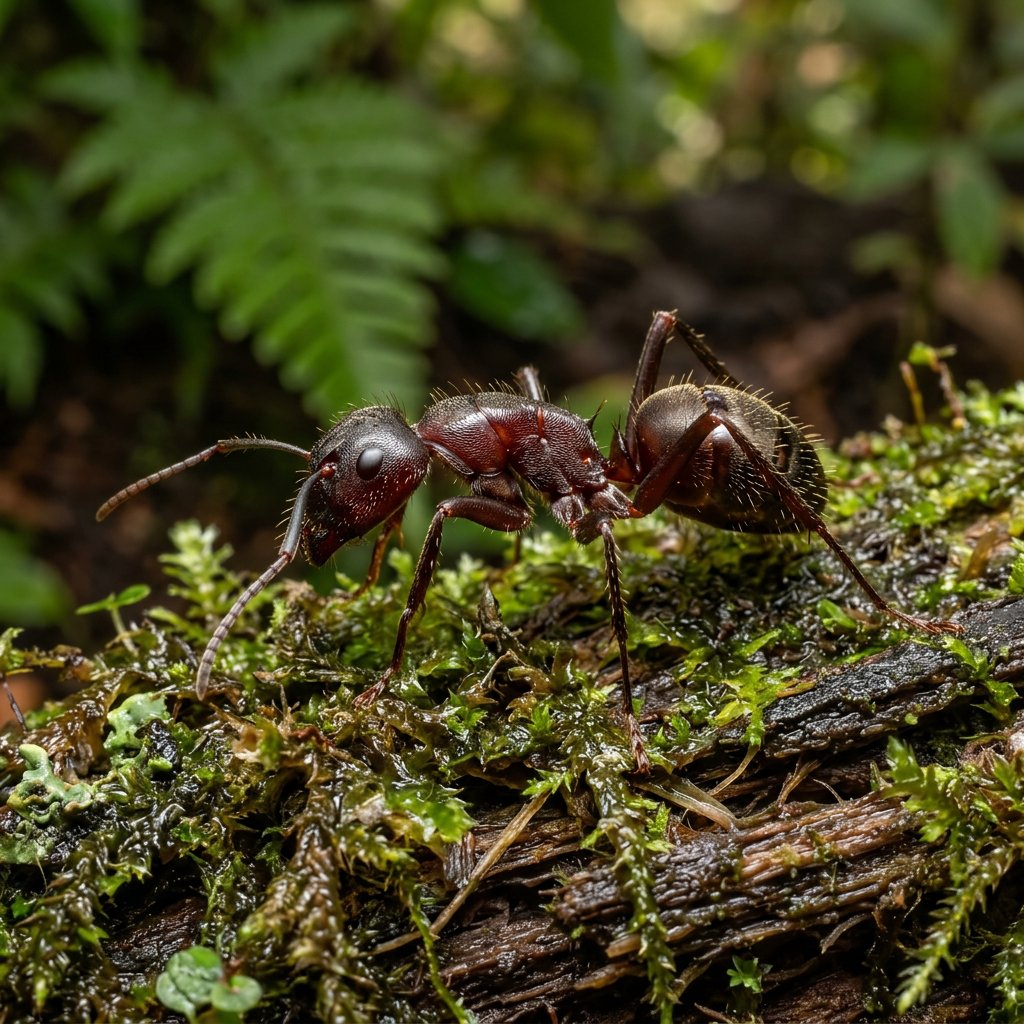
Known affectionately as the Nicobar Carpenter Ant or the Rusty Carpenter Ant, this vibrant species is a favorite among ant-keeping hobbyists worldwide. Native to the tropical climates of Southeast Asia, they are famous for their stunning reddish-orange gradient and their incredibly fast-paced colony growth. Unlike many of their sluggish cousins, these ants are high-energy "workaholics" that bring a burst of sunset colors to the forest floor.
🔍 How to Identify
- 🐜 Polymorphic Workers: You will notice a significant size difference within the colony; "Minors" are small and slender, while "Majors" have massive, heart-shaped heads designed for crushing food.
- 🎨 Rusty Coloration: They boast a beautiful matte finish, ranging from a light burnt orange on the thorax to a darker, brownish-red on the abdomen (gaster).
- 🦵 Elongated Limbs: Compared to other carpenter ants, they have relatively long legs, allowing them to move with surprising speed when a food source is discovered.
🌲 Habitat & Ecology
- 🌙 The Night Shift: While they can be active during the day, these ants are primarily nocturnal. In the wild, they wait for the sun to set before sending out massive foraging parties to scout for fallen fruit or dead insects.
- 🪵 Nesting Habits: Despite being "Carpenter Ants," they aren't always found in wood. They are opportunistic nesters, happy to set up shop in leaf litter, under stones, or inside hollow bamboo stalks where humidity is high.
- 🍯 Honeydew Harvesters: They have a "sweet tooth" and often form symbiotic relationships with aphids, "milking" them for sugary honeydew in exchange for protection from predators.
⚠️ Safety & Toxicity
- 🛡️ Status: Harmless to humans, though they are spirited defenders of their nests.
- ⚔️ Defensive Tactics: These ants do not have a stinger. If they feel threatened, they will use their strong mandibles to give a tiny "nip" and may spray a microscopic mist of formic acid to deter the intruder.
- 🏠 Home Safety: While they love moisture, they are less likely to cause structural damage to dry, sound timber compared to other carpenter ant species, but they should still be encouraged to stay outdoors.
✨ Fun Fact
The Camponotus nicobarensis is considered the "speedster" of the carpenter ant world; while some species take years to reach a few hundred members, a healthy Nicobar queen can lead a colony of thousands within just its first year!
More Details








