Info
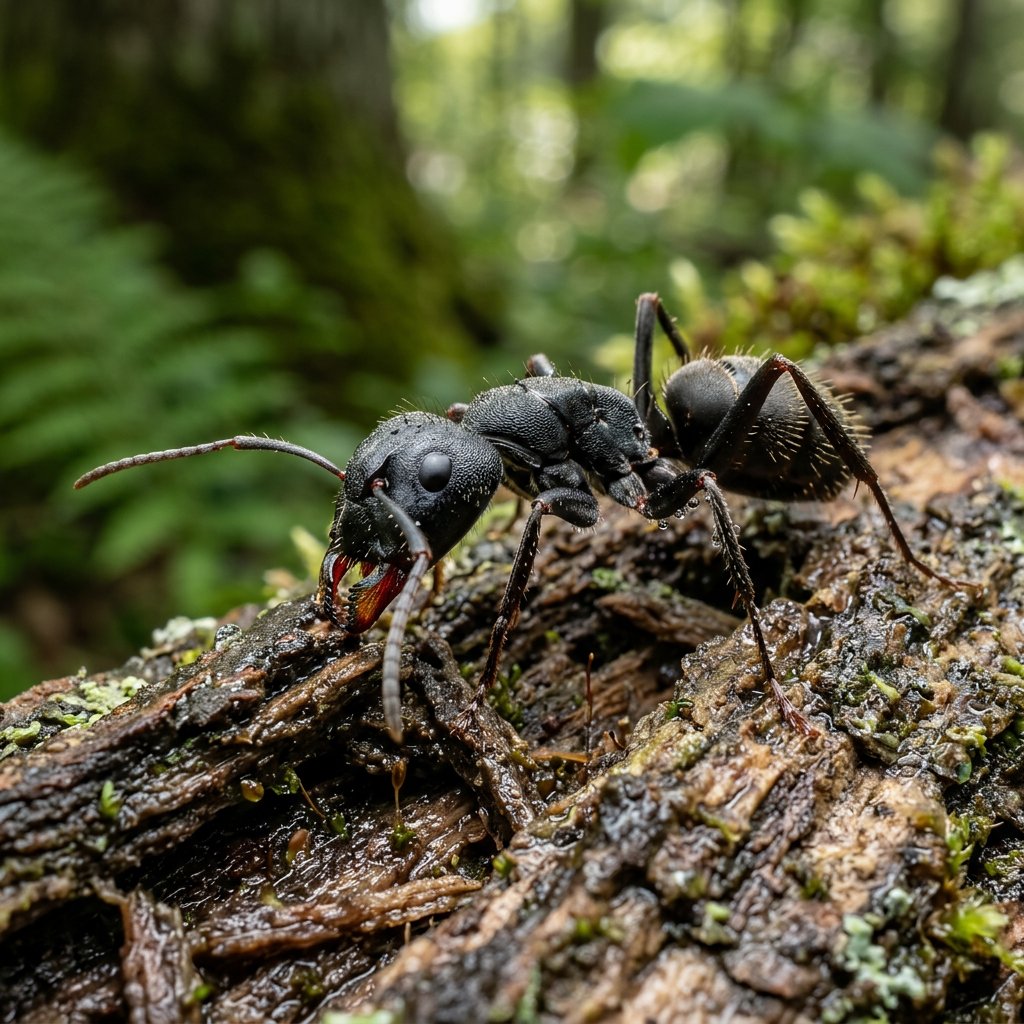
While the name might sound like a botanical species, Camponotus pennsylvanicus is actually the Black Carpenter Ant, one of the most industrious and recognizable insects in North America. Known as the "Midnight Woodworker," these ants are famous for their impressive size and their ability to carve complex galleries inside old trees. If you see them on your plants, they aren't eating the leaves—they are usually patrolling for sweets!
🔍 How to Identify
- 🐜 Matte Black Finish: Unlike some shiny ants, the Black Carpenter Ant has a dull, velvety black body, often covered in tiny, pale yellowish hairs on the abdomen.
- 📏 Impressive Size: They are among the largest ants in temperate regions; workers can vary significantly in size (polymorphism) within the same colony.
- 📐 Smooth Thorax: When viewed from the side, their thorax (mid-section) has a perfectly continuous, smooth curve, which distinguishes them from other large ant species.
🌲 Habitat & Ecology
- 🪵 The Woodworker: They do not eat wood (unlike termites); instead, they excavate it. They prefer moist, decaying wood to create "apartments" for their larvae, making them vital decomposers in forest ecosystems.
- 🍭 Aphid Farmers: You will often find them climbing garden plants to "milk" aphids. They protect these tiny pests from predators in exchange for sugary honeydew, acting much like tiny shepherds.
- 🌙 Nocturnal Navigators: While active during the day, their peak "rush hour" is shortly after sunset. They follow invisible chemical trails to forage for protein (other insects) and sugar.
⚠️ Safety & Toxicity
- 🦷 The Pinch: They lack a stinger, but their large mandibles are powerful. If handled, they can deliver a sharp, defensive bite.
- 🧪 Formic Acid: When they bite, they may spray a small amount of formic acid into the wound. It is not dangerous to humans or pets but can cause a momentary stinging sensation.
- 🏠 Structural Warning: While they are harmless to your health, finding them inside your home frequently may indicate a moisture problem or decaying wood in the structure that needs inspection.
✨ Fun Fact
Carpenter ants are surprisingly clean! They have dedicated "refuse chambers" in their nests (essentially tiny bathrooms and trash rooms) to keep the living quarters and the queen’s chamber sterile and free of mold.
More Details








