Info
Meet the "Bouncer of the Bug World," the Camponotus truncatus. Known commonly as the Flat-headed or Door-head Ant, this tiny architect is a master of home security. Unlike other ants that rely on stings or spray, this species has evolved a specialized "living door" to keep intruders at bay, making it one of the most fascinating neighbors you might find in an old oak tree.
🔍 How to Identify
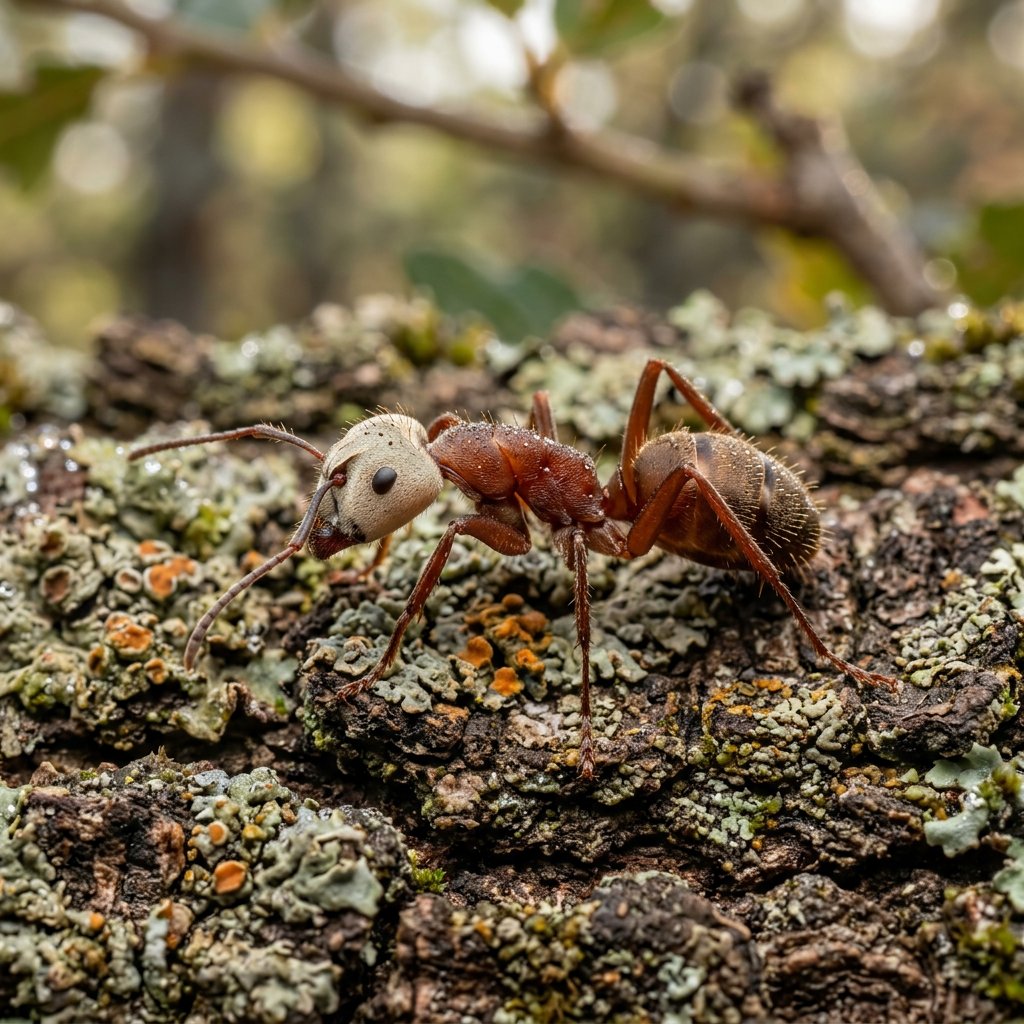
- 🛡️ The Door-Head: Major workers and queens possess a bizarre, flat-fronted, cylindrical head that looks like it has been cut off with a saw. This "truncated" face is perfectly circular to match the diameter of their nest entrance.
- 🎨 Color Palette: They feature a polished appearance with a dark brownish-black abdomen and a contrasting reddish-brown thorax and head.
- 📏 Size & Shape: They are relatively small for Carpenter ants (roughly 3–6mm). While the majors have the famous "plug" head, the minor workers have more traditional, rounded ant heads.
🌲 Habitat & Ecology
- 🌳 The Arboreal Life: You won't find these ants digging in the dirt. They are strictly tree-dwellers, preferring to nest in the dead twigs or bark of broadleaf trees like Oak, Walnut, or Chestnut.
- 🐜 Shy Foragers: These ants are "peaceful neighbors." They primarily forage for honeydew secreted by aphids or scavenge for small, dead insects. They are non-aggressive and will quickly retreat or "plug the hole" if they feel threatened.
- 🏠 Recycled Housing: They rarely drill their own holes; instead, they move into galleries abandoned by wood-boring beetles, saving themselves the manual labor of construction.
⚠️ Safety & Toxicity
- 🟢 Status: Completely harmless to humans and pets.
- 🚫 No Sting: Unlike some of their cousins, they do not possess a stinger. While they have mandibles and can technically nip, they are far too small to break human skin or cause pain.
- 🛡️ Passive Defense: Their primary defense mechanism is "phragmosis"—the act of using a body part to block an entrance. If a predator tries to enter the nest, the major worker simply sticks its flat face in the hole, creating an impenetrable living wall.
✨ Fun Fact
The term for their specialized defense is Phragmosis. When the "door-man" ant is on duty, other colony members signal their desire to enter by tapping on the door-ant's head with their antennae, essentially using a "secret knock" to get inside!
More Details








