Info
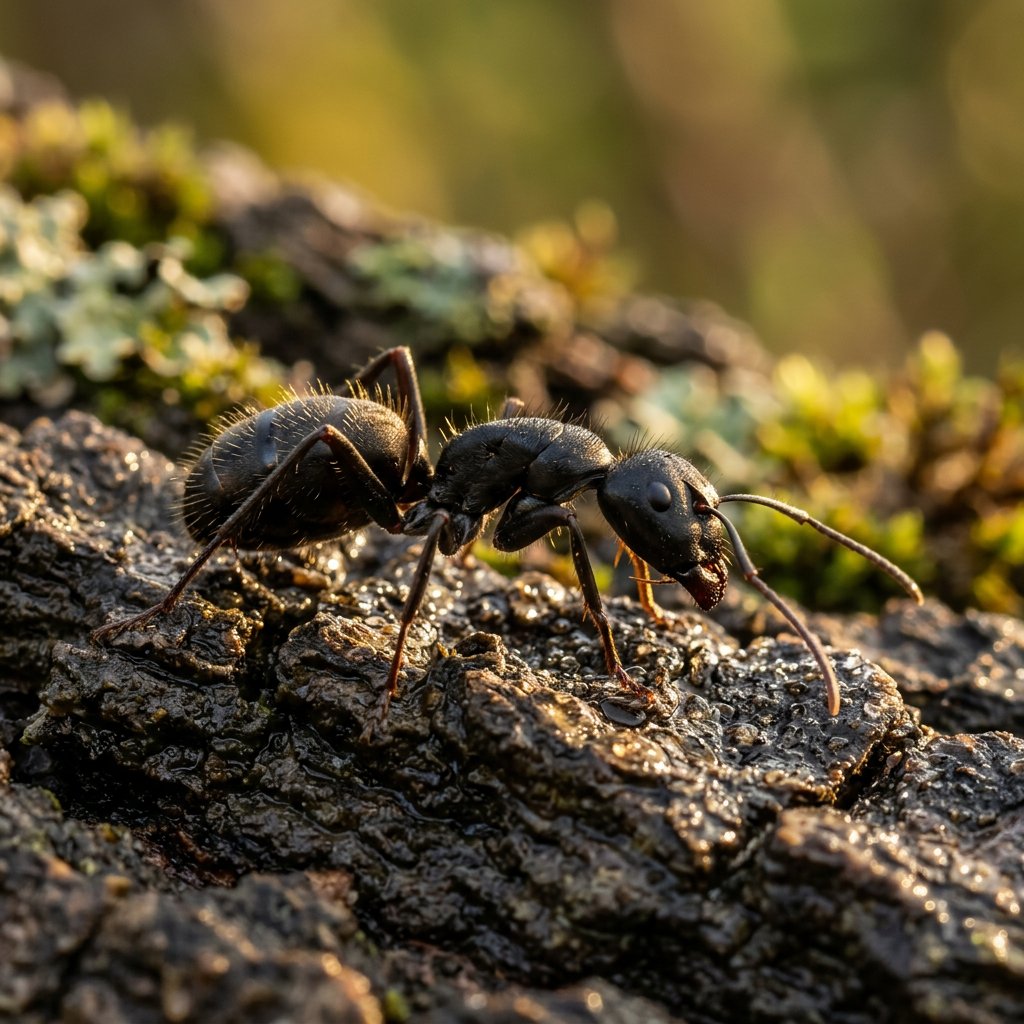
The "Charcoal Carpenter Ant," Camponotus vagus, is one of the most impressive and largest ant species you’ll find patrolling the sun-drenched edges of forests and gardens. Known for their matte-black, velvety bodies and surprisingly fast movements, these ants are the elite architects of the timber world. While they might look intimidating due to their size, they are fascinating social creatures that play a vital role in cleaning up decaying wood in the environment.
🔍 How to Identify
- 🐜 Matte Black Finish: Unlike many shiny ant species, Camponotus vagus has a distinctively dull, charcoal-black appearance caused by a dense coating of very fine, short hairs.
- 📐 Polymorphic Workers: You will notice a huge range in size within a single colony. "Minor" workers are small and slender, while "Major" soldiers have massive, heart-shaped heads and powerful mandibles designed for defense and heavy lifting.
- 🔍 Silvery Sheen: On their abdomen (gaster), you can often see rows of longer, silver-white hairs that catch the light, giving them a slightly "frosted" look.
🌲 Habitat & Ecology
- 🪵 The Wood-Carvers: These ants are "carpenter" ants, meaning they excavate galleries in dry, dead wood to build their nests. They do not eat the wood—they simply move it to create high-rise apartments for their larvae.
- 🍯 Aphid Ranchers: They are often found high up in trees or on garden shrubs acting as "bodyguards" for aphids. They protect the aphids from ladybugs and other predators in exchange for sweet honeydew.
- 🌞 Sun Seekers: They are thermophilic, meaning they love the heat. You’ll mostly find them on the south-facing side of trees or old logs where the sun warms their colony.
⚠️ Safety & Toxicity
- 🛡️ Powerful Pinchers: They are non-venomous and do not have a stinger. However, because of their size, a "Major" worker can deliver a very sharp, mechanical pinch if they feel the nest is under threat.
- 💧 Formic Acid: When they bite, they may spray a tiny amount of formic acid into the pinch site. This can cause a temporary stinging sensation or a mild "citrus" smell, but it is not dangerous to humans or pets.
- 🏠 Home Warning: While they prefer dead logs, they can occasionally move into structural timber that has been softened by moisture. If you see them inside your home regularly, it usually indicates a hidden dampness issue in the wood.
✨ Fun Fact
The queen of a Camponotus vagus colony is a true long-distance runner of the insect world; she can live for up to 15 years, single-handedly producing thousands of workers to maintain her charcoal empire.
More Details








