Info
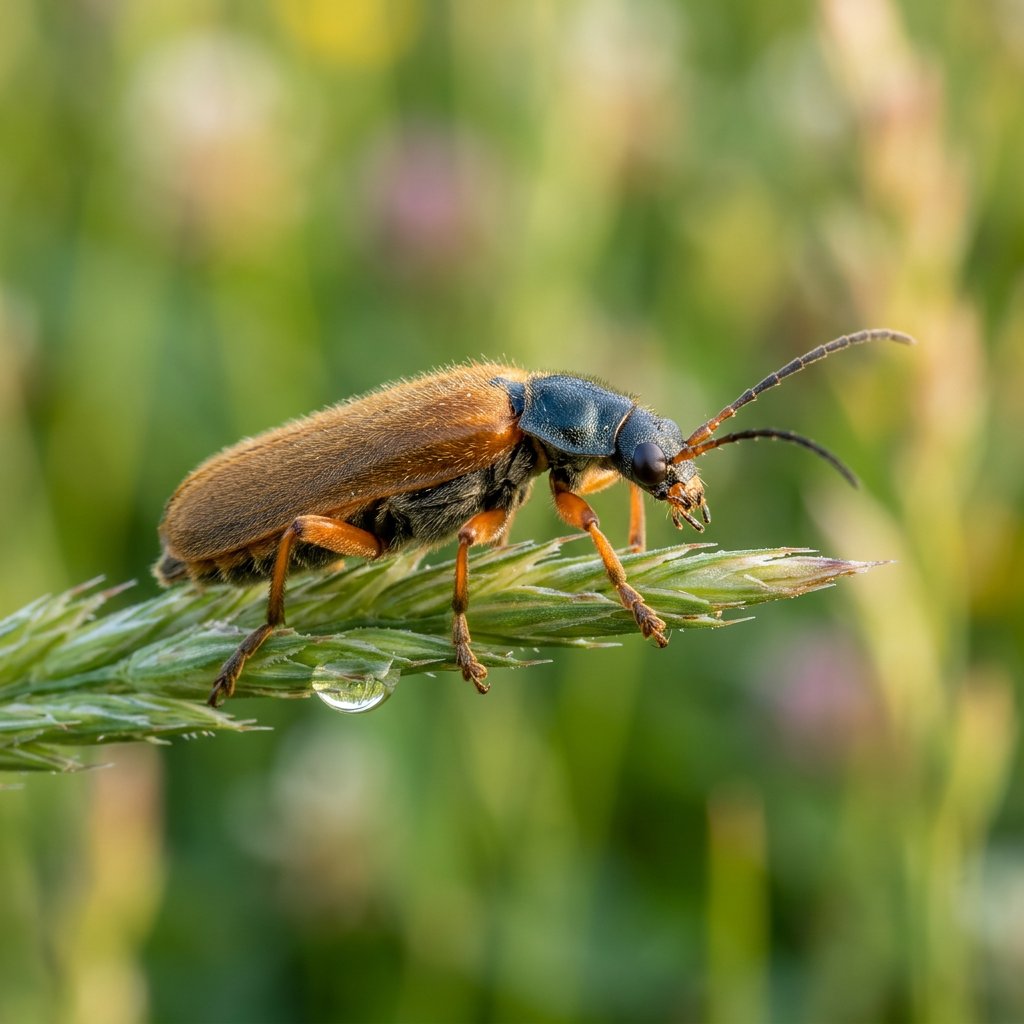
Often called the "Soldier Beetle," Cantharis decipiens is a gentle guardian of the summer garden. This beneficial insect is a welcome sight for anyone battling garden pests, as it spends its days patrolling flowers for a protein-rich meal. Its name stems from its soft, colorful appearance, which reminded early naturalists of the bright uniforms worn by historical infantry.
🔍 How to Identify
- 🐞 Soft Wing Cases: Unlike many beetles with hard, armor-like shells, this species has "elytra" (wing cases) that are noticeably soft and flexible, typically appearing in a muted yellowish-brown or orange.
- 📏 Slender Silhouette: It features a narrow, elongated body with long, sensitive antennae that it keeps in constant motion to detect prey or mates.
- 🎨 The Dark "Smudge": Look closely at the pronotum (the shield behind its head); it usually features a distinctive dark mark or spot on a pale background, which helps distinguish it from its more common bright red cousins.
🌲 Habitat & Ecology
- 🍽️ The Gardener's Ally: While they do visit flowers for a sip of nectar, they are primarily predators. Both the adults and their ground-dwelling larvae are voracious "aphid hunters," making them a natural and chemical-free form of pest control.
- 🌼 Flower Power: You are most likely to find them during mid-summer, basking on flat-topped flowers like Daisies, Cow Parsley, or Hogweed, where they wait for smaller insects to land.
⚠️ Safety & Toxicity
- ✅ Friendly Neighbor: Cantharis decipiens is completely harmless to humans. They do not sting, and their mandibles are far too small to break human skin.
- 🛡️ Chemical Bluff: If they feel threatened by a bird or a curious pet, they may secrete a tiny amount of bitter-tasting fluid from their joints to discourage being eaten. It isn't dangerous, but it certainly doesn't taste good!
✨ Fun Fact
The name "Soldier Beetle" was coined in the 18th century because their bright orange and black colors were thought to resemble the red-and-yellow coats of the British military uniforms of that era!
More Details








