Info
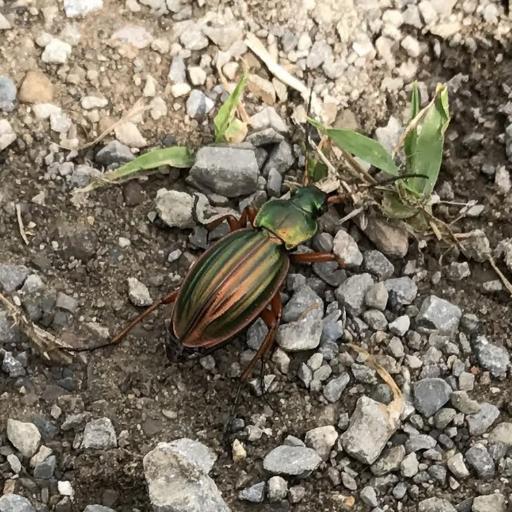
Often called the "Jewel of the Garden," the Golden Ground Beetle is a shimmering emerald knight in the world of insects. While many beetles hide under rocks during the day, this metallic beauty is often seen darting through garden beds in broad daylight. In many European cultures, it is celebrated as the "Gardener’s Best Friend" because of its legendary appetite for agricultural pests.
🔍 How to Identify
- 🪲 Brilliant Body: It features a striking metallic green or gold exoskeleton that reflects light like a polished gemstone.
- 🏎️ Grooved Wings: Its wing cases (elytra) have distinct, deep longitudinal ridges that run from the neck to the tail.
- 🦵 Colorful Legs: Unlike many other ground beetles, its legs are a bright, contrasting orange-red, making it easy to spot against the soil.
- 👄 Powerful Mandibles: It possesses large, pincer-like jaws designed for grabbing and piercing soft-bodied prey.
🌲 Habitat & Ecology
- ⚔️ The Garden Protector: This insect is a top-tier "friend" to humans. It is a fierce predator that hunts slugs, snails, and caterpillars that would otherwise destroy your vegetables.
- 🏃 A Grounded Runner: Although it has wings, they are vestigial and non-functional. It is a flightless beetle that relies on its impressive speed to chase down prey or escape predators.
- 🌞 Sun Lover: While most ground beetles are nocturnal (night-active), Carabus auratus is primarily diurnal, meaning it is most active when the sun is out.
- 🏡 Preferred Soil: It favors open fields, clay-rich soils, and well-maintained gardens where prey is abundant and the ground is easy to traverse.
⚠️ Safety & Toxicity
- 🛡️ Non-Venomous: This beetle is entirely harmless to humans and pets. It does not possess a stinger or any toxic spray.
- 🤏 Mechanical Pinch: If you pick it up roughly, it may try to pinch with its mandibles or release a pungent, smelly liquid from its abdomen to discourage you from eating it, but it cannot break the skin or cause lasting harm.
✨ Fun Fact
A single Golden Ground Beetle is such a prolific hunter that it can consume its own body weight in slugs and snails in just 24 hours! Historically, French farmers would actually transport these beetles between fields to help control pest populations naturally.
More Details








