Info
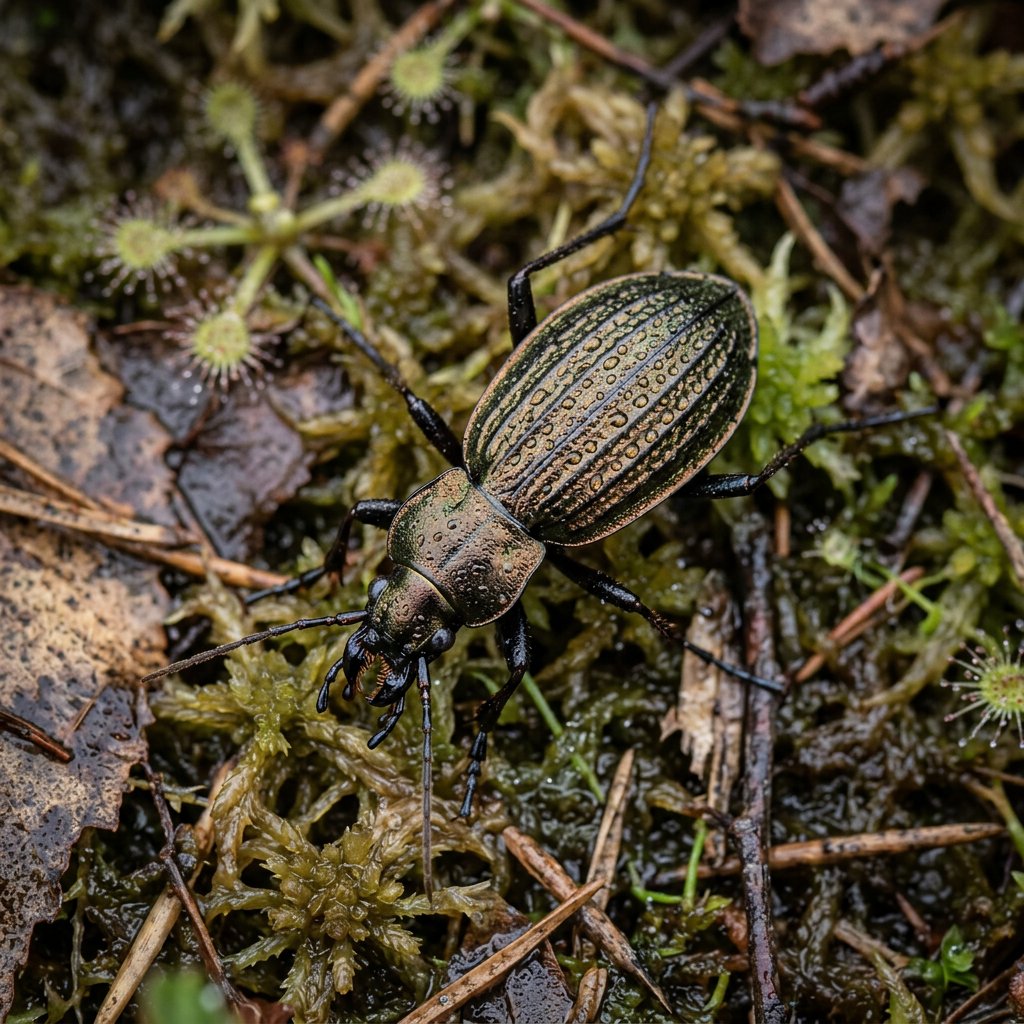
Often called the Golden-pitted Ground Beetle, Carabus clatratus is one of nature’s most striking "armored" specialists. Resembling a dark shield decorated with rows of hammered gold, this beetle is a rare gem that indicates a healthy, undisturbed wetland. While many beetles avoid the water, this stunning insect is a courageous hunter that thrives in the damp shadows of bogs and marshes.
🔍 How to Identify
- 🪲 The "Gold Pits": The most defining feature is the three rows of large, metallic depressions (foveae) on each wing case. These shimmer in shades of gold, copper, or bronze against a dark, greenish-black body.
- 🛡️ Robust Frame: It has a broad, slightly flattened oval body, typically reaching about 25–30mm in length, giving it a very sturdy, "tank-like" appearance.
- 🏃 Powerful Legs: It possesses long, notched legs designed for high-speed sprinting across muddy terrain and tangled moss.
🌲 Habitat & Ecology
- 🌊 The Wetland Wanderer: This beetle is a semi-aquatic specialist. You won't find it in dry forests; it lives almost exclusively in very wet habitats like peat bogs, salt marshes, and the reedy edges of lakes.
- 🐌 Slug Control: As a fierce nocturnal predator, it is a master at keeping pest populations in check. It primarily hunts slugs, snails, and earthworms, using its sharp mandibles to overcome prey much larger than itself.
- 🌑 Night Hunter: It is most active after dusk, hiding under damp logs or deep within sphagnum moss during the heat of the day to stay hydrated.
⚠️ Safety & Toxicity
- ✅ Safe Neighbor: This beetle is entirely non-toxic and lacks a stinger. It poses no threat to humans, pets, or garden plants.
- 🤏 Handle with Care: While not aggressive, it has powerful jaws designed for crushing snail shells. If handled roughly, it may deliver a small, defensive nip, but it is not medically significant.
- 🧪 Chemical Defense: Like many ground beetles, it may release a pungent-smelling liquid if it feels threatened to discourage birds from eating it.
✨ Fun Fact
Carabus clatratus is a rare "scuba diver" in the beetle world. It is known to hunt underwater in shallow pools, trapping a thin layer of air against its underside so it can breathe while searching for aquatic larvae!
More Details








