Info
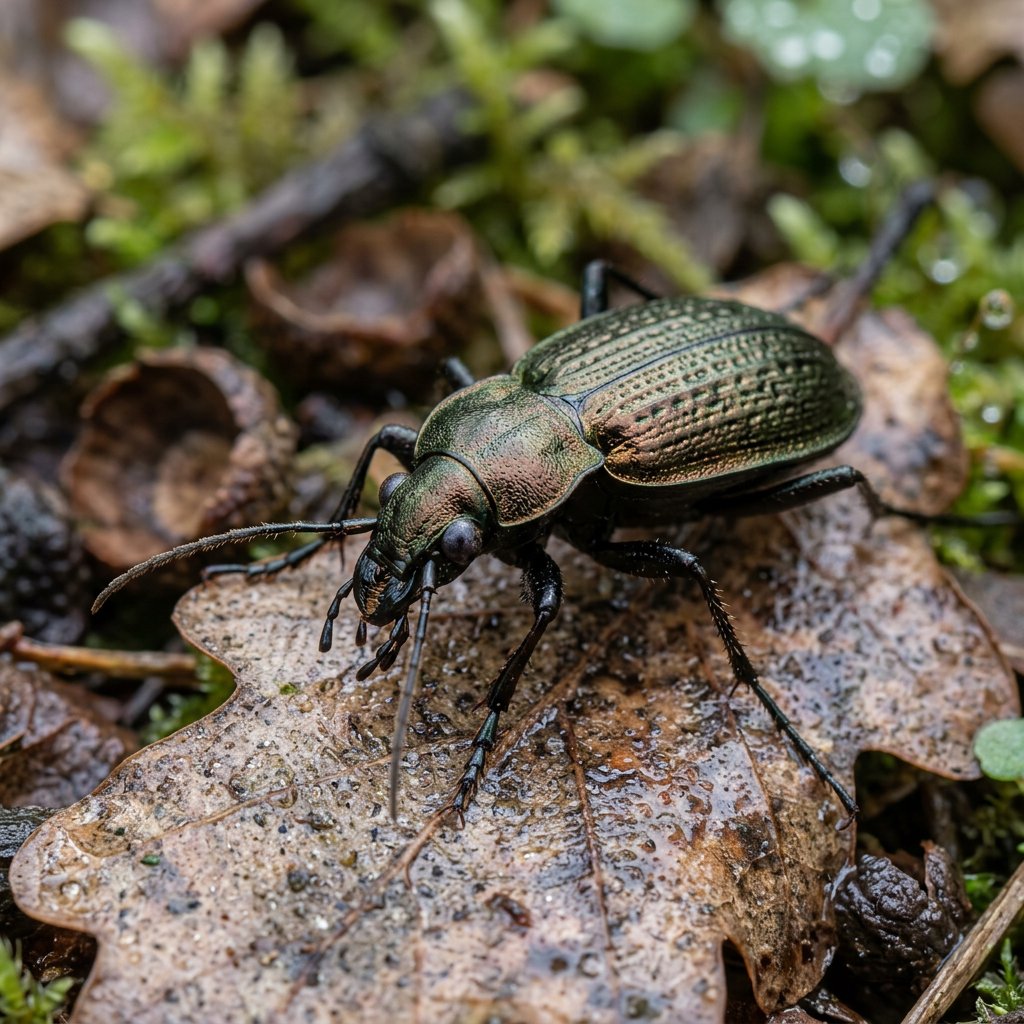
The Garden Ground Beetle is a nocturnal knight in shining armor, patrolling your flower beds while you sleep. Often mistaken for a common pest, this sleek, dark beetle is actually one of the most beneficial residents of a healthy garden ecosystem. If you see a flash of gold-spotted black scuttling under a leaf or a log, you’ve likely found a Carabus hortensis on its nightly hunt.
🔍 How to Identify
- 🪖 The Armor: A broad, oval-shaped body with a satiny black or deep bronze finish that looks like polished hematite.
- ✨ Golden Pits: The most distinctive feature is the three rows of metallic gold or coppery indentations (called foveae) running down each wing cover.
- 🏃 Legs for Speed: They possess long, sturdy, reddish-brown to black legs designed for sprinting across the soil rather than climbing.
- 🛡️ Fused Wings: Unlike many other beetles, their wing cases (elytra) are fused together, meaning they are completely flightless and rely entirely on their speed on foot.
🌲 Habitat & Ecology
- 🐌 The Gardener's Ally: These beetles are voracious predators. Their diet consists almost entirely of garden "villains" like slugs, snails, and various crop-destroying larvae, making them a natural form of pest control.
- 🌑 Nocturnal Lifestyle: They are "night owls" of the insect world. During the day, they retreat to damp, dark micro-habitats such as leaf litter, rotting logs, or underneath large stones to stay cool and hydrated.
- 🍂 Woodland Origins: While common in gardens, they are naturally forest dwellers, thriving in environments where there is plenty of organic debris to hide in.
⚠️ Safety & Toxicity
- 🛡️ Status: Non-venomous and generally harmless to humans and pets, though they are capable of a defensive "stink."
- 👃 Chemical Defense: If handled roughly, the beetle may exude a pungent-smelling liquid from its abdomen to discourage predators. It’s a harmless but unpleasant scent that lingers on the skin.
- 🤏 The Pinch: While they aren't aggressive, their powerful mandibles (used for crunching snail shells) can deliver a small, surprising pinch if they feel trapped in a hand. It is best to observe them on the ground or move them gently with a leaf.
✨ Fun Fact
Despite being relatively small, some Carabus species are known to live for several years—a remarkably long time for an insect! They also play a "clean-up" role in the environment; when they aren't hunting live prey, they occasionally act as scavengers, eating fallen fruit or carrion.
More Details








