Info
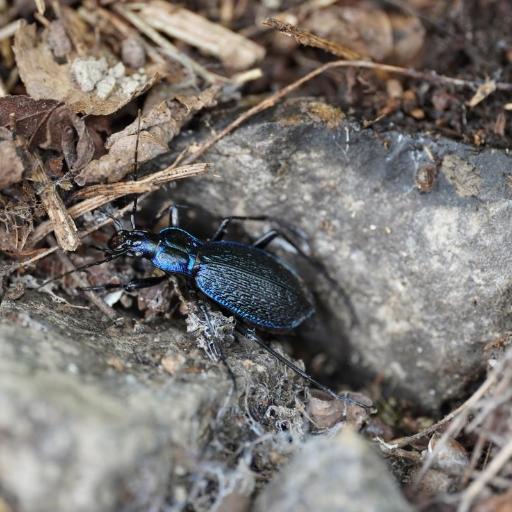
The Blue Ground Beetle (Carabus intricatus) is often described as the "Holy Grail" of the beetle-watching world. This stunning, sapphire-tinted predator is a rare resident of ancient, damp woodlands, often found hiding under mossy logs. Once feared to be extinct in several regions, this "shining jewel of the forest" has become a symbol of woodland conservation.
🔍 How to Identify
- 💎 Metallic Sheen: It boasts a deep, shimmering violet or metallic blue body that appears to glow even in the dim light of the forest floor.
- 🕸️ "Intricate" Texture: Its wing cases (elytra) are not smooth; they are covered in a complex pattern of tiny pits and ridges, which is where it gets its Latin name intricatus.
- 🏃 Lanky Build: It possesses notably long, slender legs and large, curved mandibles, perfectly designed for chasing down prey across rugged terrain.
🌲 Habitat & Ecology
- 🐌 The Slug Hunter: This beetle is a specialized predator. It is a nocturnal hunter that follows slime trails like a tiny bloodhound to find its favorite meal: slugs.
- 🌳 Ancient Resident: You won’t find this beetle in a typical backyard. It requires high-quality, ancient deciduous forests with high humidity and plenty of decaying wood to survive and breed.
⚠️ Safety & Toxicity
- 🛡️ Non-Venomous: The Blue Ground Beetle is not poisonous and poses no serious threat to humans or pets.
- 🦨 Chemical Defense: If handled roughly, it may secrete a pungent, sour-smelling liquid from its abdomen to deter predators. It can also deliver a sharp (but medically harmless) pinch with its powerful jaws if it feels cornered.
✨ Fun Fact
- 🧗 Tree Climber: While most ground beetles stay on the floor, the Blue Ground Beetle is an agile climber. On damp nights, it will scale vertical tree trunks to hunt for the "Lemon Slug," a citrus-colored delicacy it finds irresistible!
More Details








