Info
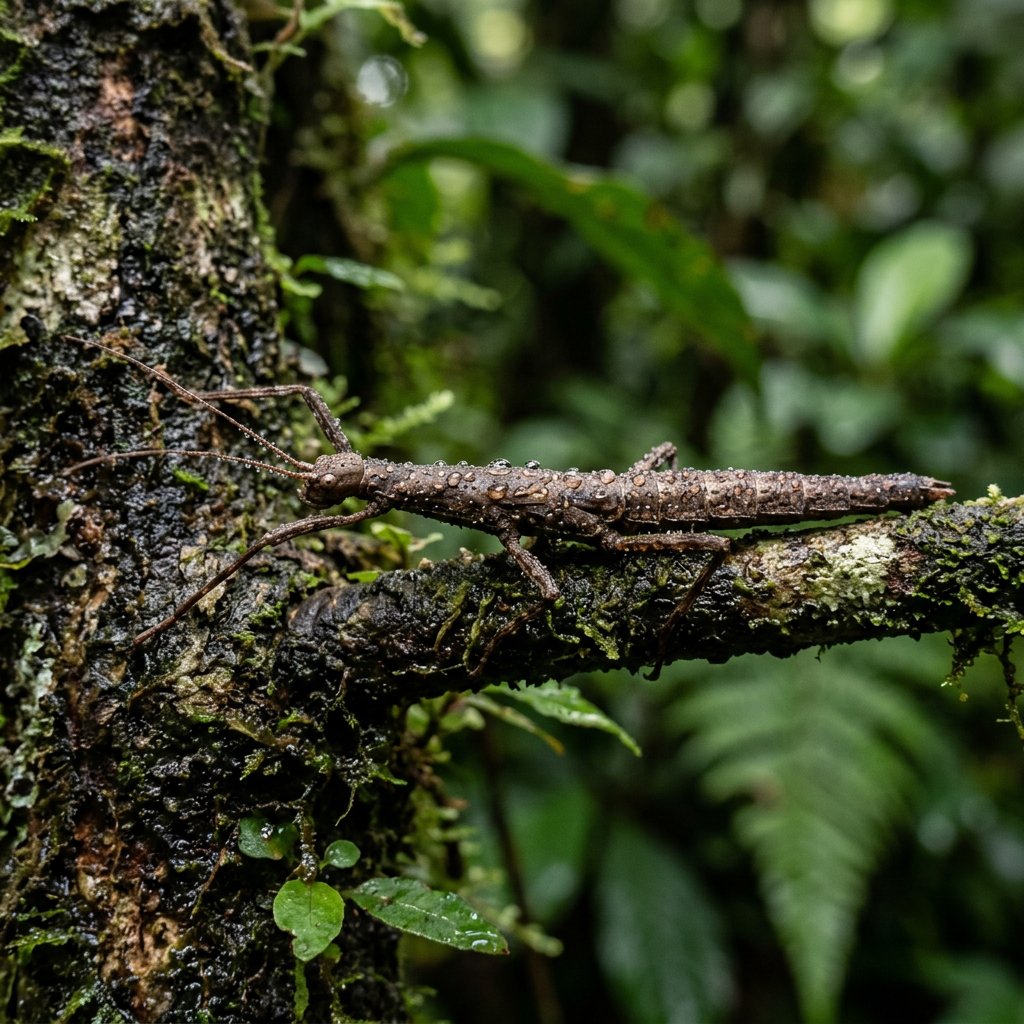
Often called the "Common Stick Insect" or the "Laboratory Walking Stick," this master of disguise has been a classroom favorite for decades. Native to the humid forests of Southern India, they are the ultimate "hidden in plain sight" champions, spending their days perfectly mimicking a dried twig to avoid the eyes of hungry birds. If you spot one, you’re likely looking at a "living branch" that has mastered the art of doing absolutely nothing.
🔍 How to Identify
- 🌿 Body Shape: Exceptionally long, thin, and cylindrical, typically reaching about 3 to 4 inches in length. They lack wings entirely, which adds to their twig-like silhouette.
- 🎨 Color Palette: Usually a dull lime green or woody brown. Remarkably, they can shift their pigment slightly between light and dark shades depending on the light levels of their environment.
- 🦵 Hidden Details: If you look closely at the base of their front legs, you'll see a splash of bright red. This "flash color" is hidden when they are resting but serves to startle predators if the insect is forced to move.
🌲 Habitat & Behavior
- 🍃 Dietary Habits: These are strict herbivores with a particular fondness for bramble, ivy, hawthorn, and privet leaves. They feed almost exclusively at night to avoid detection.
- 💤 The "Playing Dead" Trick: When startled, they perform thanatosis. They tuck their legs tightly against their body and enter a catatonic state, falling to the ground where they are indistinguishable from leaf litter.
- 🐣 Virgin Births: One of their most "alien" traits is their method of reproduction. They are almost entirely parthenogenetic, meaning females lay fertile eggs without ever needing a male to fertilize them.
⚠️ Safety & Toxicity
- 🛡️ Completely Harmless: These insects are "friends" in every sense. they do not bite, they have no stinger, and they do not secrete any toxic sprays or irritants.
- 🤲 Fragile Frames: While they are safe to hold, they are incredibly delicate. Their legs can "autotomize" (snap off) if they are grabbed too firmly. While young nymphs can sometimes regrow a limb during a molt, adults cannot.
- 🐱 Pet Interaction: They pose no threat to curious cats or dogs, though the insect itself is at high risk of being stepped on or eaten by a household pet.
✨ Fun Fact
🧬 A World Without Men: In the world of Carausius morosus, males are a biological rarity. It is estimated that only one in every 1,000 stick insects is a true male; the rest of the population consists of self-cloning females!
More Details








