Info
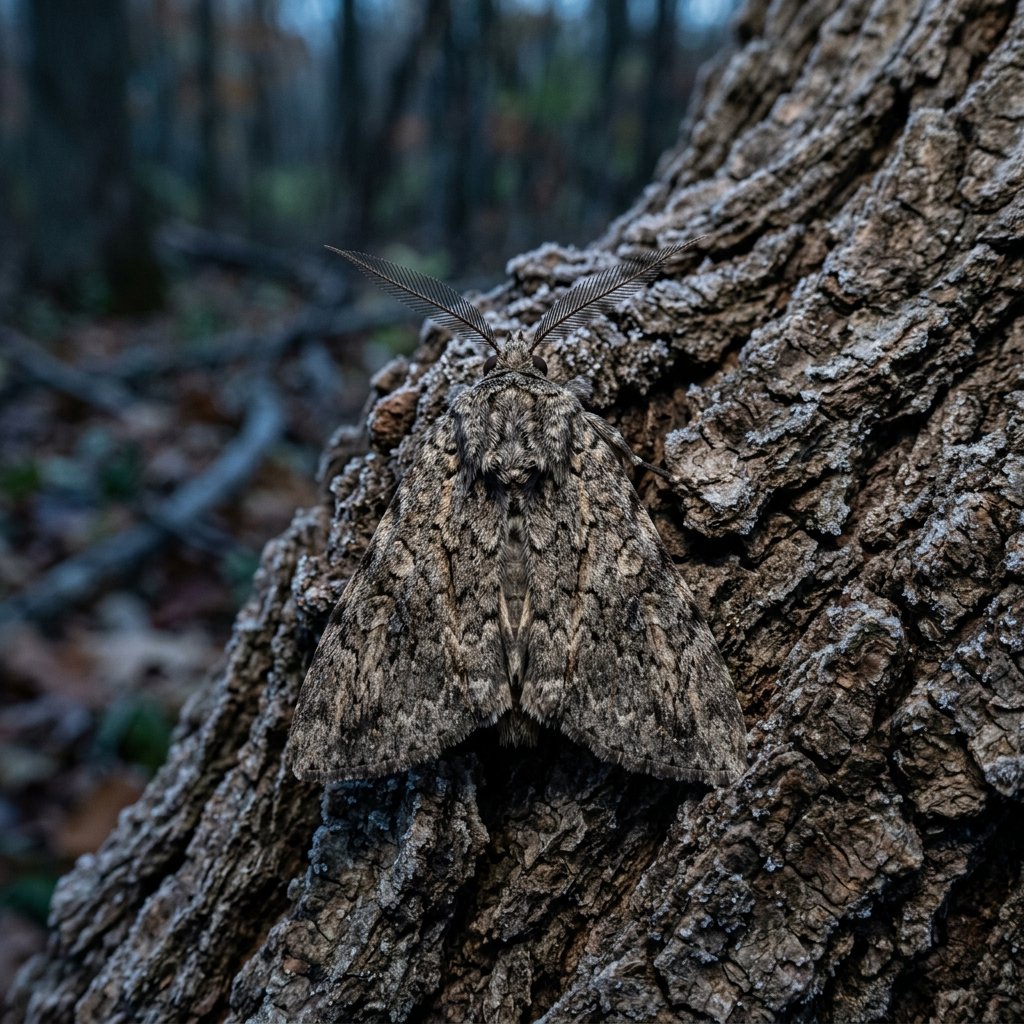
Often called the Penitent Underwing, this moth is a master of "startle camouflage." While it looks like a piece of drab, weathered tree bark when resting, it hides a vibrant secret beneath its top wings. This large, handsome moth is a staple of North American deciduous forests, appearing most frequently during the humid nights of late summer and early autumn.
🔍 How to Identify
- 🦋 Forewings: These are mottled with complex shades of chocolate brown, charcoal, and grey. When folded, they create a perfect disguise that mimics the rough texture of a walnut or hickory tree.
- 🍊 Hindwings: The signature feature! If the moth is disturbed, it flashes its hidden hindwings, which are a deep, rich yellowish-orange marked by two thick, wavy black concentric bands.
- 📏 Size & Shape: This is a robust moth with a wingspan that can reach up to 3 inches (around 8 cm). It has a thick, furry body that helps it stay insulated during cooler nights.
🌲 Habitat & Ecology
- 🌳 The Walnut Connection: You will almost always find the Penitent Underwing near its favorite "nursery" trees. The caterpillars (larvae) feed exclusively on the foliage of Walnut, Hickory, Butternut, and Pecan trees.
- 🌙 Nocturnal Habits: During the day, they press themselves flat against tree trunks to avoid birds. At night, they become active, searching for mates and feeding on rotting fruit or tree sap. They are also frequent visitors to backyard porch lights.
⚠️ Safety & Toxicity
- ✅ Status: Completely harmless.
- 👐 Details: The Penitent Underwing does not possess a stinger, nor does it bite. It has no chemical toxins, meaning it is safe for curious pets or children to observe. Their only defense mechanism is the "flash effect"—hoping that the sudden burst of orange color will scare a predator just long enough for the moth to escape.
✨ Fun Fact
The genus name Catocala is derived from the Greek words kato (behind or under) and kalos (beautiful). This literally translates to "beautiful underneath," a tribute to the hidden, colorful petticoats these moths wear beneath their drab "cloaks."
More Details








