Info
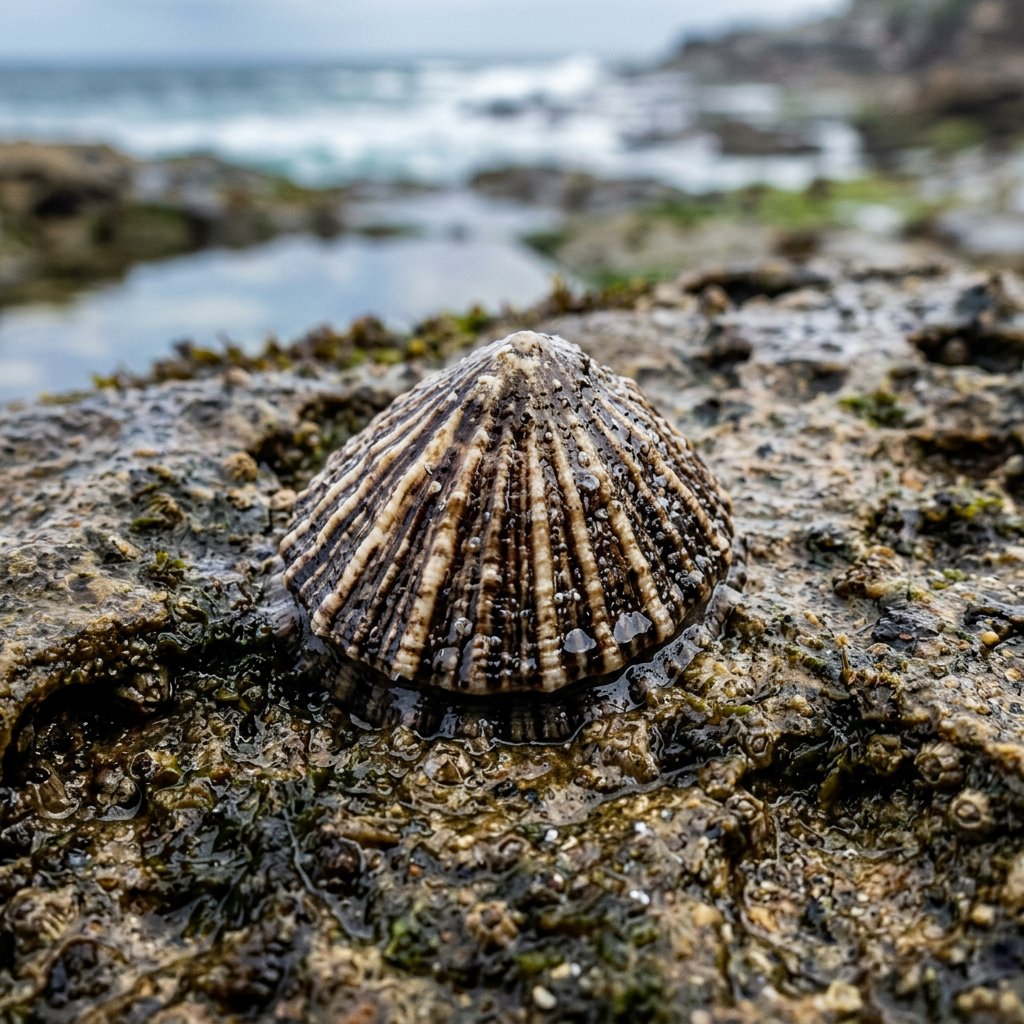
Known as the "Variegated Limpet," this hardy creature is a master of the rocky shoreline rather than the forest floor. Although it might look like a simple stone at first glance, it is actually a marine mollusk (a sea snail) famous for its beautiful, sunburst-patterned shell. In Australia, where it is most common, it acts as a tiny, rhythmic "lawnmower" of the intertidal zone, scraping algae off rocks with incredible precision.
🔍 How to Identify
- 🐚 The Shell: A distinctive low, conical shape resembling a volcanic mountain or a wide-brimmed hat.
- 🎨 Color Patterns: Features "variegated" (multi-colored) radiating ribs that often alternate between orange, yellow, brown, and cream, creating a starburst effect.
- 🦶 The Foot: A large, muscular orange or yellow underside that acts like a powerful suction cup to prevent the creature from being swept away by crashing waves.
🌊 Habitat & Ecology
- 🪨 The Splash Zone: They live on sun-drenched rocks between high and low tide marks. They have the incredible ability to trap a small amount of water under their shell to keep from drying out during low tide.
- 🏠 Homing Instinct: These limpets are surprisingly sentimental about their location; they roam around to graze on algae when the tide is in, but usually return to the exact same "home scar" on their favorite rock when the tide goes out.
- 🦷 Algae Scrapers: They possess a "radula," a tongue-like ribbon covered in tiny, incredibly hard teeth used to rasp microscopic plants off the rock surface.
⚠️ Safety & Interaction
- 🟢 Status: Completely non-toxic and harmless to humans.
- 🤝 Observation Tips: While they are safe to touch, please avoid prying them off the rocks. Removing them can damage their internal organs or leave them vulnerable to predators and desiccation (drying out) before they can re-attach.
- 🦶 Human Safety: The biggest danger when looking for Variegated Limpets is the environment—rocky shores are often slippery and sharp. Always wear sturdy shoes and watch the incoming tide!
✨ Fun Fact
The teeth of a limpet are one of the strongest biological materials ever discovered! They are reinforced with a mineral called goethite, making them even stronger than spider silk and capable of scraping through solid rock without breaking.
More Details








