Info
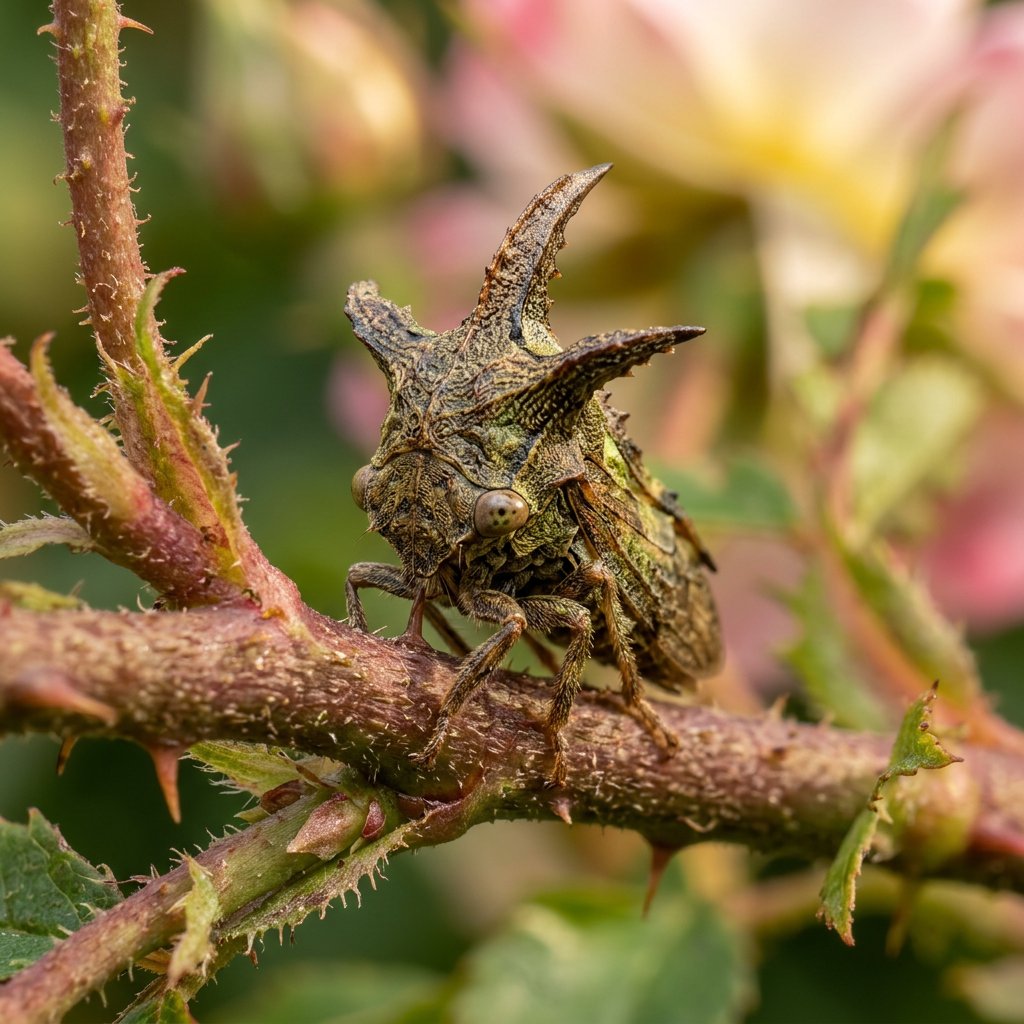
Often called the Horned Treehopper, this tiny insect looks like a miniature dragon or a piece of sharp wood that accidentally sprouted legs. While its pointed "horns" might look intimidating, this creature is a master of camouflage, evolving to blend perfectly with the thorns of the plants it inhabits. It is a common but easily overlooked resident of European woodlands and gardens, acting as a tiny, armored sentinel of the undergrowth.
🔍 How to Identify
- 🐂 The Horned Pronotum: Its most striking feature is its enlarged thorax, which extends into two sharp, ear-like horns on either side and a long, curved spine that stretches back over its abdomen.
- 🟤 Mottled Coloration: The body is typically a dark, textured brown or charcoal color, mimicking the appearance of dried bark or a dead bud.
- 🦟 Transparent Wings: Hidden beneath its rigid "helmet" are two pairs of clear, translucent wings with dark, prominent veins, used for quick, hopping bursts of flight.
🌲 Habitat & Ecology
- 🍃 Diet & Feeding: These insects are sap-suckers. They use specialized mouthparts to pierce the stems of woody plants—most commonly Thistles, Hawthorn, and Blackthorn—to drink the nutrient-rich fluids within.
- 🐜 The Ant Connection: You will frequently find them "tended" by ants. The treehopper excretes a sweet substance called honeydew; in exchange for this sugary treat, the ants act as bodyguards, warding off predators like ladybugs and spiders.
⚠️ Safety & Toxicity
- ✅ Harmless Resident: Despite the "horns," this insect is entirely non-aggressive and harmless to humans. It possesses no stinger and its mandibles are designed for plants, not skin.
- 🌱 Garden Impact: They are considered "neutral" in the garden. While they do feed on plants, they rarely gather in large enough numbers to cause noticeable damage or wilting to your greenery.
✨ Fun Fact
The elaborate "horns" of the Treehopper are actually a highly modified part of its thorax called the pronotum. Some scientists believe this structure is a "third pair of wings" that evolved into a permanent, hardened helmet over millions of years!
More Details








