Info
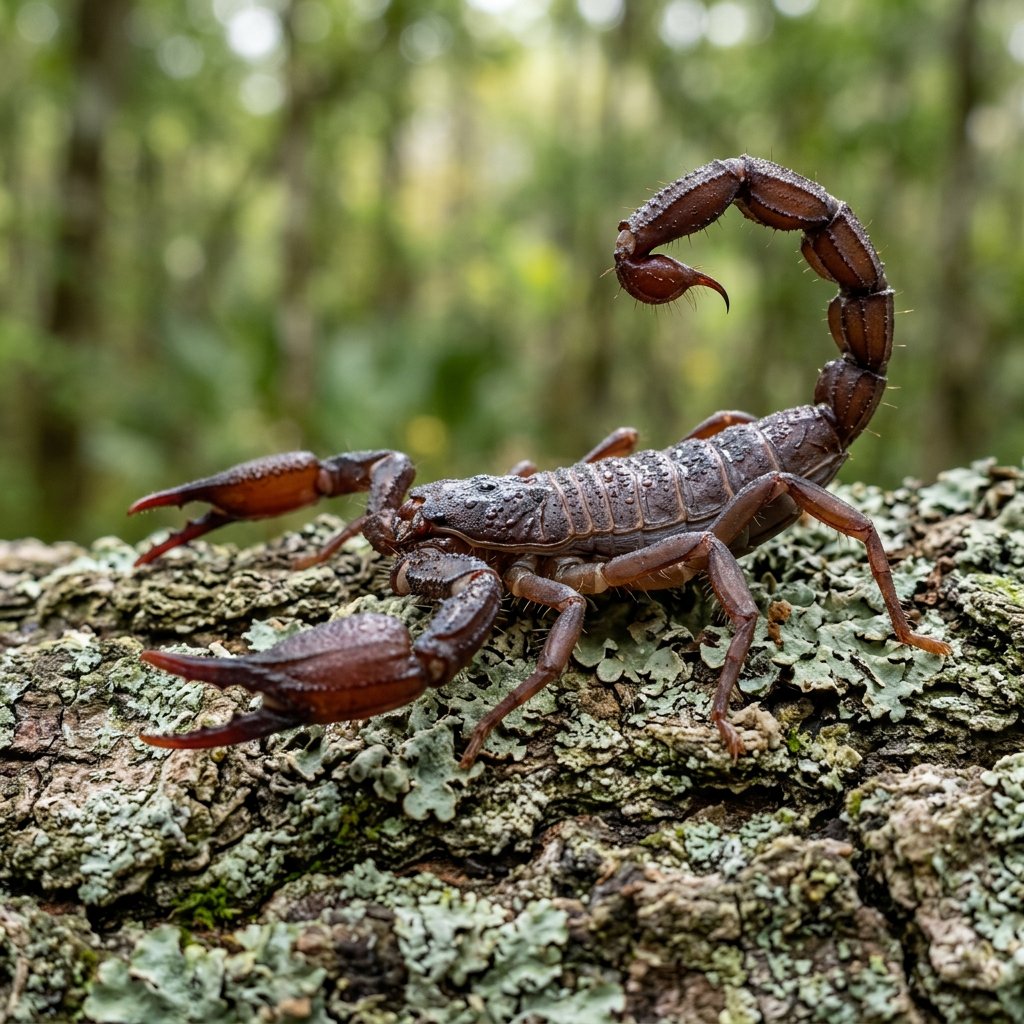
The Florida Bark Scorpion, often known by its scientific name Centruroides gracilis, is a sleek, dark-armored arachnid that often startles homeowners with its prehistoric appearance. While its long, whip-like tail and pincers might look like something out of a horror movie, this nocturnal wanderer is actually a master of pest control. Often found hiding under the peeling bark of trees or inside woodpiles, it is one of the most common scorpions encountered in the southeastern United States and the Caribbean.
🔍 How to Identify
- 🦂 The "Slender" Build: True to its name, this species has very long, thin pincers (pedipalps) and a notably elongated tail compared to other scorpion species.
- 🌑 Color Palette: Usually a deep reddish-brown to almost black, though younger individuals may have lighter yellowish legs and a pale underside.
- 📏 Impressive Size: They are relatively large for bark scorpions, often reaching 3 to 4 inches in length, making them easy to spot if they venture out into the open.
🌲 Habitat & Ecology
- 🌙 Night Shift: These are strictly nocturnal hunters. They spend their nights stalking the "shadow realm" of your garden, preying on cockroaches, crickets, and other insects that might otherwise invade your home.
- 🧗 Expert Climbers: Unlike many "burrowing" scorpions, the Florida Bark Scorpion is an agile climber. It prefers vertical surfaces and is frequently found under the loose bark of pine or oak trees, or even high up on the walls of houses.
- 🤱 Family Values: Female scorpions are surprisingly attentive mothers; they carry their snowy-white "scorplings" on their backs for several weeks until the babies are strong enough to hunt on their own.
⚠️ Safety & Toxicity
- 🚫 Sting Status: While they are venomous, the Florida Bark Scorpion is not considered "medically significant" for healthy adults. The sting is often compared to that of a honeybee or a paper wasp—intense, immediate pain followed by localized swelling.
- 🛡️ Safety Precautions: They are generally shy and will only sting if stepped on or pressed against skin. If you live in their range, it is wise to shake out gardening gloves or boots left outside and use a flashlight when walking through the yard at night.
- 🐾 Pets & Kids: Small children, the elderly, or pets may have a more severe reaction. If a pet is stung and shows signs of distress (drooling, stumbling), seek veterinary care immediately.
✨ Fun Fact
Like a scene from a sci-fi film, the Florida Bark Scorpion glows a vibrant, neon cyan-blue under ultraviolet (UV) light! Scientists believe this "fluorescence" might help them sense light levels or find each other in the pitch-black night. If you want to find them in your garden, just head out after dark with a blacklight!
More Details








