Info
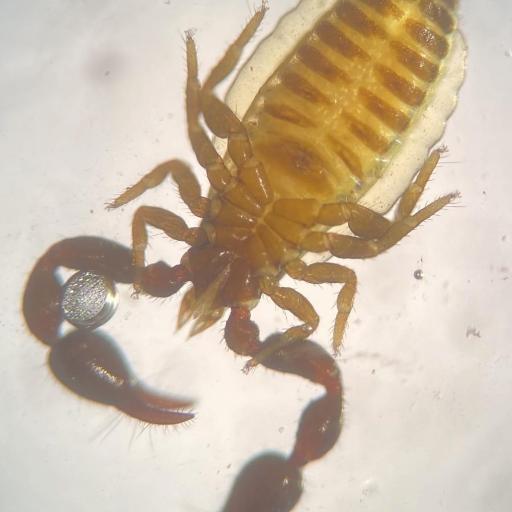
Meet the tiny "False Scorpions" of the hidden world. Despite their fierce appearance, members of the Chernetidae family are miniature arachnids (not insects!) that act as the secret security guards of your garden and home. Often called "Pseudoscorpions," they look like the front half of a scorpion that has lost its tail, and they are famous in the biological world for their clever way of traveling.
🔍 How to Identify
- 🦀 The "Big" Claws: They possess oversized, crab-like pincers called pedipalps, which they use to grab tiny prey like mites and springtails.
- 💧 Teardrop Body: Their body is flat, oval, and usually a dark mahogany or teardrop brown, measuring only about 2 to 5 millimeters in length.
- 🚫 No Stinger: Unlike true scorpions, they completely lack a tail and a stinging bulb, making their backend look rounded and harmless.
- 🕷️ Eight Legs: As arachnids, they have four pairs of walking legs, though they often move backward or sideways just as easily as forward.
🌲 Habitat & Ecology
- 🍂 The Hidden Hunters: You will most likely find them in the "neighborhoods" of decay—under the bark of fallen logs, deep within leaf litter, or inside compost bins where their prey is abundant.
- 🦟 The Hitchhikers: They are famous for "phoresy," a behavior where they grab onto the legs of larger insects like flies or beetles to hitch a ride to a new location.
- 🐜 Pest Control: They are high-level predators in the micro-world, keeping populations of booklice, fungus gnats, and mites in check.
⚠️ Safety & Toxicity
- ✅ Harmless Roommate: Chernetidae are completely harmless to humans and pets. They do not have a stinger and their tiny pincers are far too small to break human skin.
- 🏠 Beneficial Presence: If you find one in your home (often near old books or in damp basements), don't panic! They are likely there eating the pests that actually cause damage, such as carpet beetle larvae or mites.
✨ Fun Fact
Chernetidae are the "jet-setters" of the soil; because they are so small and cannot fly, they have been documented "hitchhiking" on bird feathers and even the fur of small mammals to colonize new forests!
More Details








