Info
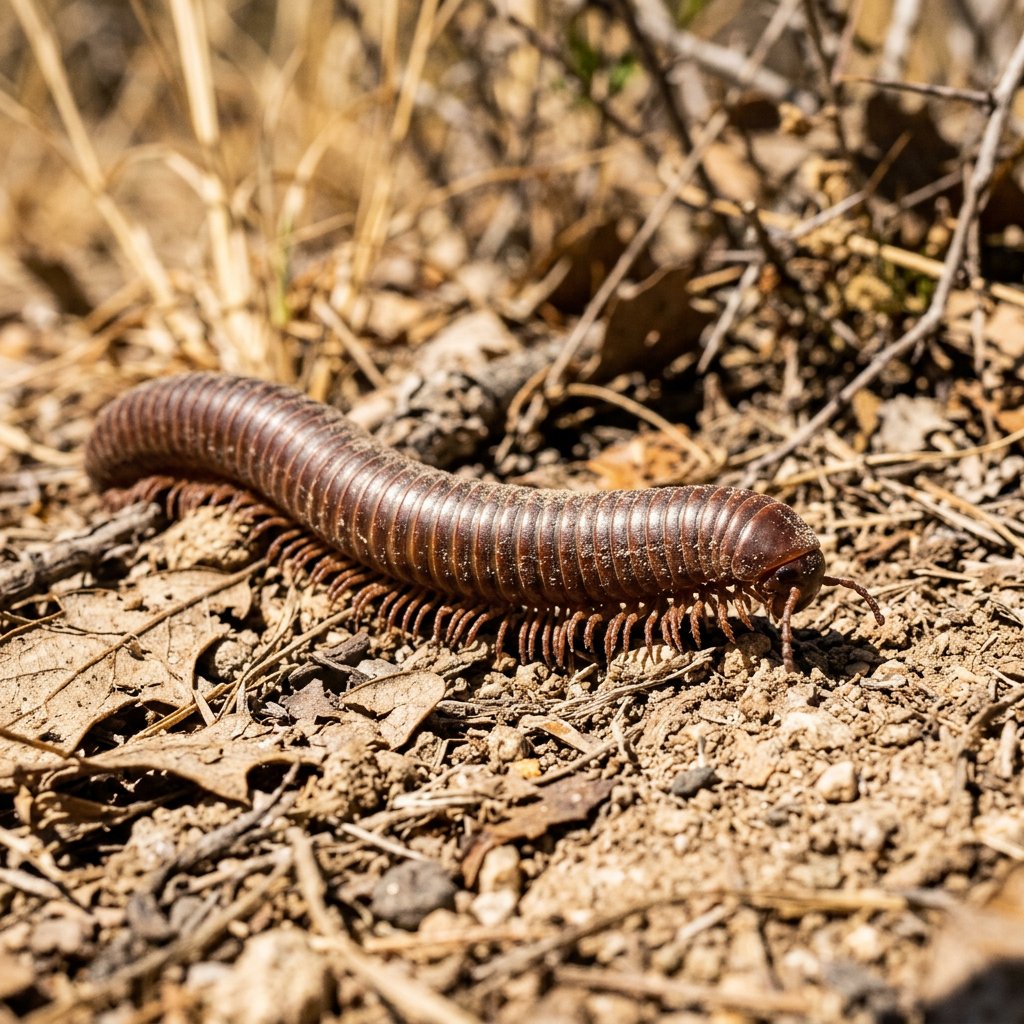
Often called the Florida Ivory Millipede, this sleek, monochrome crawler is one of the most beloved "gentle giants" of the forest floor. Looking like a polished piece of jewelry come to life, it spends its days as nature’s tiny janitor, recycling dead leaves into nutrient-rich soil across the Southeastern United States.
🔍 How to Identify
- 🦓 Segmented Style: Its body features a beautiful high-contrast pattern of creamy "ivory" white segments bordered by deep charcoal or black rings.
- 👟 The Leg Parade: As a millipede, it sports two pairs of pale-colored legs per body segment, which move in a mesmerizing, wave-like motion as it walks.
- 🌀 The Defensive Coil: When startled, it doesn't run; it curls its 3-to-4-inch body into a tight, protective spiral to shield its soft underbelly.
🌲 Habitat & Ecology
- 🍂 Forest Floor Scavenger: These millipedes are detritivores, meaning they survive almost exclusively on a diet of decaying wood, fallen leaves, and various fungi.
- 🏖️ Humid Hideouts: While native to the Southeast US, they are particularly fond of the sandy soils and humid pine forests of Florida, where they burrow deep to stay cool during the midday sun.
- 🐢 Slow and Steady: Unlike their fast-moving, predatory cousins (the Centipedes), Ivory Millipedes are slow, non-aggressive, and have no interest in biting humans.
⚠️ Safety & Toxicity
- 🛡️ Chemical Defense: They do not bite or sting. However, when stressed, they can secrete a brownish liquid (benzoquinones) from their sides as a deterrent to predators.
- 🖐️ Skin & Eye Care: This liquid is generally harmless to humans but can leave a temporary yellowish stain on the skin or cause mild irritation. Always wash your hands after handling, and never touch your eyes while holding one.
- 🐶 Pet Safety: While not "deadly," they should not be ingested by curious dogs or cats, as the defensive secretions are meant to taste terrible and can cause stomach upset.
✨ Fun Fact
Unlike many other invertebrates that live only a single season, the Florida Ivory Millipede is a long-term resident of the forest; under the right conditions, they can live for up to 10 years!
More Details








