Info
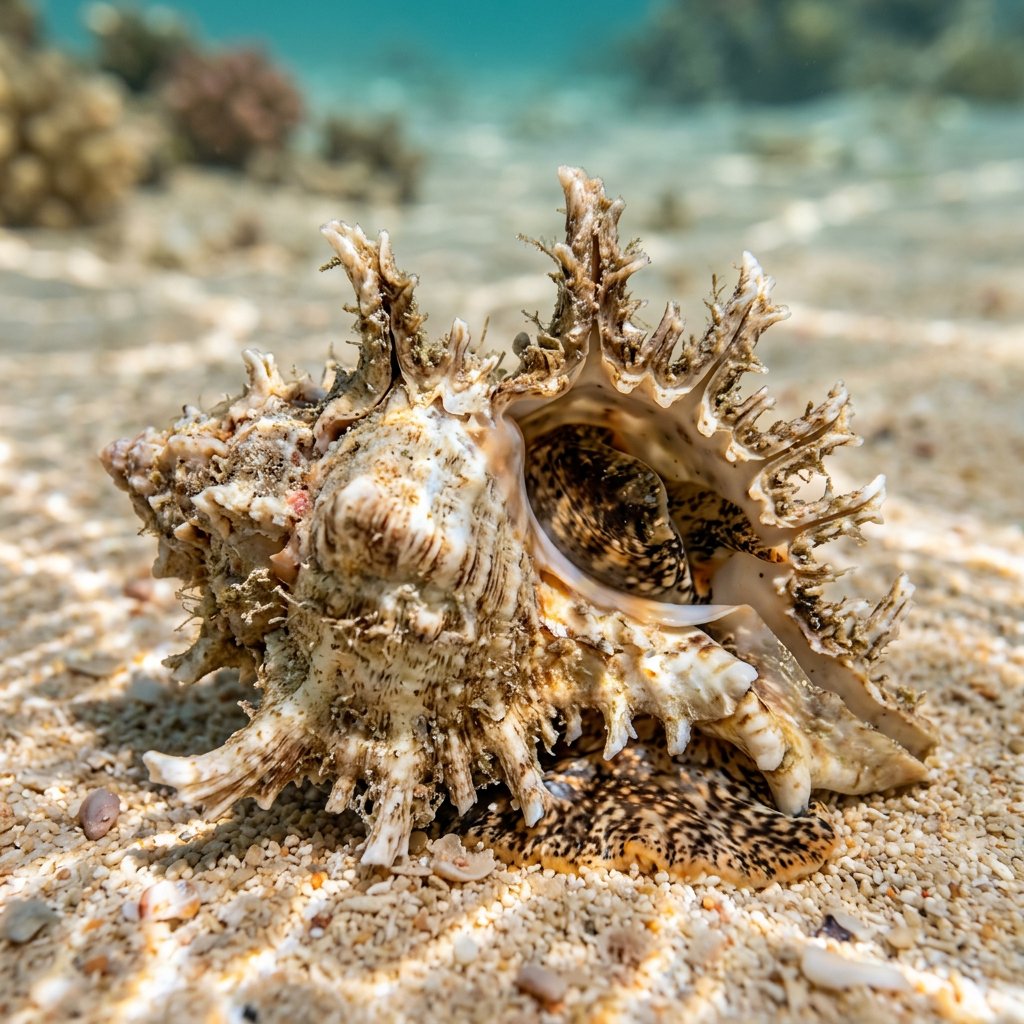
Known as the Branched Murex or Leafy Murex, Chicoreus is not actually an insect, but one of the ocean's most spectacular master architects. These marine snails are prized by collectors for their incredibly ornate, "frilly" shells that look like they were carved from stone. In antiquity, their close relatives were the source of "Tyrian Purple," the most expensive dye in the world, reserved strictly for royalty.
🔍 How to Identify
- 🐚 Leafy Spines: The shell is famous for its "varices"—prominent, frilled ridges or branched spines that look like dried leaves or coral branches.
- 🌀 Elongated Spire: They feature a high, conical spire consisting of several overlapping whorls, often ending in a delicate point.
- 👄 Polished Aperture: The "mouth" or opening of the shell is usually large and oval, often featuring a smooth, porcelain-like interior that can be white, pink, or orange.
🌊 Habitat & Ecology
- 🦀 The Reef Predator: While they look delicate, these snails are fierce carnivores. They use a specialized, sandpaper-like tongue called a "radula" to drill perfectly circular holes through the shells of other mollusks to eat them.
- 🪨 Tropical Hiding Spots: They are primarily found in warm, tropical waters, inhabiting coral reefs, rocky substrates, or sandy bottoms where their jagged shape helps them blend in with the surrounding reef debris.
⚠️ Safety & Toxicity
- 🟢 Status: Generally harmless and non-venomous to humans.
- ⚠️ Physical Hazards: The primary danger is the shell itself. The spines can be incredibly sharp and brittle; handling a live or empty shell without care can result in painful skin punctures.
- 🛡️ The Operculum: When threatened, the snail retracts and closes its "front door" (the operculum), which is a hard, trap-door-like structure that can pinch if a finger is in the way.
✨ Fun Fact
In the ancient world, it took approximately 12,000 Murex snails to produce just 1.5 grams of pure purple dye—enough to color the trim of a single imperial robe. This is why purple became the universal color of kings and emperors!
More Details








