Info
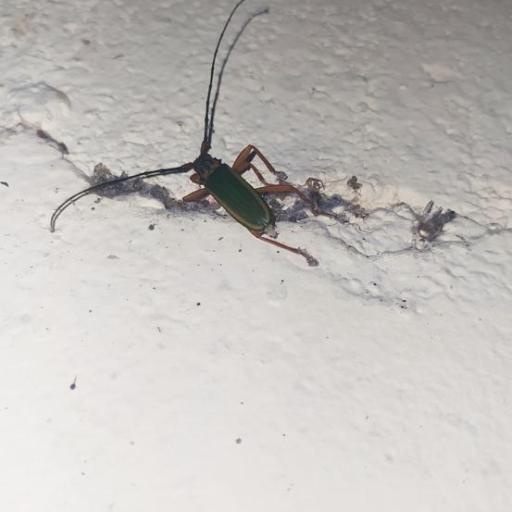
Often called the Festive Longhorn Beetle, this jewel-like insect looks as though it was hand-painted for a tropical parade. Native to the Neotropics and frequently spotted in warm regions like Florida and the Caribbean, it is famous for its shimmering metallic coat. While it is technically a "wood borer," most nature lovers encounter it as a curious, colorful visitor resting near garden lights.
🔍 How to Identify
- 🪲 Electric Colors: The wing covers (elytra) are a brilliant, shimmering metallic green, accented by two bold, golden-yellow stripes running vertically down the back.
- 📶 Extra-Long Antennae: As a true longhorn beetle, its segmented antennae are elegant and sweeping, often reaching or exceeding the total length of its body.
- ⚔️ Thoracic Spines: If you look closely at the "shoulders" (the thorax), you will see sharp, tiny spikes protruding from the sides, giving it a slightly armored appearance.
🌳 Habitat & Behavior
- 🍎 Orchard Resident: In its larval stage, this beetle develops inside the wood of various trees, including Mango, Citrus, and Mahogany. While it helps decompose stressed timber in the wild, it can be a minor pest in fruit groves.
- 🌙 Night Moves: The adults are most active at twilight and during the night. They are exceptionally strong flyers and are frequently drawn to porch lights or illuminated windows.
- 🍃 Dietary Habits: While the "babies" (larvae) eat wood, the adults are much more refined, typically feeding on tree sap, nectar, or pollen.
⚠️ Safety & Toxicity
- 🛡️ Non-Venomous: The Festive Longhorn Beetle is not toxic and does not possess a stinger. It is generally considered "friendly" to humans, provided you don't mind a crunchy visitor.
- 🦷 Strong Mandibles: Because they are designed to chew through wood, these beetles have powerful jaws. If handled roughly, they may deliver a startling pinch to your finger, but they will not break the skin or inject any toxins.
- 🐾 Pet Safety: They are harmless to curious cats or dogs, though the hard, chitinous shell might be difficult for a pet to swallow if they decide to make it a snack.
✨ Fun Fact
- 🚢 The Hitchhiker: This beetle is a famous "accidental traveler." Because the larvae live deep inside wood, Chlorida festiva is frequently intercepted by customs officials around the world, having hitched a ride across oceans inside shipments of tropical timber and crates of fruit!
More Details








