Info
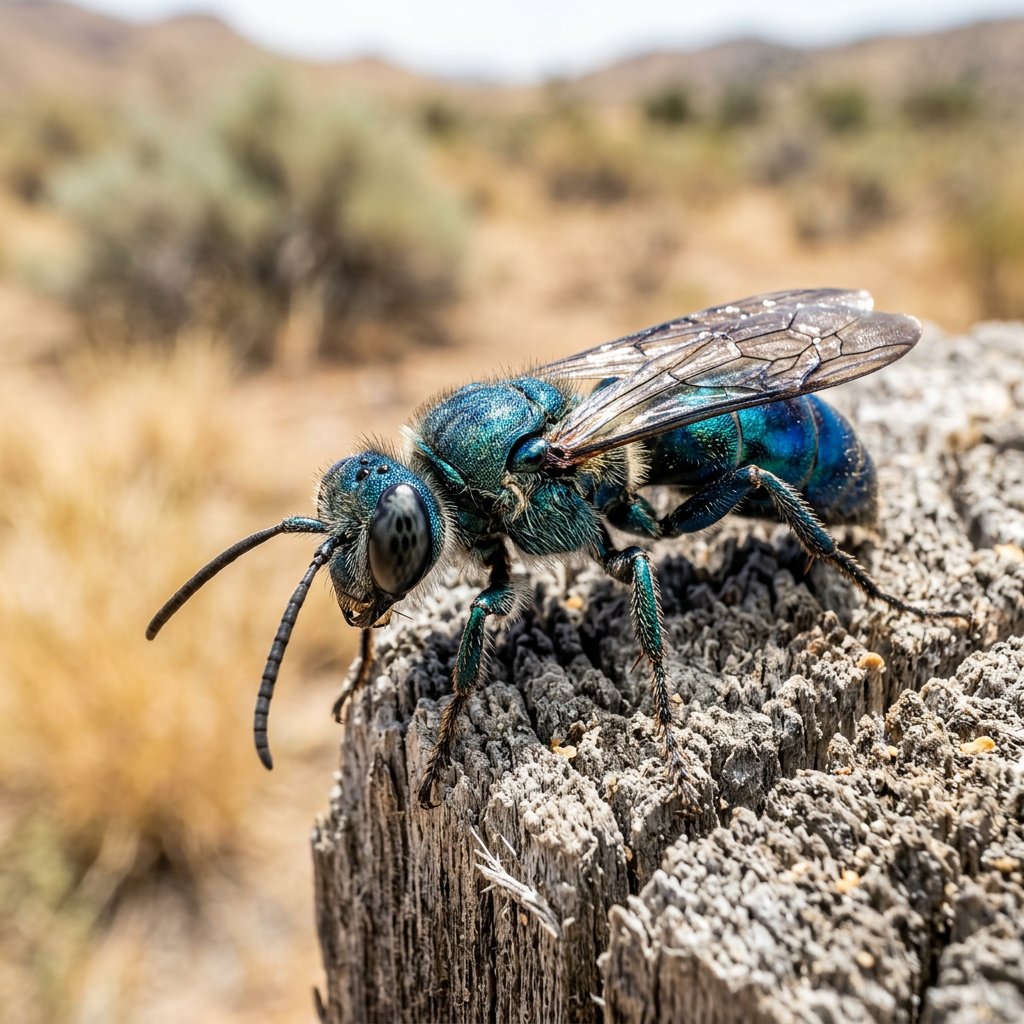
Commonly known as the Steel-Blue Cricket Hunter, this solitary wasp is one of nature’s most stunning living jewels. With its shimmering, metallic-blue exoskeleton that shifts into green or purple under the sun, it looks more like a piece of high-end jewelry than a garden predator. Despite its somewhat intimidating size and "wasp" label, it is a peace-loving neighbor that spends its days hunting garden pests and sipping nectar.
🔍 How to Identify
- 💎 Metallic Finish: The entire body is a brilliant, iridescent steel blue or teal, which serves as a natural warning to predators and a dazzling sight for observers.
- 🪽 Smoky Wings: It possesses large, dark-tinted wings that often have a violet or brownish translucent sheen when they catch the light.
- 📏 Impressive Size: These are relatively large wasps, often reaching over an inch in length, with long, spindly legs and thin "wasp-waists" (petioles) typical of the Sphecidae family.
🌲 Habitat & Ecology
- 🦗 The Cricket Hunter: As the name suggests, females are expert hunters of crickets. They paralyze their prey with a surgical sting and drag them back to underground burrows to feed their developing larvae.
- 🌻 Pollination Partner: While the larvae eat meat, the adults are strictly vegetarians. You will most often find them hovering over flowers like Milkweed or Goldenrod, where they act as highly effective pollinators.
- 🕳️ Solitary Solitude: Unlike Yellowjackets, these wasps do not live in hives. They are solitary nesters, meaning there is no "queen" to defend, making them much less likely to swarm or act aggressively.
⚠️ Safety & Toxicity
- 🟢 Low Risk: The Steel-Blue Cricket Hunter is considered "docile." They have no interest in humans and will only sting if they are physically squeezed or stepped on.
- 🛡️ Garden Ally: Because they do not have a hive to protect, they lack the "guard dog" instinct of social wasps. They are safe to have in the garden and are actually beneficial for keeping cricket and grasshopper populations in check.
- 🐾 Pets & Kids: While the sting can be painful (similar to a honeybee), it is not medically significant unless the individual has a specific allergy to wasp venom.
✨ Fun Fact
The Steel-Blue Cricket Hunter is a master of "zombie" surgery! When it stings a cricket, it doesn't kill it; it merely paralyzes it. This keeps the "meal" fresh and alive for the wasp's larvae to eat weeks later after they hatch underground.
More Details








