Info
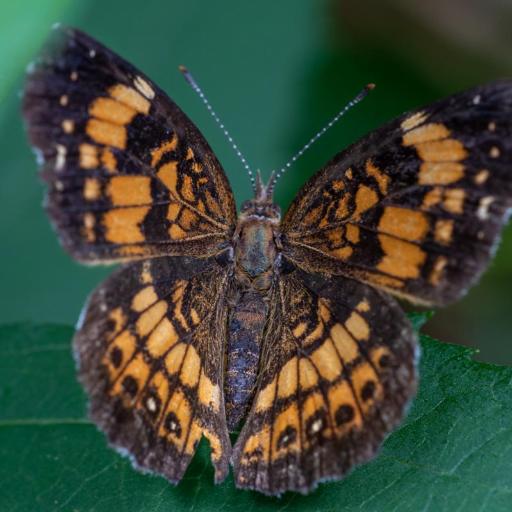
Known for its intricate, stained-glass wing patterns, the Silvery Checkerspot (Chlosyne nycteis) is a frequent and welcome visitor to sun-drenched meadows and damp forest edges. Often mistaken for its cousin, the Pearl Crescent, this butterfly gets its name from the distinct silvery-white crescents hidden on the underside of its wings. It is a "friend" to the gardener, acting as an active pollinator for many of our favorite late-summer wildflowers.
🔍 How to Identify
- 🦋 Checkered Wings: The upper side features a vibrant orange-and-black checkered pattern, often with a dark border containing small, pale spots.
- 🌙 The "Silver" Crescent: If you catch it with its wings closed, look for a prominent, pale, silvery-white crescent-shaped spot in the middle of the dark border on the hindwing.
- 🐛 Spiky Larvae: The caterpillars are chocolate-brown to black with yellow stripes and are covered in branched, soft spines that give them a "hedgehog" appearance.
🌲 Habitat & Ecology
- 🌻 Flower Power: You will most likely find these butterflies dancing around Sunflowers, Black-eyed Susans, and Asters. These plants serve as both a nectar source for adults and a "nursery" for their eggs.
- 💧 Moisture Seekers: Unlike some butterflies that prefer dry plains, the Silvery Checkerspot loves humidity. Look for them near stream banks, moist meadows, and the edges of marshy woodlands.
- 🤝 Social Feeders: When they are young, the caterpillars are quite social! They stay together in large groups on the underside of leaves, munching in unison before spreading out as they mature.
⚠️ Safety & Toxicity
- ✅ Harmless Friend: The Silvery Checkerspot is completely safe for humans and pets. They do not bite or sting.
- 🌵 Spiny Look, Soft Touch: While the caterpillars look "thorny" or prickly, their spines are not stinging hairs. They are meant to camouflage the larvae and discourage birds, though they may feel slightly ticklish if they crawl on your hand.
✨ Fun Fact
To survive the freezing winter, these butterflies perform a trick called "diapause." The half-grown caterpillars crawl into the leaf litter at the base of their host plants and essentially hit the "pause" button on their life, waiting for the first warm rays of spring to wake up and finish growing!
More Details








