Info
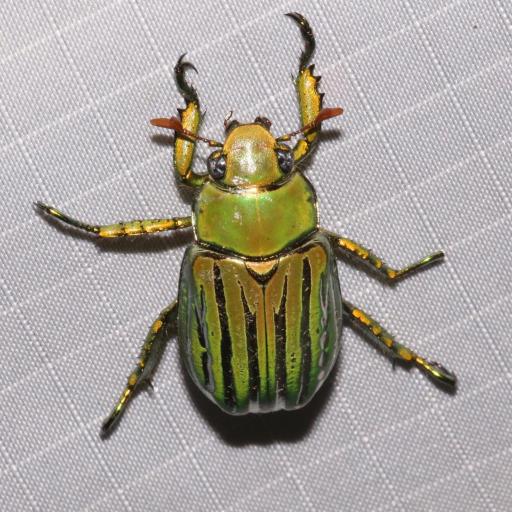
Often called the "Glorious Beetle," this shimmering scarab looks more like a piece of high-end jewelry than a forest dweller. Found primarily in the rugged mountains of the American Southwest and Mexico, its metallic brilliance has made it a favorite among collectors and nature photographers alike.
🔍 How to Identify
- 💎 Metallic Shell: The body is a vibrant, iridescent lime green that glimmers under the sun.
- 🥈 Silver Racing Stripes: It is easily distinguished from other jewel beetles by the elegant, recessed silver (or sometimes gold) stripes running vertically down its wing covers (elytra).
- 🪲 Classic Scarab Shape: It possesses a thick, oval body with powerful legs designed for clinging to branches and leaves.
🌲 Habitat & Ecology
- 🌳 Juniper Specialist: This beetle is almost exclusively found in oak-juniper woodlands. It relies on the juniper tree for both its diet as an adult and as a nursery for its larvae.
- 🍃 Master of Camouflage: While it looks conspicuous in a collection box, its metallic green and silver stripes actually help it disappear among the needles and sunlight-dappled branches of juniper trees.
- 🌙 Night Moves: Though they are active during the day, they are frequently drawn to bright lights at night, often surprising hikers or campers near their mountainous habitats.
⚠️ Safety & Toxicity
- ✅ Harmless Friend: The Glorious Beetle is completely non-toxic and lacks any form of stinger or dangerous mandibles.
- 🤚 Gentle Handling: While they might give a tiny "pinch" with their feet while trying to hold onto your finger, they are not aggressive. They are much safer to handle than most common garden pests.
- 🐾 Pet Safety: They pose no threat to curious cats or dogs, though their hard shells make them a bit of a crunchy (but non-poisonous) snack if accidentally ingested.
✨ Fun Fact
The "silver" stripes on this beetle aren't actually colored with pigment! The color comes from a complex microscopic structure that reflects light in a specific way (circularly polarized light). Scientists study these beetles to help develop new types of "smart" optical materials and sensors.
More Details








