Info
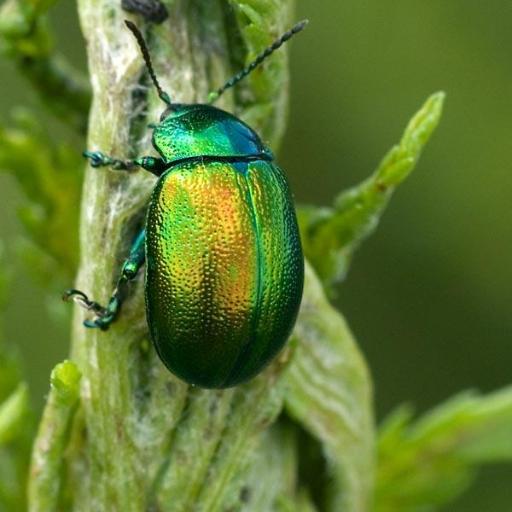
Known as the "Jewel of York," the Tansy Beetle is a shimmering, iridescent masterpiece of the insect world. Once widespread across the wetlands of Europe, this rare gem has become a symbol of conservation, particularly in the UK where it is now a protected species. Its metallic green shell is so brilliant that it looks more like a piece of Victorian jewelry than a living creature.
🔍 How to Identify
- ✨ Metallic Sheen: The most striking feature is its brilliant emerald-green wing cases (elytra), which can flash with gold, copper, or even subtle red highlights depending on how the light hits them.
- 🟢 Rounded Form: It has a classic leaf-beetle shape—neatly oval, convex, and smooth, measuring about 10mm in length (roughly the size of a large pea).
- 🌿 The Tansy Association: If you find a metallic green beetle specifically on the feathery leaves of a Tansy plant (Tanacetum vulgare), you have likely found Chrysolina graminis.
🌲 Habitat & Ecology
- 🍽️ A Picky Eater: Unlike many beetles that wander, this species is a specialist. It spends almost its entire life cycle on or near the Tansy plant, which provides both its primary food source and a place to lay eggs.
- 🚶 Ground-Bound Beauty: Although they have wings, Tansy Beetles are remarkably reluctant to fly. They prefer to walk between plant clumps, which makes them very vulnerable to habitat fragmentation and flooding.
- 💧 Riverside Living: They are most commonly found in damp grasslands and along riverbanks where their host plants thrive in the sun.
⚠️ Safety & Toxicity
- ✅ Harmless Friend: The Tansy Beetle is completely safe for humans. It does not bite, sting, or carry any diseases.
- 🛡️ Fragile Status: While it is "safe" for you, you are not necessarily safe for it! Because they are rare and protected in many regions, it is best to observe them without handling them to avoid damaging their delicate legs or disturbing their habitat.
- 🐶 Pet Safe: They pose no threat to curious dogs or cats, though the beetle’s internal chemistry (derived from the bitter Tansy plant) makes them taste terrible to most predators.
✨ Fun Fact
Before the invention of synthetic sequins, the shimmering wing cases of beetles like the Chrysolina graminis were sometimes used by Victorian dressmakers to decorate high-fashion gowns and accessories, giving them a permanent, natural sparkle.
More Details








