Info
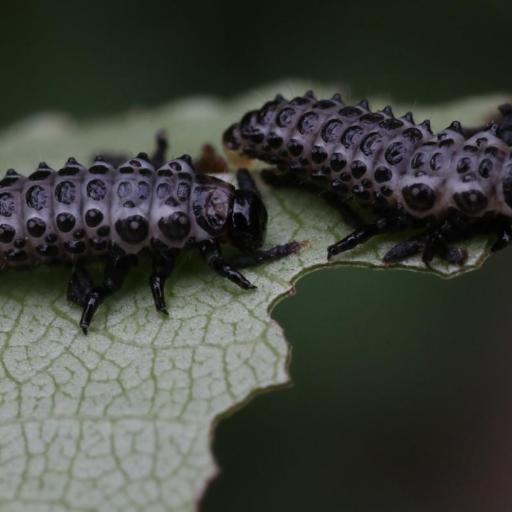
Often mistaken for a stretched-out, artistic ladybug, the Spotted Willow Leaf Beetle (Chrysomela vigintipunctata) is a striking member of the leaf beetle family. Found across Europe and Asia, this beetle is a dedicated willow enthusiast, often seen decorating riverbank branches like living polka-dot ornaments. While its presence can be alarming to tree lovers, it is a fascinating example of how insects evolve alongside their favorite food source.
🔍 How to Identify
- 🐞 The "20-Spot" Pattern: As its Latin name vigintipunctata suggests, it typically sports 10 black spots on each wing cover (elytra), though these spots can sometimes merge into stripes or blotches.
- 🎨 Color Contrast: The base color ranges from a pale creamy yellow to a vibrant, sunset orange, which contrasts sharply against a solid black head and thorax.
- 📐 Body Shape: It has a smooth, convex, elongated oval body, measuring about 6 to 9 millimeters—slightly longer and flatter than a typical ladybug.
🌲 Habitat & Ecology
- 🥗 The Willow Specialist: These beetles are "skeletonizers." Both the adults and their larvae munch on the soft tissue of willow and poplar leaves, leaving behind a delicate, brown lattice of veins.
- 🌊 Waterside Living: You are most likely to spot them in damp environments, such as marshes, riverbanks, and lake edges, where their host trees thrive.
- 🛡️ Chemical Mimicry: They don’t just eat the willow; they use it for protection. The larvae can secrete a pungent fluid derived from the salicylic acid in the willow bark to ward off hungry birds and ants.
⚠️ Safety & Toxicity
- ✅ Safe for Humans: The Spotted Willow Leaf Beetle is completely harmless to humans and pets. It does not bite, sting, or carry any known diseases.
- 🍃 Plant Health: While a large population can make a willow tree look "burnt" or ragged by mid-summer, they rarely cause permanent damage to healthy, established trees.
- 🤚 Gentle Handling: If you pick one up, it may release a tiny drop of yellow fluid (reflex bleeding) that can smell slightly medicinal, but it is not toxic to skin.
✨ Fun Fact
🧪 A Sour Defense: The larvae of this beetle possess specialized glands that can "pop out" like tiny balloons when threatened, releasing a scent that smells exactly like a strong bottle of aspirin!
More Details








