Info
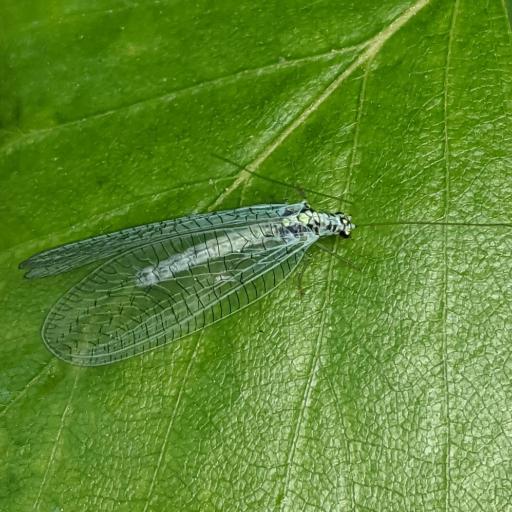
Often called the Pearled Lacewing, this delicate insect looks like a tiny, living piece of stained glass flitting through the evening air. Despite its fragile, ethereal appearance, it is one of the garden's most effective silent protectors. In many circles, its presence is celebrated as a sign of a healthy, chemical-free ecosystem and a thriving garden.
🔍 How to Identify
- 💎 Stained-Glass Wings: It possesses four large, translucent wings with an incredibly complex network of veins that resemble fine lace or filigree.
- 👁️ Metallic Eyes: It features striking, metallic gold or copper-colored eyes that bulge slightly from the head, earning the family the nickname "Golden-eyed Lacewings."
- 🖤 Dark Markings: Unlike common green lacewings, Chrysopa perla has distinct black patterns and spots on its head and thorax, giving it a "bold" contrast against its bluish-green body.
🌲 Habitat & Ecology
- 🌿 The Aphid Lion: While the adults are gentle fliers, their larvae are ferocious hunters known as "aphid lions." They possess sickle-shaped jaws used to devour garden pests like aphids, mites, and scale insects.
- 🌳 Cool, Shady Spots: This species prefers deciduous forests, hedgerows, and lush, tall-grass gardens. They are most active at dusk and are frequently seen resting on the underside of broad leaves during the heat of the day.
⚠️ Safety & Toxicity
- 🤝 Gentle Friend: The Pearled Lacewing is completely harmless to humans. It does not sting, and while the larvae might give a tiny, inquisitive pinch if handled, they are not venomous.
- 🐶 Pet & Child Safe: They are non-toxic to curious pets and children. Because they act as natural pest control, having them in your yard reduces the need for harmful chemical pesticides.
✨ Fun Fact
Lacewings have "ears" located at the base of their front wings! These specialized organs allow them to hear the ultrasonic clicks of hunting bats. When they hear a bat approaching, they fold their wings and drop into a free-fall to avoid being caught in mid-air.
More Details








