Info
Known as the "Gardener’s Best Friend," Chrysoperla rufilabris is a delicate, ethereal-looking insect that hides a fierce secret. While the adults flutter gracefully around lights at night like tiny green fairies, their offspring are legendary hunters known as "Aphid Lions" for their voracious appetite for garden pests. They are one of the most effective biological control agents you can have in your backyard.
🔍 How to Identify
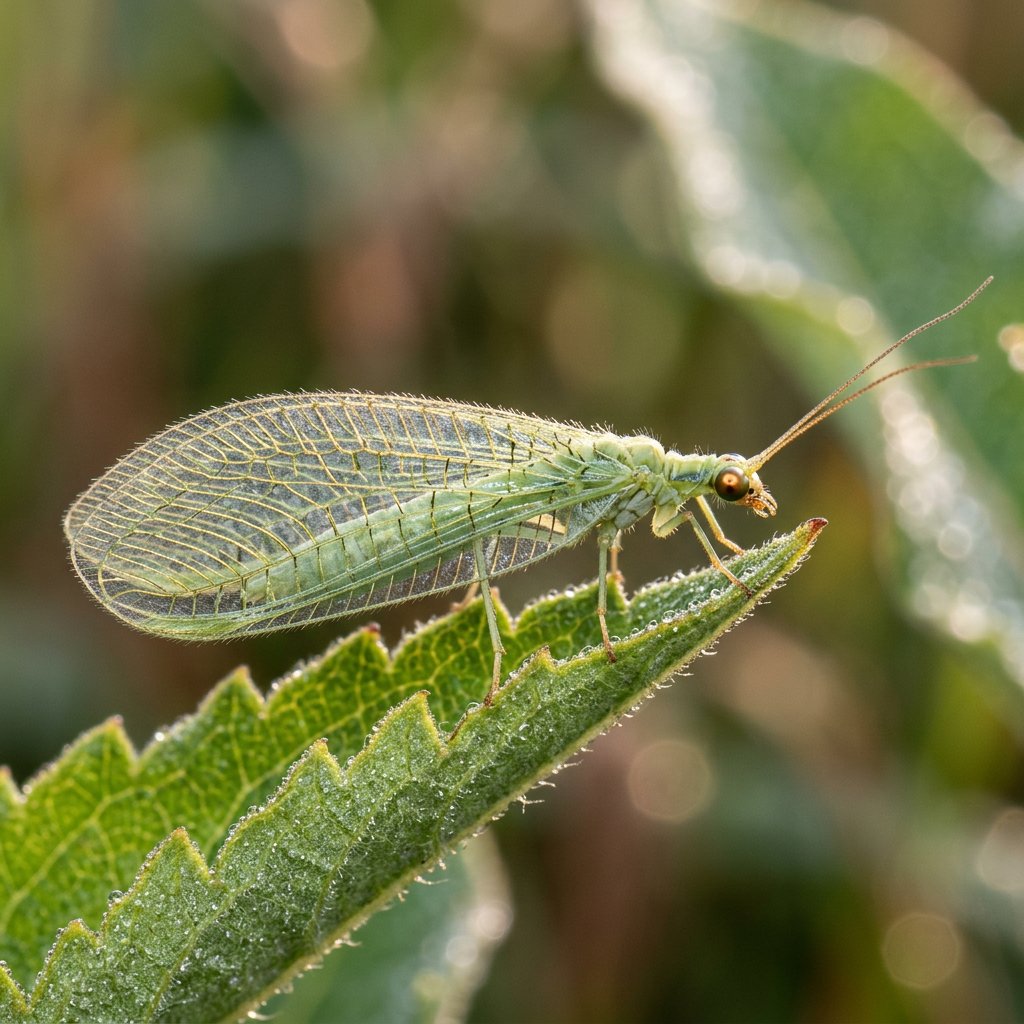
- 🧚 Lacy Wings: They possess four translucent, highly veined wings that look like fine lace, held tent-like over their bodies when resting.
- 🟢 Slender Green Body: The adult has a long, pale green body, usually measuring about 1/2 to 3/4 of an inch.
- 👁️ Golden Eyes: One of their most striking features is their large, metallic, copper or golden-colored compound eyes.
- 👄 The "Red Lip": Unlike its cousins, rufilabris often has reddish or brownish markings on its face/cheeks, giving it the common name "Red-lipped Green Lacewing."
🌲 Habitat & Ecology
- ⚔️ The Aphid Lion: While adults primarily feed on nectar and honeydew, the larvae are predatory machines. They use sickle-shaped mandibles to grab and drain the fluids from aphids, mealybugs, and spider mites.
- 🌙 Night Owls: You will most likely spot the adults near porch lights or windows at dusk. They are weak fliers and tend to flutter rather than zoom.
- 🏠 Garden Residents: They thrive in humid environments, particularly near deciduous trees, shrubs, and low-lying crops where their "prey" is abundant.
- 🥚 Stalked Eggs: To prevent their own hungry siblings from eating them, the mother lays her eggs at the end of long, hair-like silken stalks attached to leaves.
⚠️ Safety & Toxicity
- 😇 Friendly Status: These insects are completely harmless to humans and pets. They do not sting, and they do not carry diseases.
- 🤏 Minor Pinches: While the adults are "vegans," the larvae (Aphid Lions) can occasionally give a tiny, harmless nip if they land on your skin. It feels like a small pinprick and causes no lasting irritation.
- 🐕 Pet Safe: They are non-toxic if accidentally ingested by a curious cat or dog.
✨ Fun Fact
The Chrysoperla rufilabris is a master of "vibratory songs." To find a mate, they vibrate their abdomens against a leaf, creating a low-frequency song that travels through the plant. If a female likes the tune, she will vibrate back in a percussive duet!
More Details








