Info
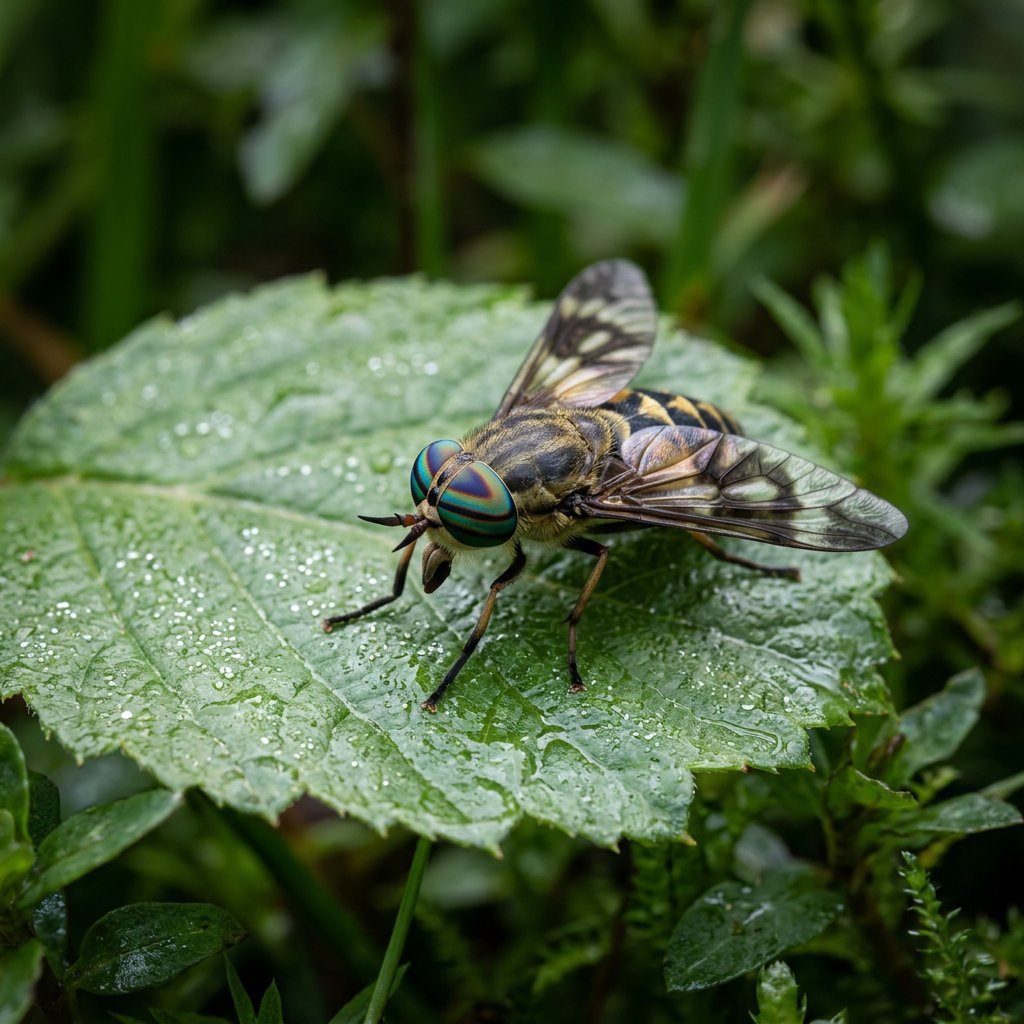
While you may have encountered the name in a botanical context, Chrysops caecutiens is actually a striking and persistent insect known as the Splayed Deer Fly. With its shimmering, jewel-like eyes and bold, patterned wings, it is one of the most visually stunning flies in the wild—though it is often considered a "foe" by hikers and gardeners. It is a creature of the wetlands, perfectly adapted for life in damp, shaded environments.
🔍 How to Identify
- 👀 Kaleidoscope Eyes: Their most famous feature; they possess large, iridescent eyes patterned with vivid zig-zags of gold, purple, and green.
- ✈️ Splayed Wings: Unlike houseflies, they hold their wings out in a distinct "delta" or "V" shape. The wings are clear with dark, smoky-brown bands.
- 🐝 Wasp-like Abdomen: The body is primarily black but features a bright yellow square or "inverted V" on the upper abdomen, helping them blend in with more dangerous stinging insects.
🌲 Habitat & Ecology
- 💧 Water Lovers: You will most likely encounter them near marshes, ponds, or damp woodland paths. Their larvae live in muddy soil or water, where they act as tiny predators.
- 🌼 Dual Lifestyle: There is a major difference between the sexes! Males are peaceful pollinators that spend their days sipping nectar from flowers. Females, however, are the ones that seek out "blood meals" to provide nutrients for their eggs.
- 🏃 Visual Hunters: Unlike mosquitoes, which track CO2, these flies hunt primarily by sight. They are attracted to dark moving objects—which is why they often circle the heads of people or dogs on a walk.
⚠️ Safety & Toxicity
- 🩹 The Bite: They are not "toxic," but the female’s bite is famously sharp and painful. Rather than a tiny needle, they use scissor-like mouthparts to cut the skin.
- 🧴 Protection: They are persistent and will follow a target for long distances. To avoid them, wear light-colored clothing (which they find less attractive) and use a repellent containing DEET or Picaridin when near water.
✨ Fun Fact
The iridescent colors in a Deer Fly's eyes aren't caused by pigments, but by "structural color." Tiny layers in the eye reflect light at different angles, much like the surface of a soap bubble or an oil slick!
More Details








