Info
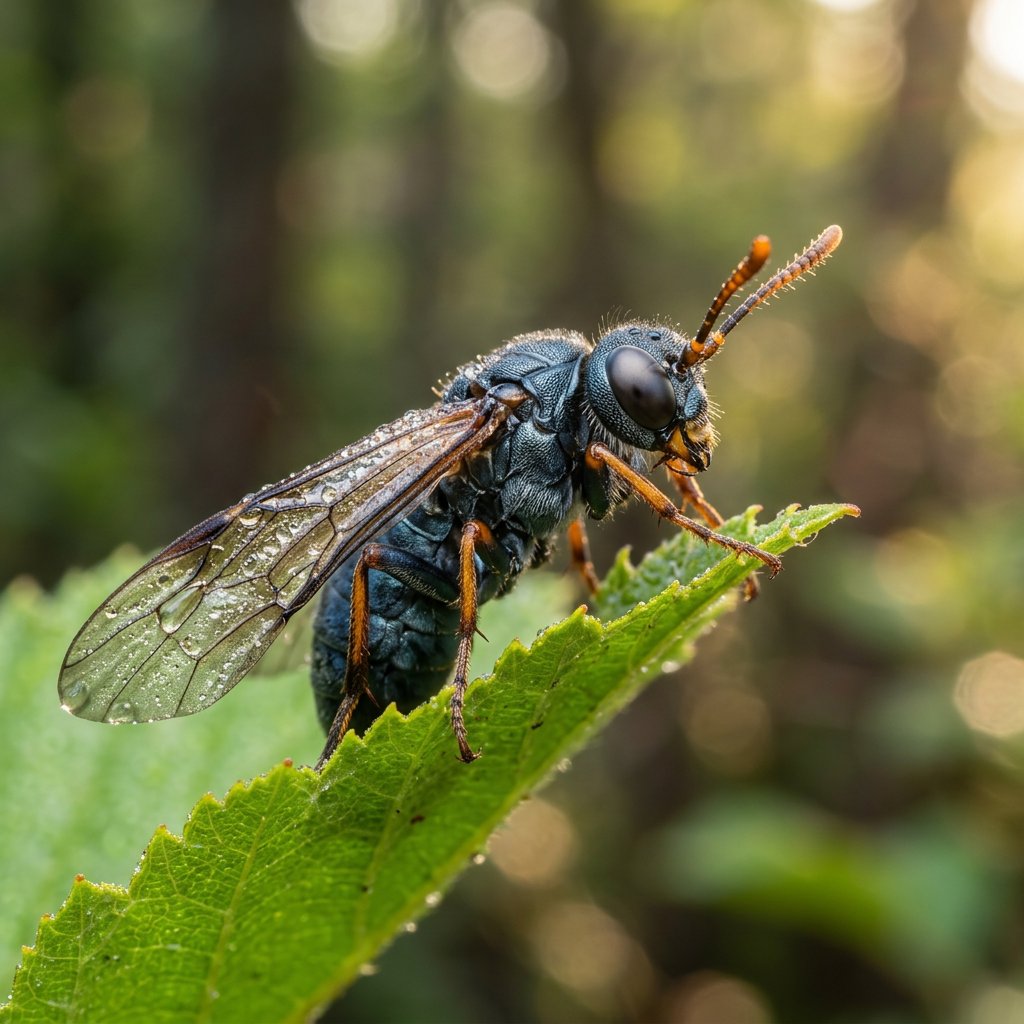
The European Large Sawfly (Cimbex connatus) is a master of mimicry. With its bulky body and loud buzzing flight, it is frequently mistaken for a giant hornet, a clever disguise that keeps many predators at bay. Often found near riverbanks and wetlands, this heavyweight of the insect world is a fascinating example of "all bark and no bite."
🔍 How to Identify
- 🏏 Clubbed Antennae: Unlike the thin antennae of wasps, this sawfly has distinct, orange-tipped antennae that end in a thickened "club" shape.
- 🎨 Robust Body: It lacks the thin "wasp waist." It features a broad, heavy-set abdomen, usually colored dark brown with greenish-yellow patches that look like glowing portholes.
- 🐛 Giant Larvae: The larvae are often mistaken for caterpillars; they are lime green, exceptionally large, and have a habit of coiling into a tight spiral when resting on a leaf.
🌲 Habitat & Ecology
- 🌳 Alder Specialist: This species is biologically tied to Alder trees (Alnus). You will almost exclusively find them in damp woodlands or along watercourses where their host trees grow.
- 🪚 Twig Strippers: While most adult insects sip nectar, these sawflies use their powerful mandibles to "girdle" twigs—stripping away bark to drink the sweet, sugary sap flowing underneath.
- 🏗️ Solitary Life: They do not live in hives or colonies. Each female operates alone, using her saw-like organ to slit open Alder leaves and tuck her eggs safely inside.
⚠️ Safety & Toxicity
- 🐝 Harmless Mimic: Despite its intimidating hornet-like appearance, this insect has no stinger. It cannot sting humans or pets.
- 🦷 Strong Mandibles: Because they are designed to chew through wood and bark, they have very strong jaws. If you pick one up and squeeze it, it may deliver a defensive pinch, but it carries no venom.
✨ Fun Fact
When the larvae feel threatened by a bird or a curious human, they can "reflex bleed," squirting a defensive, foul-smelling liquid from tiny pores along their sides to gross out their attacker!
More Details








