Info
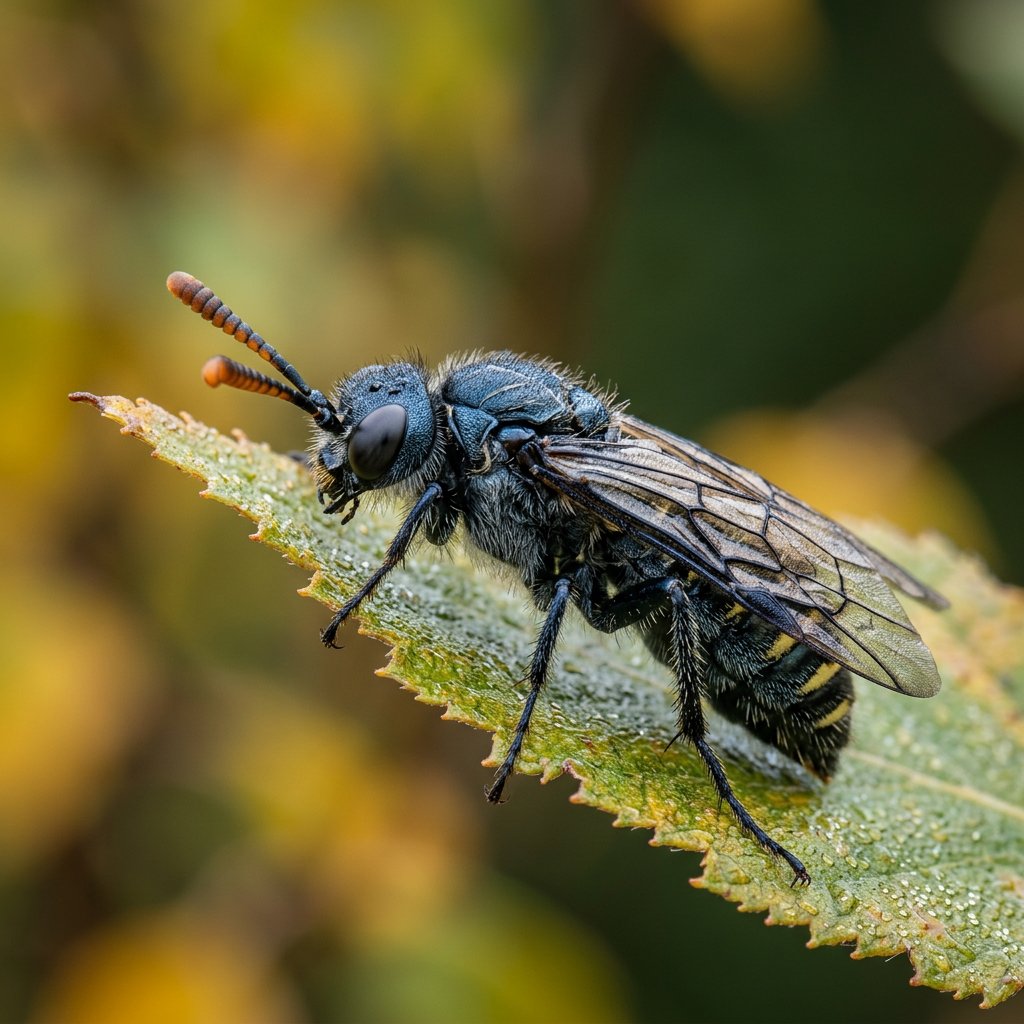
The Birch Sawfly (Cimbex femoratus) is the gentle giant of the insect world, often mistaken for a fearsome hornet due to its impressive size and loud, buzzing flight. Despite its "tough guy" appearance and metallic sheen, this insect is actually a stingless relative of wasps and bees. You’ll most likely spot them patrolling the edges of birch woodlands during the mid-summer months, looking for a sweet sip of sap.
🔍 How to Identify
- 🐝 The Body: A large, robust insect (up to 25mm) with a dark, often metallic black or reddish-brown abdomen that features a distinctive pale or yellow band near the base.
- 🏏 The Antennae: Unlike many wasps, their antennae are conspicuously "clubbed" at the ends and are usually a bright yellow or orange color.
- 🚫 The "Waist": Unlike true wasps which have a "cinched" waist, the Birch Sawfly is broad-waisted, meaning its thorax and abdomen are joined broadly.
- 🐛 The Larvae: Often mistaken for caterpillars, the larvae are pale green with a dark stripe down the back and a characteristic habit of coiling their bodies when at rest on a leaf.
🌲 Habitat & Ecology
- 🌳 The Birch Connection: As the name suggests, these insects are inextricably linked to Birch trees. Adults use their powerful mandibles to strip small patches of bark to reach the sugary sap beneath, while larvae feast on the foliage.
- 🛡️ Master of Mimicry: They use "Batesian mimicry," looking and sounding like a dangerous hornet to discourage birds from eating them, even though they possess no venomous sting.
- 🍂 Lifecycle: After feeding throughout the summer, the larvae drop to the ground and spin a tough, papery cocoon in the leaf litter, where they overwinter before emerging as adults the following spring.
⚠️ Safety & Toxicity
- 🟢 Status: Harmless but "pinch-capable."
- 🤏 Details: The Birch Sawfly does not have a stinger. However, because they have powerful mandibles designed for cutting bark, they can deliver a noticeable "pinch" if handled roughly or squeezed. They are not toxic to pets or children, but their large size can be startling.
✨ Fun Fact
When the larvae of the Birch Sawfly feel threatened by a predator, they can "reflex bleed," squirting a defensive fluid from pores along their sides to startle the attacker!
More Details








