Info
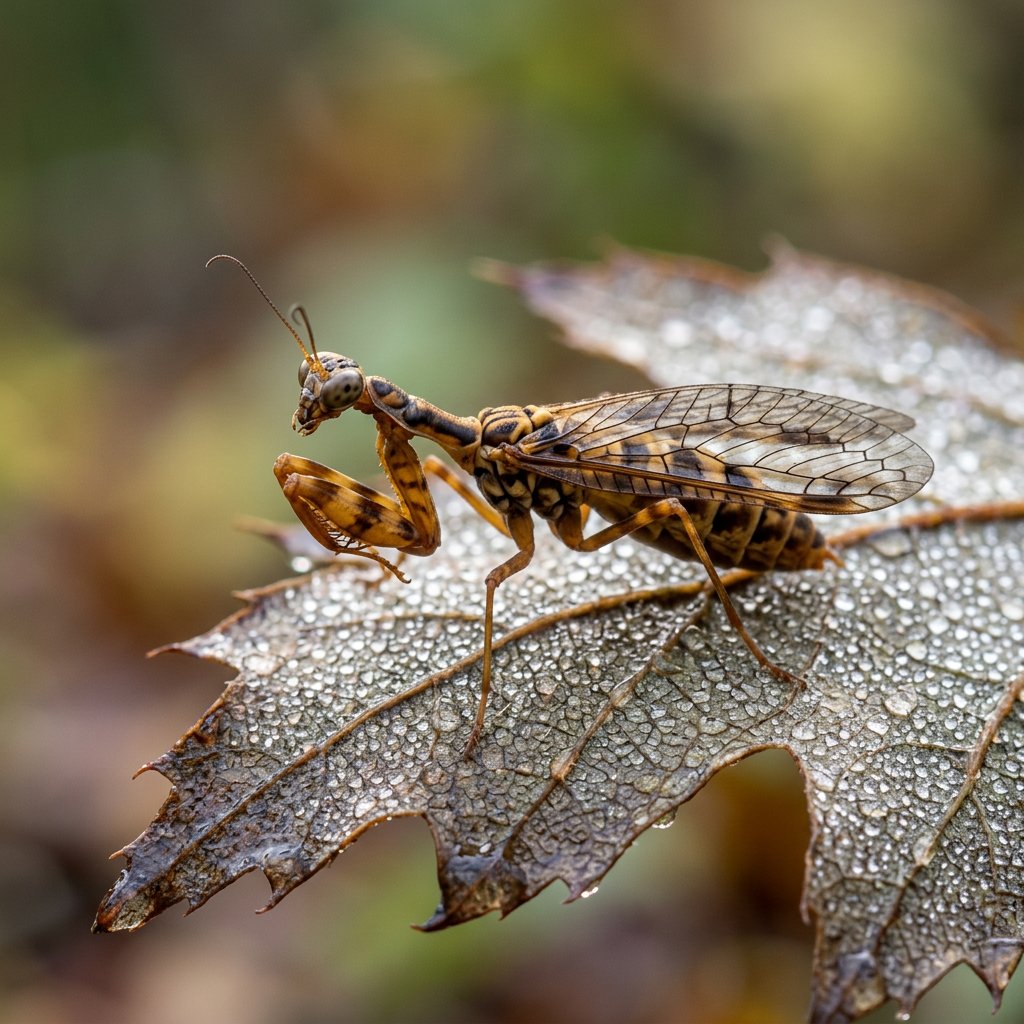
Meet the ultimate "cosplayer" of the insect world. Often called the Wasp Mantidfly, this creature looks like a mad scientist fused a Paper Wasp with a Praying Mantis. Despite its fierce, stinging appearance, it is a master of bluffing and a fascinating example of evolution’s creativity, using "Batesian mimicry" to scare off predators by pretending to be a dangerous wasp.
🔍 How to Identify
- 💪 Raptorial Front Legs: Just like a Praying Mantis, its front legs are thickened, spiked, and held in a "praying" position, perfectly designed for snatching prey out of mid-air.
- 🐝 Wasp-like Patterning: The body is typically brown with yellow or orange markings, mimicking the exact color scheme and body shape of Polistes (Paper) wasps.
- 🕸️ Lacy Wings: As a member of the Neuroptera family (lacewings), its wings are intricate and clear with dark veining, often held in a tent-like fashion over its back when resting.
- 🦒 Elongated "Neck": It possesses a very long prothorax (the segment behind the head), which gives it a serpent-like flexibility when striking at small insects.
🌲 Habitat & Ecology
- 🍽️ The Ambush Artist: Adult Mantidflies are active hunters. You will often find them perched on flowers or foliage in meadows and garden edges, where they blend in while waiting to ambush flies, moths, and other small pollinators.
- 🕷️ A Bizarre Childhood: The life cycle of Climaciella brunnea is truly wild. The tiny larvae are "spider boarders." They seek out female spiders and hitch a ride on their backs, waiting for the spider to spin an egg sac. Once the eggs are laid, the larva slips inside the silk sac to feast on the developing spiderlings.
- 🌞 Sun Lovers: They are most active during the heat of the day in mid-to-late summer. Because they look so much like wasps, they can often be seen brazenly sitting in the open on goldenrod or milkweed.
⚠️ Safety & Toxicity
- 🎭 Harmless Imposter: Despite the terrifying "wasp" look, these insects are completely non-venomous and possess no stinger. They are 100% harmless to humans and pets.
- 🤏 Pinch Warning: While they don't sting, their raptorial front legs are strong. If you try to pick one up, they might give you a tiny, harmless pinch with their "claws," but they generally prefer to fly away if disturbed.
✨ Fun Fact
The Mantidfly's mimicry is so good that it even copies the walk of a wasp. If you watch one closely, it will flick its wings and move its abdomen in a rhythmic, pulsing motion—an "acting" performance meant to convince birds that a painful sting awaits them if they try to eat it!
More Details








