Info
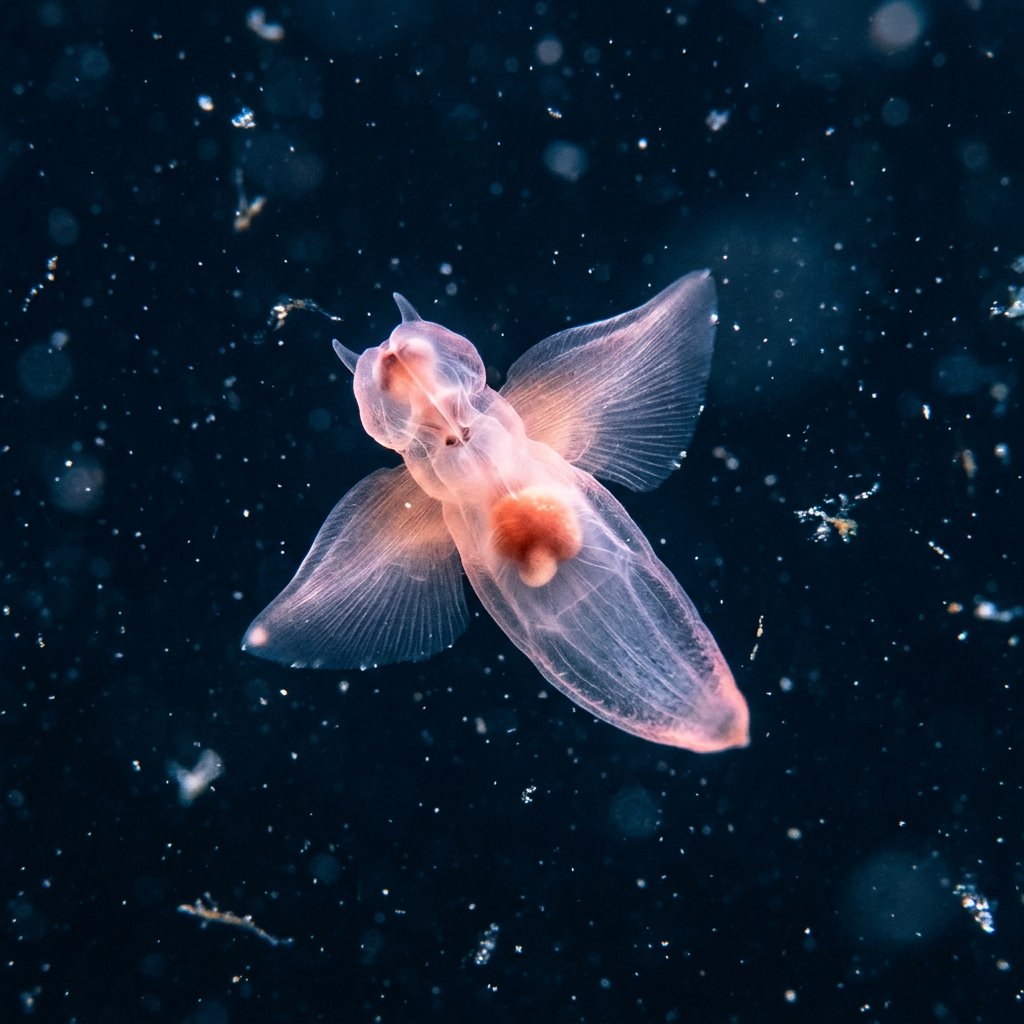
Often called the "Sea Angel," this ethereal creature looks like it drifted straight out of a fairy tale or a Studio Ghibli film. While it might look like a floating moth or insect, it is actually a specialized, shell-less swimming sea slug (gastropod mollusk). These "angels" spend their entire lives dancing through the frigid, icy currents of the Arctic and North Atlantic oceans.
🔍 How to Identify
- 🕊️ The "Wings": It features two translucent, wing-like appendages called parapodia that it flaps rhythmically to "fly" through the water column.
- 💎 Glass-like Body: Its spindle-shaped body is almost entirely transparent, making it nearly invisible to predators in the open ocean.
- 🏮 Visible Heart: Because it is see-through, you can clearly see its orange-red internal organs, which look like a glowing embers inside a paper lantern.
🌊 Habitat & Ecology
- ❄️ Polar Specialist: These creatures are rarely found in warm water; they thrive in near-freezing temperatures. They are often seen by divers in the deep blue of the Arctic, North Pacific, and North Atlantic.
- ⚔️ The Hidden Hunter: Don't let the "angel" name fool you! It is a fierce predator that eats only one thing: "Sea Butterflies" (shelled snails). When it finds prey, its head splits open to reveal six hidden, hook-like tentacles used to grab its victim and pull it from its shell.
⚠️ Safety & Toxicity
- 🛡️ Completely Harmless: Sea Angels pose no threat to humans. They do not sting, bite, or carry toxins that affect people or pets.
- 🌡️ Climate Indicator: They are incredibly sensitive to ocean acidification and rising temperatures. Because they are fragile, they serve as "canaries in the coal mine" for the health of our polar oceans.
✨ Fun Fact
The Sea Angel is a massive pop-culture icon in Japan! It has served as the direct inspiration for several Pokémon, most notably the legendary Manaphy and Phione, due to its graceful, alien-like appearance.
More Details








