Info
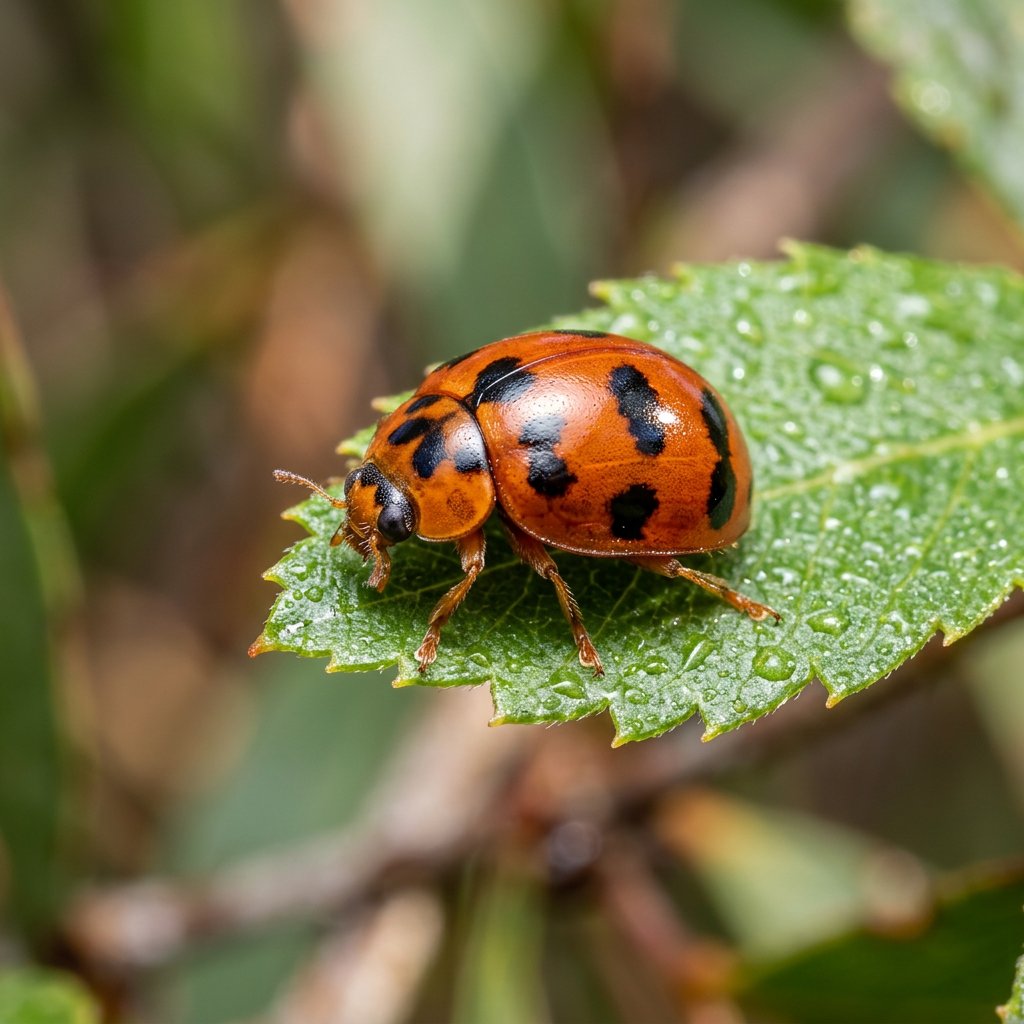
Commonly known as the Transverse Ladybird, this vibrant little beetle is a gardener’s ultimate ally across Australia and Southern Asia. Its striking orange-red shell is marked with distinct zig-zagging black bands that look like a bolt of lightning frozen in time. While some insects can seem intimidating, this ladybird is a tiny, tireless protector of your roses and vegetable patches, acting as nature's own pest control.
🔍 How to Identify
- 🐞 The Wing Covers (Elytra): A bright orange to deep red background featuring three thick, black "transverse" bands and a black line down the center where the wings meet.
- 🐜 Head and Thorax: The front section is mostly black with two prominent white or pale yellow spots on either side, which can look like a set of large, false eyes.
- 📐 Shape and Size: It possesses the classic dome-shaped "ladybug" silhouette, typically measuring between 4 to 6 millimeters in length.
🌲 Habitat & Ecology
- 🍽️ The Aphid Hunter: These are fierce predators in the insect world. Both the adults and their spiky, crocodile-like larvae spend their days hunting aphids, scale insects, and mites.
- 🌳 Garden Territory: You will most likely find them on flowering plants, shrubs, and agricultural crops. They prefer sunny spots where their prey—those tiny sap-sucking garden pests—is most active.
- 🥚 Egg Clusters: Look for tiny, bright yellow, football-shaped eggs glued in neat clusters on the undersides of leaves, strategically placed near aphid colonies for easy snacking once they hatch.
⚠️ Safety & Toxicity
- 🛡️ Friend Status: These insects are "Garden Friends." They do not sting, do not carry diseases, and are generally harmless to humans.
- 👃 Reflex Bleeding: If they feel threatened, they may leak a tiny drop of bitter, yellow fluid (hemolymph) from their leg joints. While it smells bad and might stain your skin slightly, it is not dangerous—just a clever way to tell birds they taste terrible!
- 🐾 Pet Safety: While they are not toxic, the bitter alkaloids in their bodies are meant to deter predators. If a curious cat or dog eats one, they might experience a moment of bad taste, but no serious harm.
✨ Fun Fact
A single Transverse Ladybird can consume over 50 aphids in a single day. Over the course of its short life, one ladybird can protect your garden by eating as many as 2,500 pests!
More Details








