Info
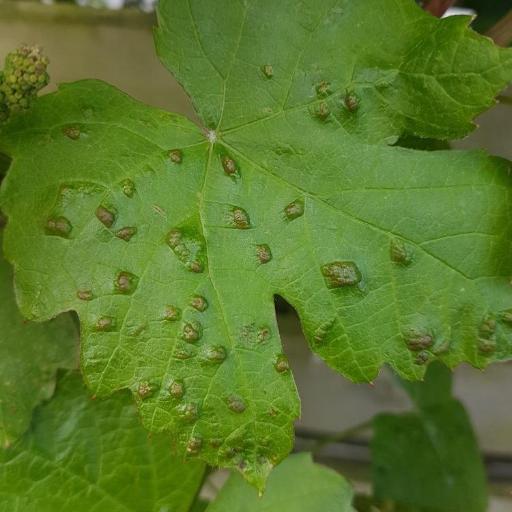
Often called the Grape Leaf Blister Mite, this tiny architect creates bizarre, fuzzy "rooms" on your grapevine leaves. While the bubbled, distorted foliage might look like a scary viral disease, it is actually the work of a microscopic mite that spends its entire life hiding in plain sight. It is a common "frenemy" of the vineyard—startling to see, but rarely a threat to your wine or table grape harvest.
🔍 How to Identify
- 🍇 The Blisters: Look for raised, green or reddish "bubbles" on the upper surface of the grape leaves, making the leaf look like it has been blistered by heat.
- 🧶 The Felt (Erineum): If you flip the leaf over, you will find concave pits filled with dense, white or yellow fuzzy hairs. These patches eventually turn a rusty brown color as the season progresses.
- 🔍 Invisible Guests: You won't actually see the mite itself without a microscope; they are cream-colored, carrot-shaped creatures that are significantly smaller than a grain of salt.
🌲 Habitat & Ecology
- 🍷 Grapevine Specialists: These mites are host-specific, meaning they only live on grapevines. They emerge from the bark scales in early spring to feast on the tender new growth.
- 🌬️ Micro-Travelers: Lacking wings, these mites are master hitchhikers. They spread through the garden by catching wind currents or clinging to the legs of larger insects and birds moving between vines.
- 🏠 The Shelter Effect: The "fuzz" (erineum) they create isn't just for show; it protects the mites from predators and prevents them from drying out in the summer heat.
⚠️ Safety & Toxicity
- ✅ Human & Pet Safety: Colomerus vitis is completely harmless to humans and animals. They do not bite, sting, or cause any skin irritation if you handle the affected leaves.
- 🌿 Plant Health: While the blisters look dramatic and "ugly," they are mostly a cosmetic issue. Most healthy vines can tolerate a large population of these mites without any reduction in fruit quality or quantity.
✨ Fun Fact
The fuzzy "hairs" inside the leaf blisters aren't actually made by the mite! The mite injects a special chemical into the leaf that "reprograms" the plant's cells, forcing the grapevine to grow an oversized forest of hair to act as a cozy nursery for the mite's babies.
More Details








