Info
Often mistaken for mere "pretty shells" found on tropical shores, members of the Conasprella genus are actually sophisticated underwater hunters. These predatory sea snails—which are mollusks, not insects—are masterpieces of geometric design, though they carry a hidden weapon that commands respect from divers and collectors alike.
🔍 How to Identify
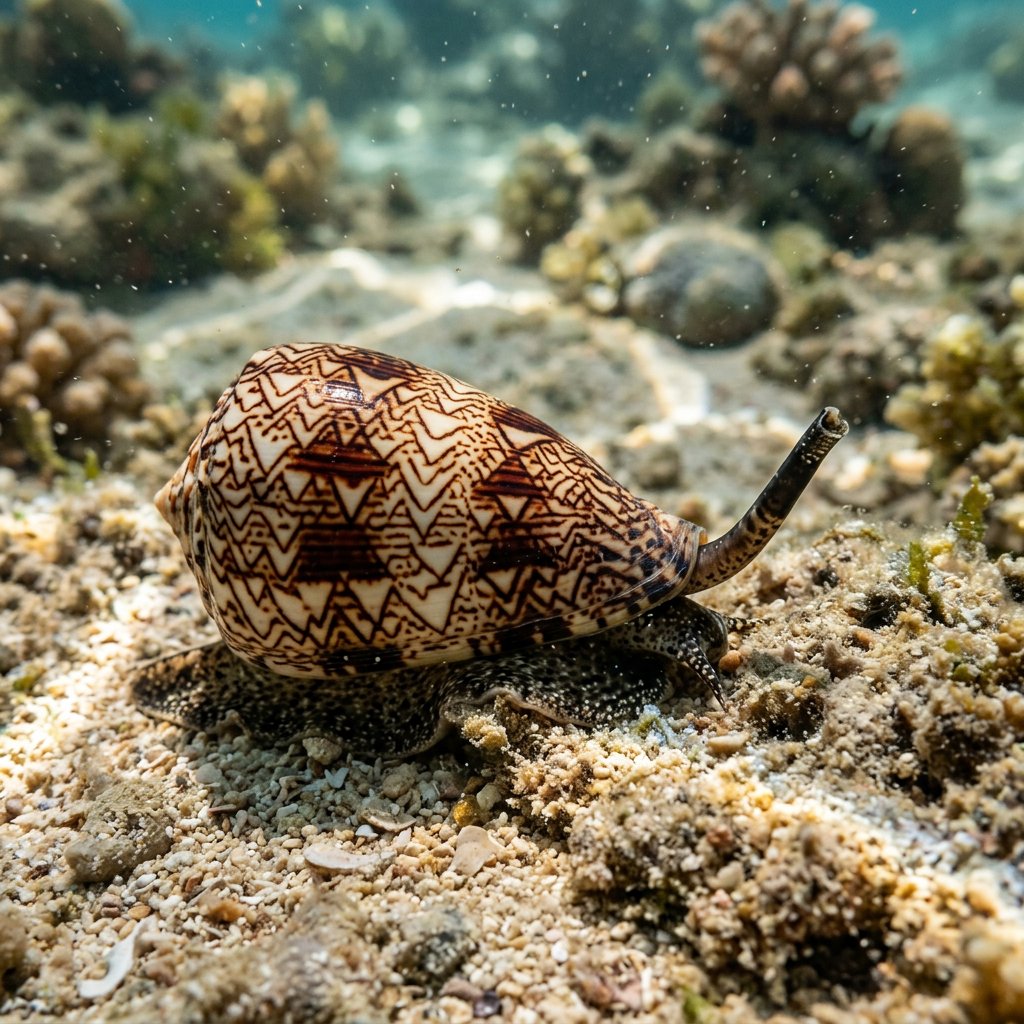
- 🐚 The Conical Shell: Features a classic "cone" shape, tapering down to a narrow point at the base with a broader, often "stepped" or spiraled top.
- 🎨 Geometric Patterns: The shells are typically decorated with intricate maps of reddish-brown or golden spots, dashes, and "tent-like" triangles against a cream or white background.
- 🗡️ Hidden Weaponry: While the snail looks soft, it possesses a "proboscis"—a flexible tube that can fire a tiny, hollow, harpoon-like tooth to inject venom into prey.
🌊 Habitat & Ecology
- 🏖️ Sandy Substrates: These snails are primarily found in tropical and subtropical oceans, often burying themselves in the sand near coral reefs to stay hidden from predators during the day.
- 🦀 The Night Hunter: Conasprella are nocturnal carnivores. They use highly developed chemoreceptors to "smell" prey (like marine worms) in the water, tracking them down across the seafloor before delivering a paralyzing sting.
- 🐚 Shell Variations: Because they live in different depths, some species have evolved thicker shells to withstand the pressure of the deep sea, while others remain light and streamlined for shallow reef life.
⚠️ Safety & Toxicity
- 🚫 WARNING: Every member of the cone snail family, including Conasprella, is venomous. Some species are potentially lethal to humans.
- ⚠️ The Sting: Even if the shell looks empty, never pick it up by the "aperture" (the long opening). A live snail can extend its harpoon and sting the handler.
- 🚑 Medical Concern: A sting can cause intense localized pain, numbness, and in severe cases, muscular paralysis or respiratory failure. There is no anti-venom; treatment is strictly supportive.
✨ Fun Fact
The venom of cone snails (known as conotoxins) is a "pharmacological goldmine." Scientists are currently using these toxins to create new types of painkillers that are 1,000 times more powerful than morphine but are not addictive because they target different receptors in the human nervous system.
More Details








