Info
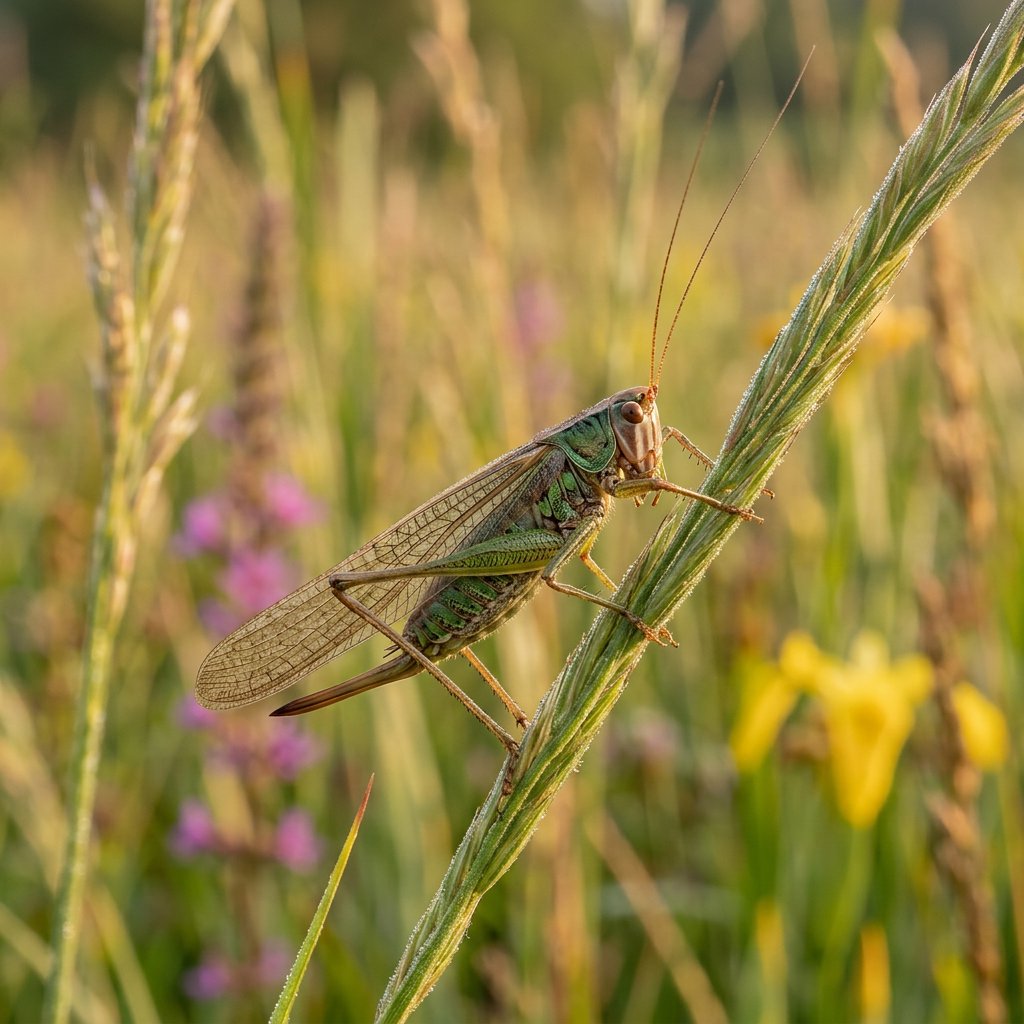
Known for its remarkably sleek profile and unusually long wings, the Long-winged Conehead is a master of hide-and-seek in the meadow. Often found clinging to tall blades of grass, this elegant bush-cricket looks like a living sliver of jade. Its most distinctive feature—the sharply pointed head—gives it a futuristic, aerodynamic look that distinguishes it from its rounder grasshopper cousins.
🔍 How to Identify
- 📐 The "Cone" Head: True to its name, the head is slanted and tapers into a distinct, blunt point at the front.
- 🪽 Extra-Long Wings: Unlike many of its relatives, its translucent wings extend well past the end of its abdomen, allowing for impressive (though infrequent) flight.
- 📡 Sweeping Antennae: It sports incredibly fine, hair-like antennae that can be up to twice the length of its entire body.
- 🎨 Color Palette: Usually a vibrant grass-green, it typically features a single, dark brown stripe running along the top of its head and back.
🌲 Habitat & Ecology
- 🌾 The Tall Grass Life: This insect is a specialist of "edge" habitats—think marshes, reed beds, and overgrown garden borders. It relies on the vertical lines of tall stems to disappear from predators.
- 🍽️ A Mixed Diet: While it primarily feasts on grass seeds and flowers, it is technically an omnivore. In your garden, it acts as a tiny predator, occasionally snacking on small aphids or other soft-bodied pests.
- 🎶 The Ultrasonic Singer: The male produces a very high-pitched, mechanical "z-z-z-z" sound. The frequency is so high that as people age, they often lose the ability to hear this specific insect's song entirely!
⚠️ Safety & Toxicity
- ✅ Harmless Neighbor: The Long-winged Conehead is completely non-toxic and lacks a stinger. It is considered a "friend" to gardeners and nature lovers.
- 👄 Gentle Warning: While it is not aggressive, it does have mandibles for eating seeds. If you pick one up and squeeze it, it may give a tiny, harmless nip in self-defense, but it prefers to use its powerful back legs to leap away.
✨ Fun Fact
The "tail" seen on females isn't a stinger—it's a sword-shaped organ called an ovipositor. They use this specialized tool to precisely slice into grass stems to tuck their eggs safely inside for the winter!
More Details








