Info
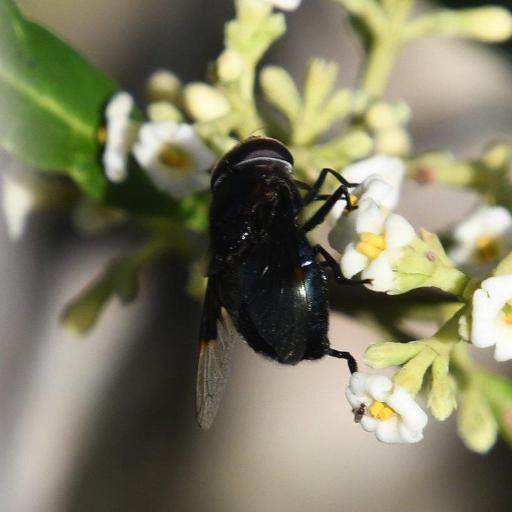
Commonly known as the Mexican Cactus Fly, this large, fuzzy insect is a master of disguise. Often mistaken for a bumblebee or a carpenter bee due to its robust size and hairy body, it is actually a harmless member of the hoverfly family. These flies play a vital role in the desert and tropical ecosystems of the Americas, acting as both specialized pollinators and nature's "clean-up crew" for decaying succulents.
🔍 How to Identify
- 🐝 The Great Pretender: It features a thick, stout body covered in dense hairs, mimicking the appearance of a stinging bee to scare off predators.
- 👀 Fly Eyes: Unlike bees, which have smaller eyes on the sides of their heads, this fly has massive, wrap-around eyes that take up most of its face.
- 🪶 Single Set of Wings: While bees have four wings, the Mexican Cactus Fly has only two clear, powerful wings, which it uses to hover perfectly still in mid-air.
🌵 Habitat & Ecology
- 🌵 Cactus Connection: The larvae (maggots) are specifically adapted to live inside the moist, decaying tissues of fallen Prickly Pear cacti or rotting bromeliads, where they help break down organic matter.
- 🌸 Pollination Partner: Adult flies are frequently seen hovering near flowers. They feed on nectar and pollen, making them essential pollinators for various desert flora.
- 🌎 Sun Lover: They are most active during the brightest parts of the day, darting between shadows and sun-drenched blooms from the Southern United States down through Mexico.
⚠️ Safety & Toxicity
- 🛡️ Status: Completely Harmless. Despite its "scary" bee-like appearance, this insect possesses no stinger and cannot bite.
- 🐶 Safe for All: It is non-toxic and poses no threat to curious pets, children, or gardeners. If one lands on you, it is likely just looking for a salty sweat snack or a place to rest.
✨ Fun Fact
The Mexican Cactus Fly is a prime example of Batesian Mimicry. It spends its entire life "cosplaying" as a dangerous bee so that birds and lizards will think twice before trying to eat it, even though it is entirely defenseless!
More Details








