Info
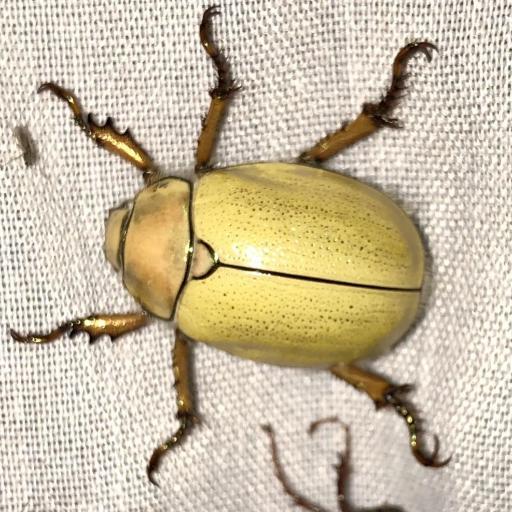
Often mistaken for a piece of lost jewelry glimmering in the sunlight, the Goldsmith Beetle (Cotalpa lanigera) is one of the most striking insects in North America. Its brilliant, metallic gold shell earned it a starring role in literature, famously inspiring the central mystery in Edgar Allan Poe’s short story "The Gold-Bug." While it looks like a precious treasure, this beetle is actually a gentle herbivore that spends its days hiding under leaves to avoid the heat.
🔍 How to Identify
- ✨ Metallic Sheen: The most distinct feature is its smooth, highly polished yellow-gold elytra (wing covers) that can appear greenish or lemon-yellow depending on the light.
- 🧶 Wooly Underside: Its species name lanigera translates to "wool-bearing," referring to the thick, cream-colored fuzz covering its chest and belly.
- 🛡️ Robust Build: It has a heavy, oval-shaped body, typically measuring about an inch long, with strong legs designed for clinging to branches.
🌲 Habitat & Ecology
- 🍃 Leafy Buffet: Adult Goldsmith Beetles are nocturnal feeders that favor the foliage of deciduous trees, particularly Willows, Cottonwoods, Poplars, and Oaks.
- 🌙 Night Owls: You are most likely to spot them near porch lights or streetlamps during late spring and early summer evenings, as they are strongly attracted to artificial light sources.
- 🪵 Root Dwellers: As larvae, they live underground for one to two years as "white grubs," feeding on rotting wood and plant roots before emerging as golden adults.
⚠️ Safety & Toxicity
- ✅ Harmless Friend: The Goldsmith Beetle is completely non-toxic and lacks any mechanism to bite or sting humans.
- 🐾 Pet Friendly: They pose no threat to curious cats or dogs; however, their hard exoskeleton can be a bit crunchy and difficult for small pets to digest if swallowed.
✨ Fun Fact
Despite its heavy, metallic appearance, the Goldsmith Beetle is an excellent flyer. It was famously used by Edgar Allan Poe to symbolize a literal "gold bug" that led a character to buried pirate treasure!
More Details








