Info
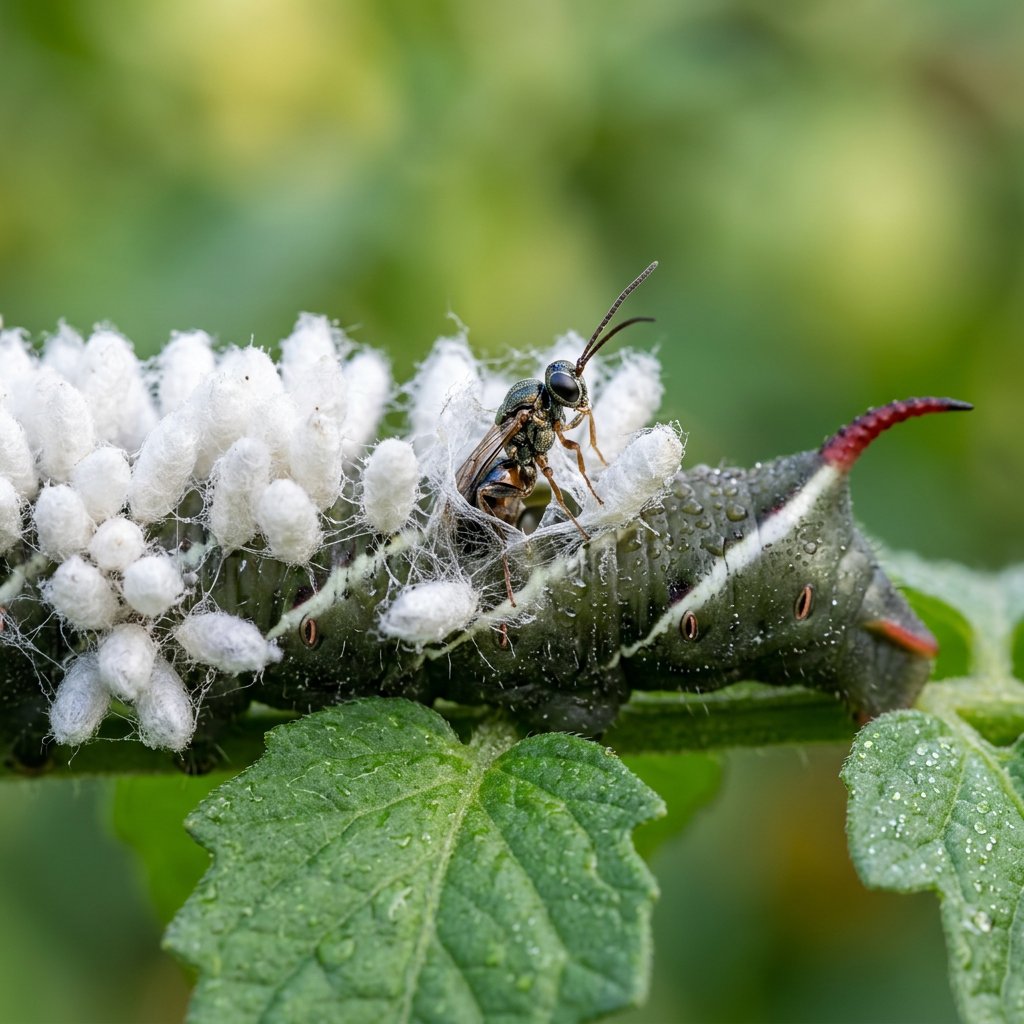
Often called the "Hornworm Wasp," Cotesia congregata is a tiny guardian of the vegetable patch. While its life cycle sounds like a sci-fi horror movie, it is one of the most effective natural pest controllers for anyone growing tomatoes or peppers. If you see a caterpillar covered in what looks like white "rice grains," you’ve found a miniature battlefield where nature is working in your favor.
🔍 How to Identify
- 🐝 The Adult: These wasps are incredibly small—only about 2-3mm long. They have slender black bodies, long antennae, and clear, delicate wings. They move quickly and are rarely seen by the naked eye.
- 🍚 The Cocoons: This is the most famous identifying feature. Dozens of small, white, silk-spun cylinders stand upright on the back and sides of a host caterpillar.
- 🐛 The Host: They are almost exclusively found attached to Tobacco Hornworms or Tomato Hornworms. The host caterpillar will usually look "deflated," stop feeding, and become very still.
🌲 Habitat & Ecology
- 🍅 Garden Protector: You will find these wasps wherever nightshade plants (tomatoes, peppers, tobacco, and eggplants) are growing. They are attracted to the chemical signals released by plants that are being chewed on by caterpillars.
- 🧬 Internal Diet: The wasp larvae feed on the internal fluids of the hornworm. Remarkably, they avoid eating the caterpillar's vital organs, keeping the host alive and "fresh" just long enough for the larvae to emerge and spin their cocoons.
- 🛡️ Biological Control: Because they kill one of the most voracious garden pests, they are considered a "beneficial insect." They help maintain the balance of the ecosystem without the need for chemical pesticides.
⚠️ Safety & Toxicity
- ✅ Harmless to Humans: Despite being "wasps," they are completely non-aggressive. They do not have a defensive stinger and cannot sting humans or pets. They are focused entirely on their caterpillar hosts.
- 🌿 Pro-Tip: If you find a hornworm covered in white cocoons, do not remove it or kill it. Let the wasps hatch; they will fly off to find more hornworms, providing free pest control for your entire neighborhood.
✨ Fun Fact
When the mother wasp lays her eggs, she also injects a specialized "polydnavirus" into the caterpillar. This virus actually rewrites the caterpillar's immune system so it doesn't attack the wasp eggs, effectively "hacking" the host's body!
More Details








