Info
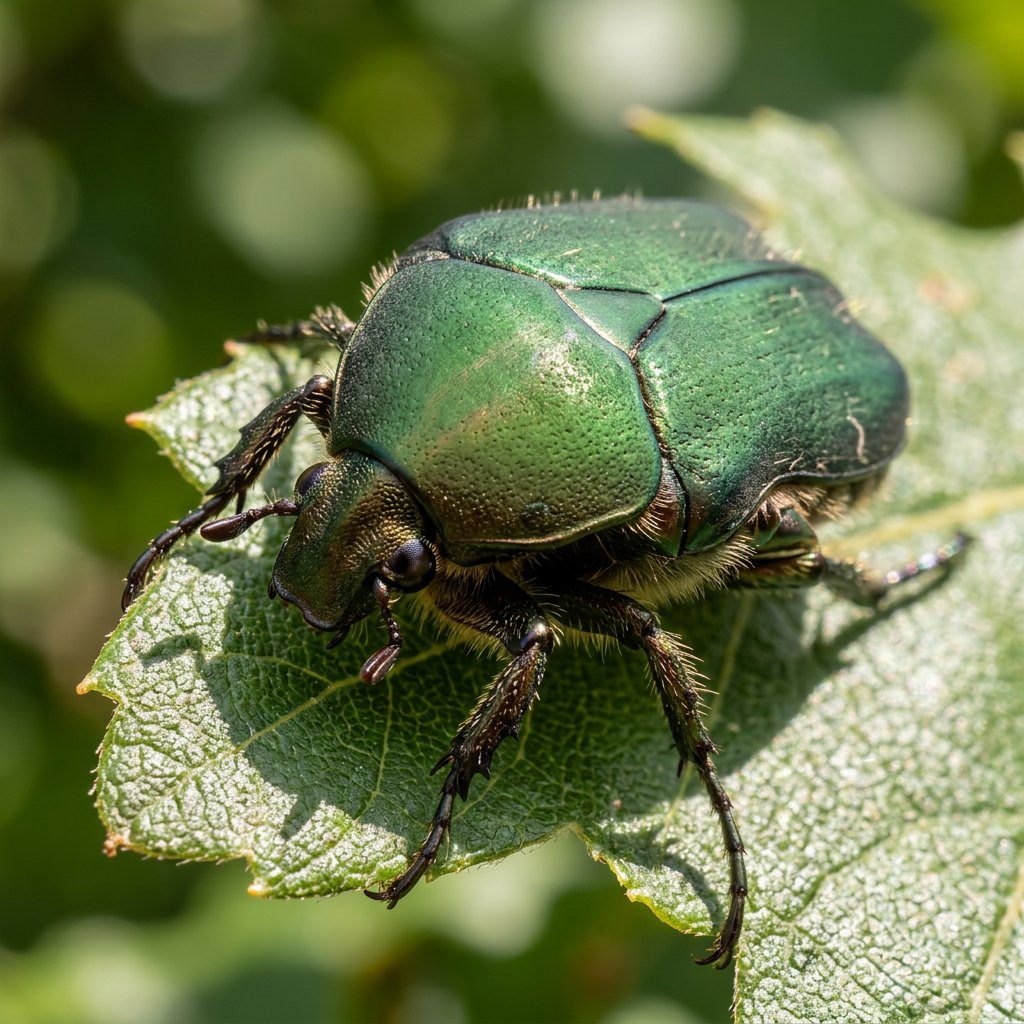
Often called the Green June Beetle, this emerald-colored aviator is a hallmark of warm summer afternoons in the Eastern United States. Known for its bumbling, loud flight patterns, it often startles gardeners by buzzing past like a tiny, metallic drone. While its sheer size and noise can be intimidating, this beetle is a harmless, albeit clumsy, neighbor that spends its days searching for sweet nectar and overripe fruit.
🔍 How to Identify
- 🎨 Metallic Sheen: The upper body is a velvet-like dull green, but if you catch it in the light or flip it over, it reveals a brilliant, polished metallic green and gold underside.
- 🛡️ Body Shape: It has a broad, shield-like shape, typically reaching about an inch in length, making it much larger than the notorious Japanese Beetle.
- 🪽 Yellow Margins: Look for thin, brownish-yellow stripes along the outer edges of the wing covers (elytra) which help distinguish it from other green beetles.
🌲 Habitat & Ecology
- 🍎 Dietary Habits: As adults, they are "fruit-eaters." They are particularly fond of thin-skinned fruits like peaches, grapes, and figs, often gathering in groups to feast on fermented or bruised produce.
- 🌱 Soil Dwellers: The larvae (grubs) live underground, where they help decompose organic matter. Interestingly, these grubs have a unique way of moving—they crawl on their backs with their legs sticking up in the air!
- ☀️ Sun Lovers: Unlike many other beetles that are nocturnal, the Green June Beetle is strictly diurnal, meaning it is most active during the brightest, hottest parts of the day.
⚠️ Safety & Toxicity
- ✅ Status: Completely harmless to humans and pets.
- 🦶 Details: They do not sting or bite. Their legs are quite spiny, which might feel like a tiny scratch if they land on you, but they possess no venom. They are a "nuisance" only to ripening fruit crops, not to your health.
✨ Fun Fact
The Green June Beetle's larvae are nicknamed "crawly-backs." Because their legs are so weak, they flip over and use stiff bristles on their backs to "row" through the soil and across the ground, looking like they are performing a tiny, upside-down backstroke.
More Details








