Info
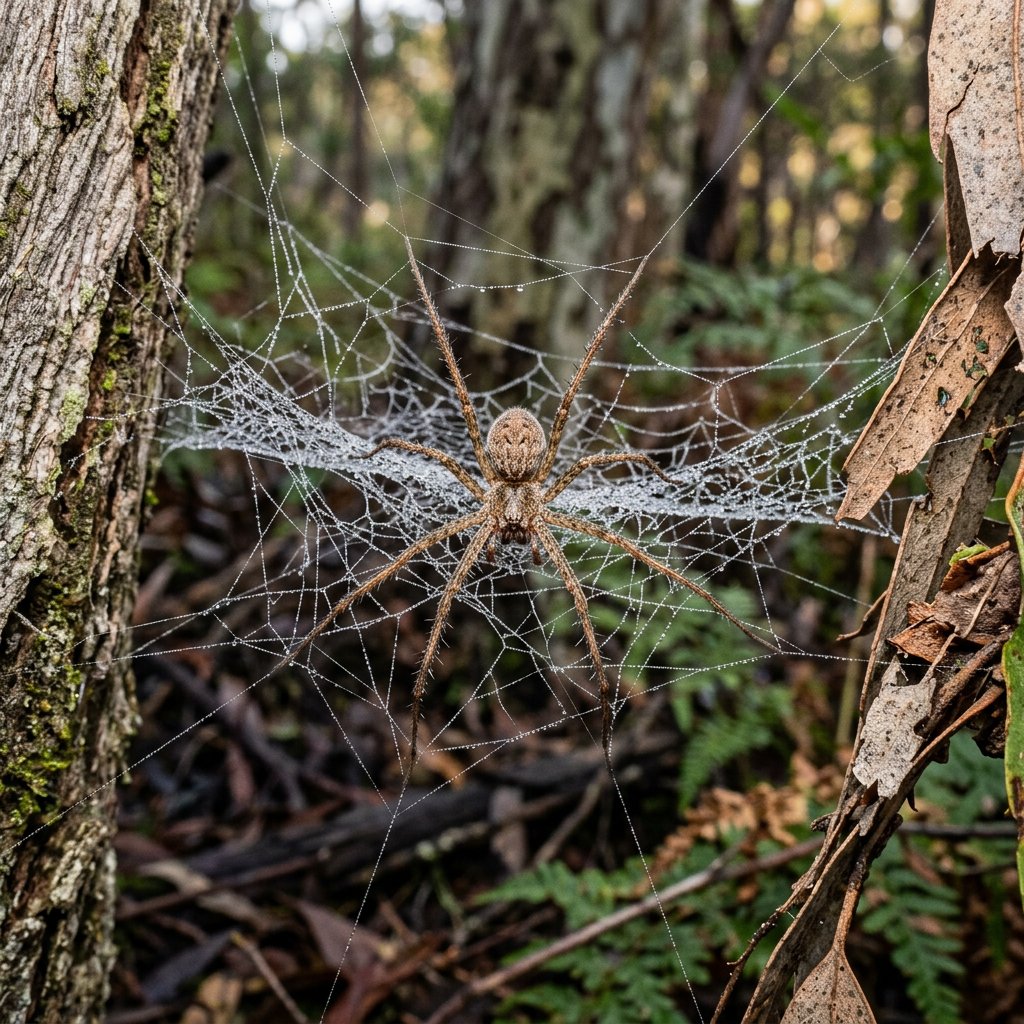
Known as the Long-legged Cobweb Spider, this delicate architect is a master of the "messy" home. Often found tucked away in the quiet corners of garden sheds or under the eaves of your house, it is a silent guardian against crawling pests. While its scientific name gigantipes translates to "giant feet," don't be alarmed—this refers to its incredibly long, spindly legs rather than its actual body size.
🔍 How to Identify
- 🕷️ The Legs: Features exceptionally long, needle-thin legs that are much longer than the rest of its body, giving it a somewhat "stilt-like" appearance.
- 🎈 Abdomen Shape: The body is small and bulbous, often shaped like a teardrop or a rounded pea, typically colored in shades of cream, tan, or mottled brown.
- 🕸️ Web Structure: Unlike the classic circular "orb" webs, this spider builds a chaotic-looking "tangle-web" or cobweb that lacks a symmetrical pattern.
🌲 Habitat & Behavior
- 🐜 The Ant Hunter: It is a specialized predator that often builds its web near the ground or along walls to catch crawling insects like ants and small beetles.
- 🏘️ Shelter Seeker: It prefers dark, dry, and undisturbed areas. You are most likely to find them behind outdoor furniture, inside garages, or nestled within thick leaf litter in the garden.
- 🧶 Sticky Tripwires: They use "gum-foot" lines—strands of silk with sticky droplets at the bottom—that act like spring-loaded traps to pull unsuspecting prey off the ground.
⚠️ Safety & Toxicity
- 🟢 Status: Harmless and non-aggressive. This spider would much rather retreat into a crack than face a human.
- 🛡️ Human & Pet Interaction: While they do possess venom to subdue insects, their fangs are generally too small to penetrate human skin. They are not considered medically significant to humans or pets. If you find one inside, it can be easily moved outdoors using the "cup and paper" method.
✨ Fun Fact
The Cryptachaea gigantipes is a master of tension; when an insect hits one of its "tripwire" strands, the silk line snaps and recoils, physically lifting the prey off the ground and leaving it dangling helplessly in the air!
More Details








