Info
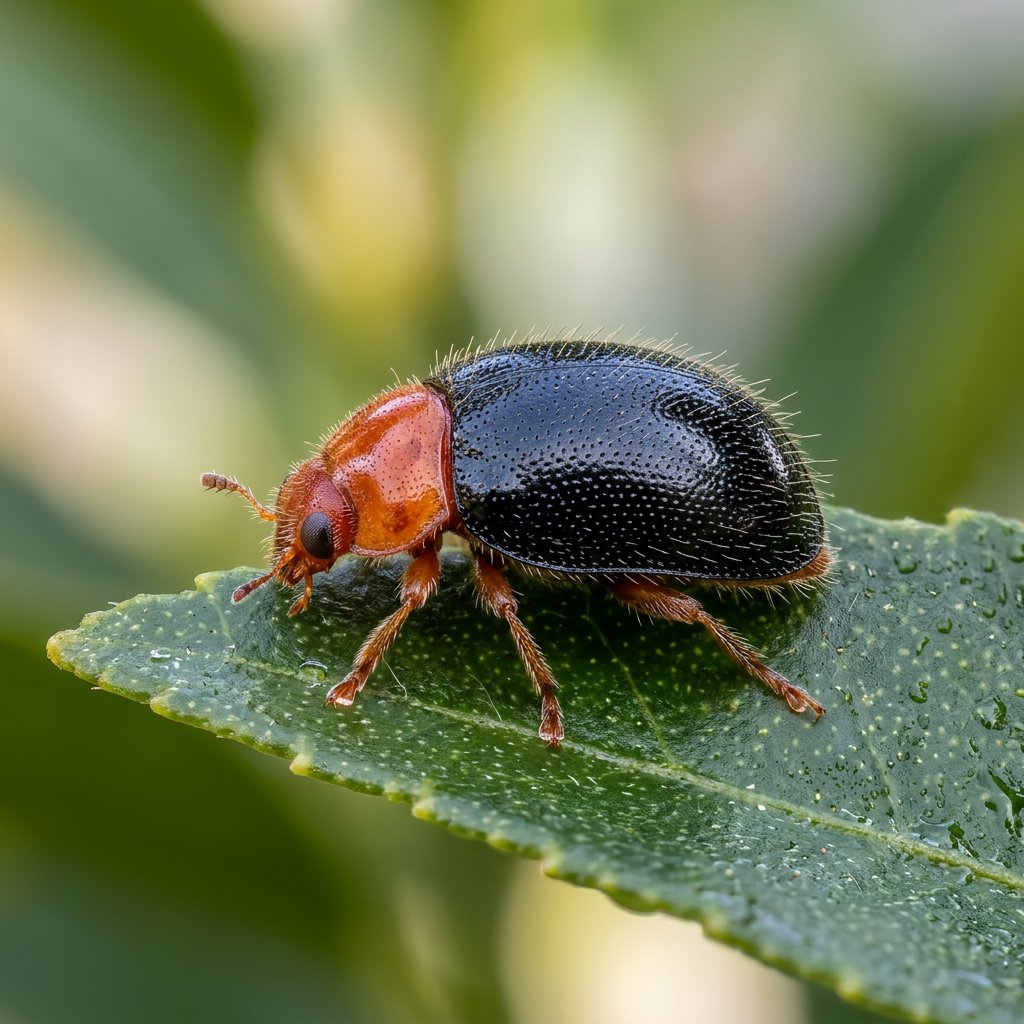
Often called the "Mealybug Destroyer," this tiny Australian lady beetle is a gardener’s secret weapon and a masterpiece of natural mimicry. While the adults look like sophisticated little beetles, their larvae are famous for "going undercover"—they grow long, white, waxy tufts to look exactly like the very pests they eat, allowing them to infiltrate mealybug colonies undetected.
🔍 How to Identify
- 🐞 The Adult Form: A small, oval-shaped lady beetle about 4mm long with a dark, metallic black body and a distinctive dull orange or "tan" head and tail.
- 🐛 The "Sheep" Larvae: The larvae are covered in long, white, shaggy wax filaments. They look like mealybugs on steroids, often growing twice as large as their prey.
- 💨 Movement: Unlike the slow-moving mealybugs they mimic, Cryptolaemus larvae are quite mobile and will crawl away quickly if disturbed.
🌲 Habitat & Ecology
- 🍽️ The Ultimate Predator: These insects are obligate predators; both the adults and the larvae spend their entire lives hunting mealybugs and certain soft scales. A single larva can devour up to 250 mealybugs before reaching adulthood.
- 🛡️ Biological Security: They are the "special forces" of the greenhouse world. Because they are so effective, they are commercially reared and released worldwide to clear infestations in orchards and indoor plant collections without the use of chemicals.
- ☀️ Temperature Sensitivity: They thrive in warm, humid environments. If the temperature drops too low, they become sluggish, which is why they are most active in late spring and summer.
⚠️ Safety & Toxicity
- ✅ Garden Friend: This insect is 100% beneficial and poses no threat to humans, pets, or your prize-winning foliage.
- 🚫 Chemical Sensitivity: Because they are living biocontrols, they are highly sensitive to broad-spectrum insecticides. If you see them in your garden, stop spraying, or you'll accidentally kill your best tiny bodyguards.
✨ Fun Fact
The Mealybug Destroyer’s disguise is so convincing that it even fools ants! Ants often protect mealybugs from predators in exchange for sugary honeydew, but they leave the Cryptolaemus larvae alone because they look just like part of the "herd."
More Details








