Info
Known as the Cat Flea, Ctenocephalides felis is the tiny Olympic jumper that causes more pet-owner headaches than almost any other pest. Despite its name, it isn't a picky eater and will happily snack on dogs, rabbits, or even humans if the opportunity arises. These ancient hitchhikers have perfected the art of "living off the land"—where the "land" is your favorite furry friend.
🔍 How to Identify
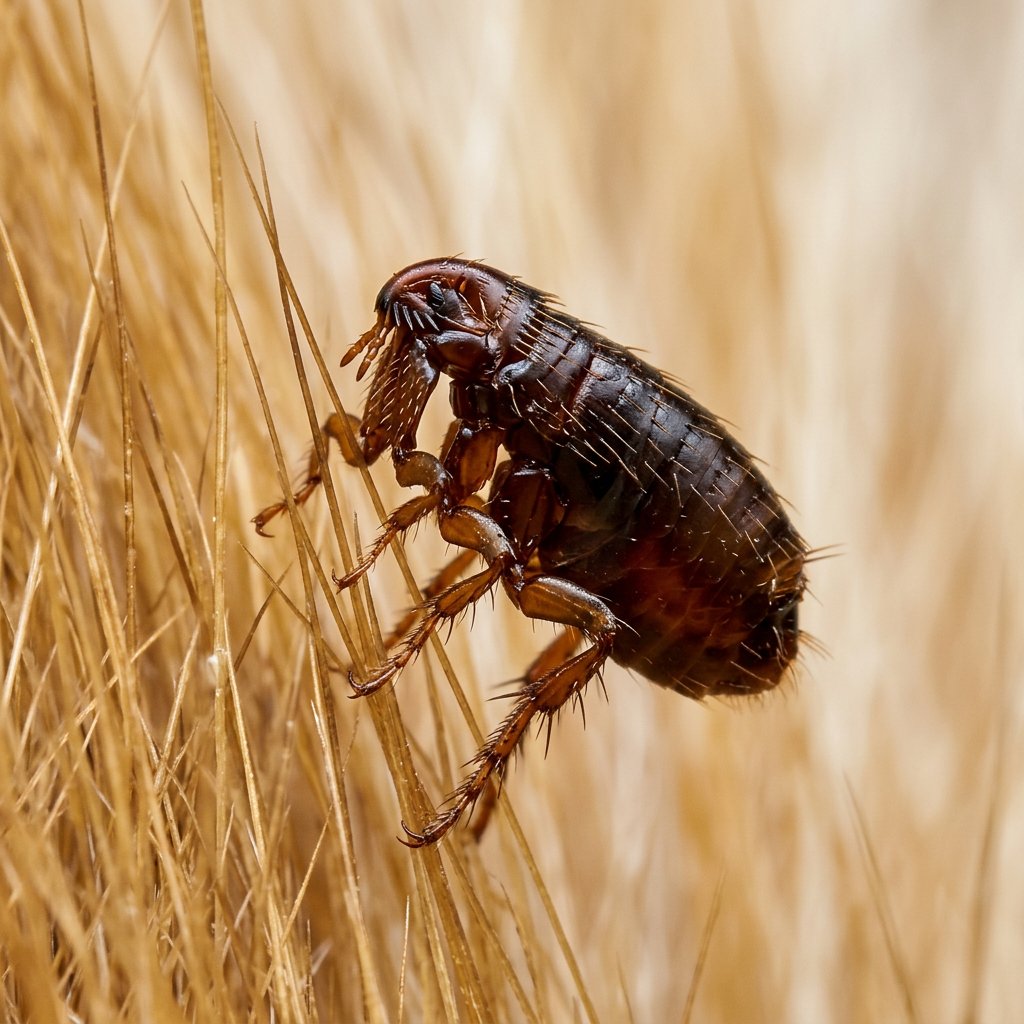
- 🦟 Body Shape: They are laterally compressed, meaning they look like they’ve been squeezed from the sides. This unique shape allows them to zip through thick fur or hair like a hot knife through butter.
- 🎨 Coloring: These wingless insects are a glossy, reddish-brown to deep black, with a hard outer shell (sclerites) that makes them surprisingly difficult to crush between your fingers.
- 🦵 Powerful Rear: They possess disproportionately large hind legs designed for explosive jumping, which is their primary mode of "flight" since they lack wings entirely.
🌲 Habitat & Ecology
- 🐾 The Host Forest: While the adults spend most of their time in the warm, humid environment of a host's fur, they are rarely solitary. If you see one flea on your pet, there are likely hundreds of eggs and larvae hiding in your carpets or floor cracks.
- 🩸 The Diet: Adults are obligate blood-feeders, requiring a meal to reproduce. Interestingly, the larvae do not drink blood directly; instead, they scavenge on "flea dirt"—the nutrient-rich, dried blood excreted by the adult fleas.
⚠️ Safety & Toxicity
- 🚫 Bite Irritation: While they do not have a venomous sting, their saliva contains anticoagulants that often trigger Flea Allergy Dermatitis (FAD). This causes intense itching, redness, and potential skin infections from over-grooming.
- 🦠 Hidden Dangers: Cat fleas are notorious "middle-men" for parasites. They are the primary intermediate host for the Double-Pore Tapeworm; if a pet swallows an infected flea while grooming, they can develop an internal parasitic infection. They can also transmit Bartonella, the bacterium responsible for "Cat Scratch Fever."
✨ Fun Fact
A cat flea can jump up to 150 times its own body length. To put that in perspective, if a human had the same proportional leg strength, they would be able to leap over the Eiffel Tower in a single bound!
More Details








