Info
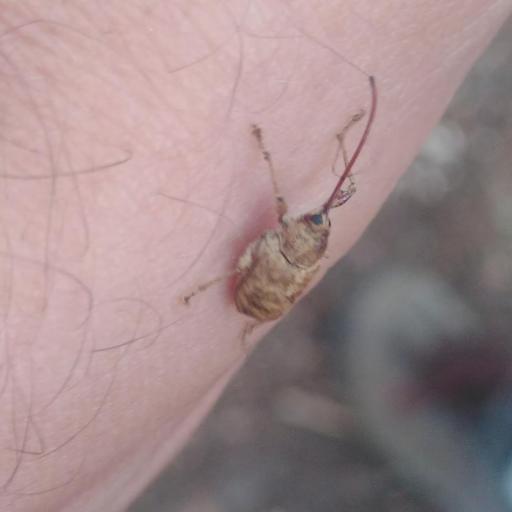
The Curculio elephas, better known as the Elephant Weevil, looks like a tiny armored tank with a built-in drill. Its name comes from its exceptionally long snout, which mimics an elephant's trunk in a way that feels both prehistoric and slightly comical. Often found hanging around oak and chestnut trees, this beetle is a master of the woodland nut-cracking business.
🔍 How to Identify
- 🐘 The Snout (Rostrum): Its most striking feature is a very long, slender, and downward-curved snout that can sometimes be longer than its entire body.
- 🛡️ Body Armor: It has a robust, oval body covered in fine, tan-to-greyish scales that provide excellent camouflage against tree bark and dried leaves.
- 📡 Elbowed Antennae: Look closely at the snout; halfway down the length, you will see "elbowed" or jointed antennae that help the weevil navigate its environment.
🌲 Habitat & Ecology
- 🌰 Nut Specialist: This insect is a dedicated specialist of chestnuts and acorns. The female uses her long snout to drill a deep, narrow hole into a developing nut to deposit her eggs safely inside.
- 💤 The Long Nap: Once the larvae finish eating the inside of a nut, they burrow into the soil. They can stay underground for several years, waiting for the perfect environmental conditions to emerge as adults.
⚠️ Safety & Toxicity
- ✅ Harmless to Humans: Despite the intimidating "needle" on its face, the Elephant Weevil is completely harmless to people and pets. It does not sting, and its mandibles are too small and specialized to bite humans.
- 🌳 Garden Impact: While it poses no physical threat to you, it is considered a pest by chestnut growers. If you see them, your local nut crop might end up with "wormy" surprises inside the shells.
✨ Fun Fact
The female's snout isn't just a straw; it’s a high-powered drill. She has tiny, sharp mandibles at the very tip of that long "trunk," allowing her to bore through the toughest green husks that even humans struggle to open without tools!
More Details








