Info
The Acorn Weevil (Curculio glandium) looks like a tiny creature straight out of a sci-fi movie, thanks to its incredibly long, needle-like nose. Known as one of nature’s most specialized "drillers," this beetle is a common inhabitant of oak forests. While their appearance might seem intimidating, they are harmless little engineers focused entirely on the life cycle of the oak tree.
🔍 How to Identify
- 👃 The Rostrum: Its most striking feature is a long, curved snout (rostrum) that, in females, can actually be longer than the rest of its entire body.
- 🛡️ Body Shape: A robust, pear-shaped body covered in fine, tan to reddish-brown scales that create a camouflaged, mottled pattern to blend in with autumn leaves.
- 📐 Elbowed Antennae: Look closely at the snout; you will see a pair of "L-shaped" antennae branching off halfway down the length, which is a classic trait of the weevil family.
🌲 Habitat & Ecology
- 🌳 The Oak Connection: As the name suggests, these insects are oak specialists. You will find them crawling on branches or resting on developing acorns during the summer months.
- 🏗️ Master Driller: The female uses her snout like a biological drill bit to bore a microscopic hole into a green acorn. She then lays her eggs inside, ensuring her larvae have a high-protein "lunchbox" to eat as they grow.
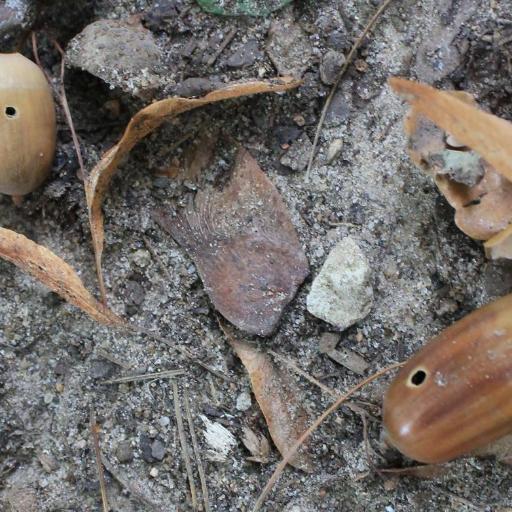
- 🍂 Lifecycle: If you find an acorn on the ground with a perfect, tiny circular hole, you’ve found a "graduate." The larva eats the nut meat, bores its way out, and then tunnels into the soil to live for up to two years before emerging as an adult.
⚠️ Safety & Toxicity
- ✅ Harmless Friend: The Acorn Weevil is completely safe. They do not bite, sting, or carry any diseases that affect humans or pets.
- 🌿 Plant Health: While they can prevent specific acorns from sprouting into trees, they are a natural part of the forest ecosystem and are not considered a "pest" that requires chemical intervention in a standard home garden.
✨ Fun Fact
The tip of the weevil's long snout actually contains tiny, sharp mandibles. To drill into a hard acorn, the weevil moves its entire body in a circular motion, using the long snout as a lever to create a hole with mechanical precision!
More Details








