Info
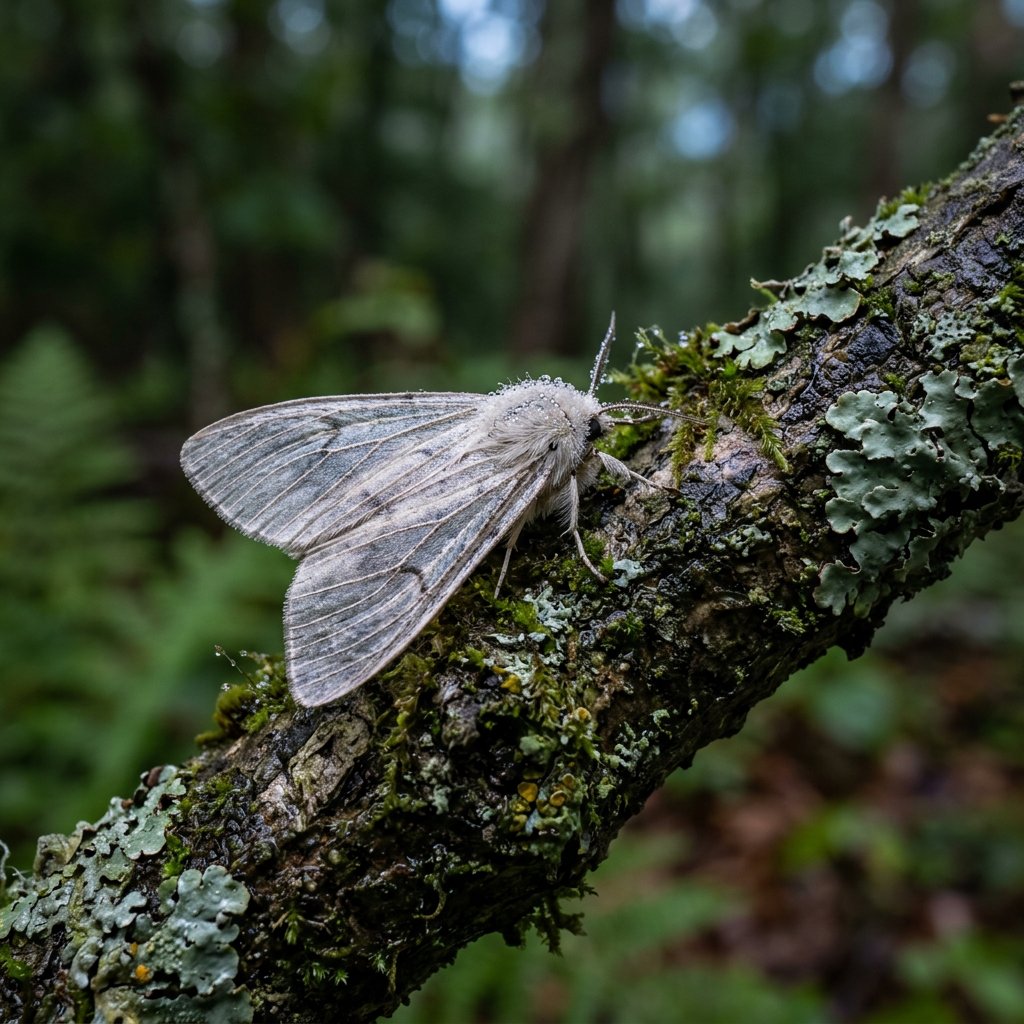
Often mistaken for a stray piece of white lint or a tiny feather, the Collared Cycnia is a ghostly elegant moth that frequents sun-drenched meadows. While it looks delicate and pure, this insect is a "chemical warrior" that spends its life feeding on toxic plants to become unpalatable to predators. It is a close relative of the more famous Tiger Moths, sharing their secret ability to talk back to bats using sound.
🔍 How to Identify
- 🏳️ Wings: Both the forewings and hindwings are a pristine, solid snowy white with no spots or patterns.
- 🧣 The Collar: Its most defining feature is a bright yellow or orange "collar" (the prothorax) located right behind its head, contrasting sharply with its white body.
- 🟡 Abdomen: If you catch a glimpse of its belly, you’ll see a vibrant yellow abdomen decorated with a row of small black dots—a classic warning sign in nature.
🌲 Habitat & Ecology
- 🌿 Milkweed Specialist: Like the Monarch butterfly, the Collared Cycnia caterpillar thrives on Dogbane and Milkweed. It doesn't just eat these plants; it steals their toxins to make its own body poisonous.
- 🔊 Sonic Shield: These moths have a unique "tymbal" organ. When a bat hunts them using sonar, the moth emits ultrasonic clicks that can "jam" the bat’s radar or warn the predator that this white snack tastes absolutely terrible.
⚠️ Safety & Toxicity
- 🟢 Status: Harmless to handle, but toxic to eat.
- 🚫 Details: While they don't bite or sting, their bodies contain cardenolides (heart poisons) sequestered from their diet. Keep curious pets from snacking on them. Additionally, some people may experience mild skin irritation if they handle the fuzzy, "hairy" caterpillars, as the bristles can act as a mechanical irritant.
✨ Fun Fact
The Collared Cycnia is a master of the "Aposematic" strategy; even though its wings are white, its bright yellow body tells predators, "I might look like a marshmallow, but I taste like bitter medicine!"
More Details








