Info
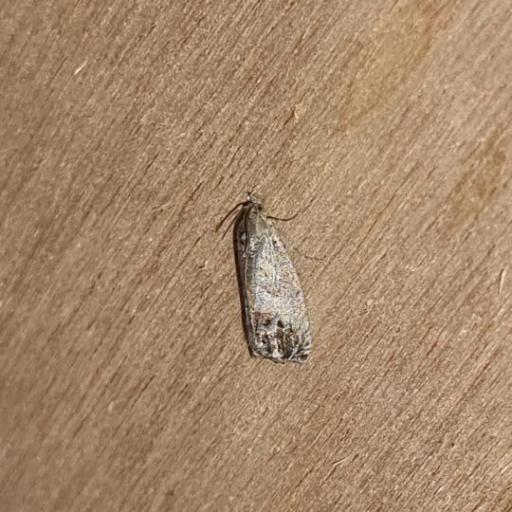
Known as the world’s most famous "Worm in the Apple," Cydia pomonella is the architect behind that classic cartoon image of a caterpillar peeking out of a piece of fruit. While the adult moth is a subtle master of camouflage, its larvae are world-renowned for their specialized appetite for orchard harvests, making them a legendary figure in both folklore and agriculture.
🔍 How to Identify
- 🦋 The "Mirror": The most distinguishing feature is a shimmering, copper or bronze circular patch (called an ocellus) located at the very tips of the forewings.
- Bark-like Wings:** Their wings are mottled with delicate grey and soft brown scales, perfectly designed to mimic the texture of tree bark.
- 🐛 The Larvae: If you find one inside an apple, it will be a pale pink or creamy-white caterpillar with a dark, reddish-brown head.
🍎 Habitat & Ecology
- 🌳 Orchard Specialist: You will primarily find them wherever pome fruits grow—specifically apples, pears, quinces, and even walnuts. They are rarely found far from their host trees.
- 🌙 Night Owls: Adult moths are strictly nocturnal, emerging at dusk to mate and lay eggs on leaves or developing fruit. You’ll rarely see them active during the heat of the day.
- 🚜 The Seed Seeker: Unlike other pests that nibble on leaves, this insect tunnels directly into the heart of the fruit. Its goal is the core, where it feeds on the nutrient-dense seeds to power its transformation.
⚠️ Safety & Toxicity
- 🛡️ Status: Completely harmless to humans. They do not bite, sting, or carry any toxins or diseases.
- 🍏 Garden Foe: While they aren't a threat to your health, they are a major "foe" for your garden. Their tunneling often introduces bacteria or fungi into the fruit, causing it to rot prematurely.
- 🐕 Pet Safety: If your dog accidentally eats an apple containing a larva, there is no need for concern; they are non-toxic to pets.
✨ Fun Fact
The Codling Moth is such a persistent traveler that it has successfully followed humans to every single continent where apples are grown, except for Antarctica! Documented for centuries, it is one of the most studied insects in history due to its clever "hide-and-seek" life cycle inside the fruit.
More Details








