Info
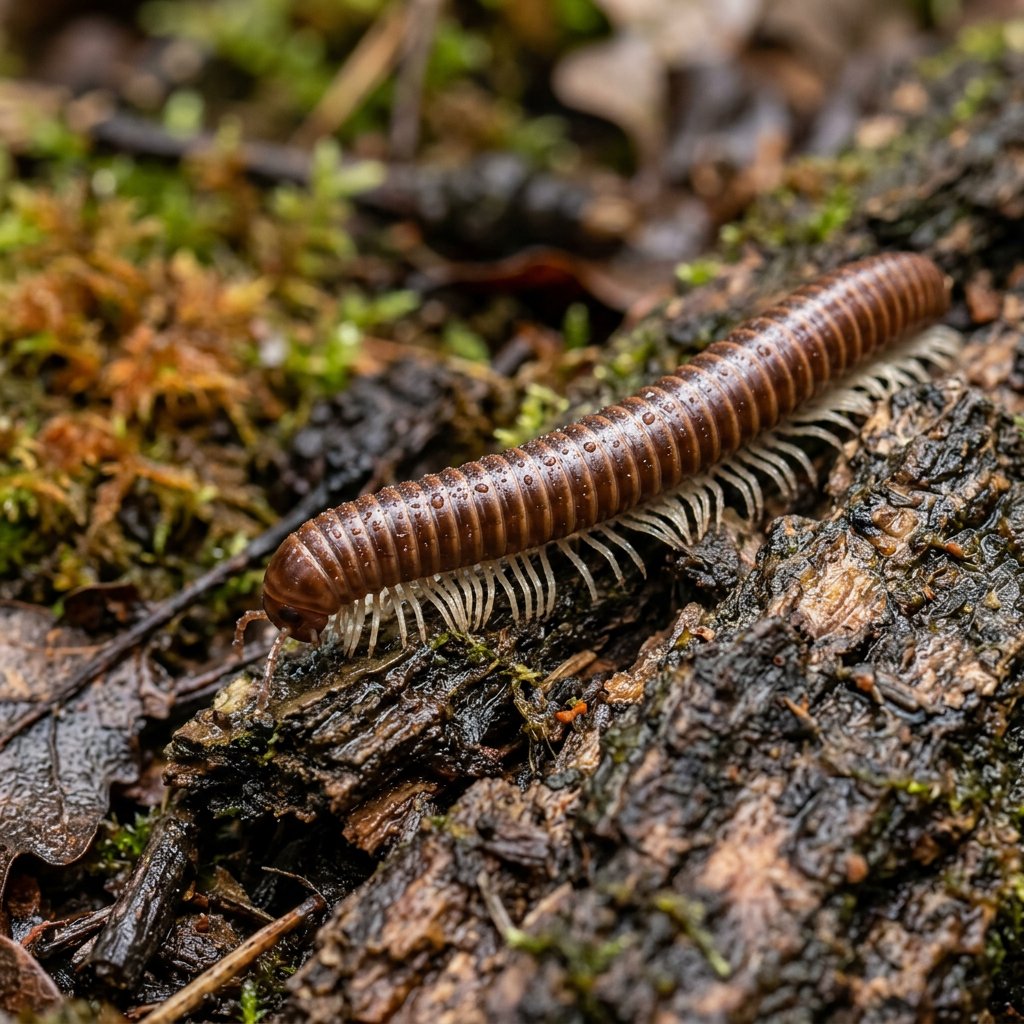
Often called the Blunt-tailed Snake Millipede, this little critter is a master of the underworld—specifically, the world of damp leaves and rotting wood. While its many-legged crawl might look intimidating to some, it is one of nature’s most vital recyclers, quietly turning old debris into nutrient-rich soil. It is frequently found tucked away in the crevices of ancient trees, acting as a tiny, armored janitor of the forest floor.
🔍 How to Identify
- 🪵 The Body: It has a smooth, cylindrical shape that resembles a miniature, polished twig or a thick piece of wire, usually reaching about 2–3 centimeters in length.
- 🟤 The Side Spots: Look for a row of dark, reddish-brown or black dots along each side of its pale-cream or brown body; these are actually its defensive scent glands (ozopores).
- 🛡️ The Blunt Tail: Unlike some of its relatives that have a pointed "spike" at the rear, this species ends in a noticeably rounded, blunt tail-segment.
🌲 Habitat & Ecology
- 🍂 Forest Janitor: This millipede is a detritivore, meaning it spends its life eating "trash"—specifically decaying bark, moss, and rotting leaves. It plays a crucial role in the ecosystem by breaking down organic matter.
- 🧗 Bark Dweller: While many millipedes stay buried in the dirt, the Blunt-tailed Snake Millipede is a skilled climber. It is most commonly found under the peeling bark of dead logs or deep within leaf litter in damp woodlands and gardens.
⚠️ Safety & Toxicity
- 🛡️ Harmless Friend: This millipede is completely non-aggressive. It does not have a stinger and its mandibles are far too weak to bite humans or pets.
- 👃 Chemical Defense: When threatened, it will curl into a tight, watch-spring spiral. If handled roughly, it may secrete a faint, pungent-smelling yellow liquid. While not toxic to touch, this liquid can stain skin and should be kept away from your eyes and mouth.
✨ Fun Fact
Despite the name "millipede" meaning "thousand feet," the Cylindroiulus punctatus doesn't even come close! Most adults have between 40 and 100 legs, adding a few more every time they molt and grow.
More Details








