Info
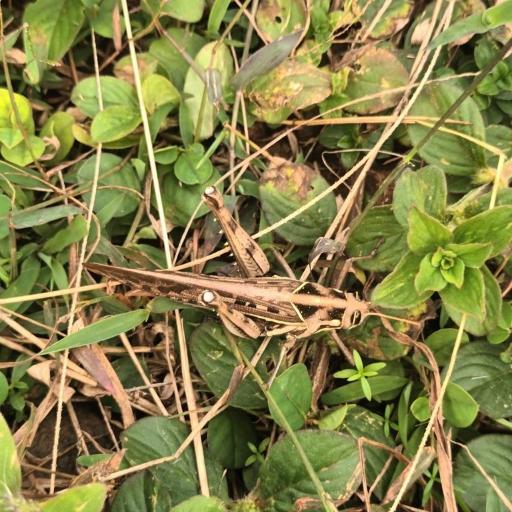
Often called the Brown-spotted Locust, Cyrtacanthacris tatarica is a majestic giant of the grasshopper world. While it shares the "locust" name, it lacks the aggressive, plague-forming swarming behavior of its more infamous cousins. Its intricate, leopard-like wing patterns make it look like a piece of living camouflage found dancing across the landscapes of Africa and Asia.
🔍 How to Identify
- 🟤 Spotted Wings: Its most striking feature is its large, translucent forewings which are heavily dappled with dark brown, irregular spots.
- 🦒 Robust Build: This is a large insect, often reaching up to 8cm in length, with a thick, powerful body designed for long-distance travel.
- 🛡️ Saddle Pronotum: The area behind the head (the pronotum) has a distinct "saddle" shape, often marked with a pale longitudinal stripe running down its back.
🌲 Habitat & Ecology
- 🌿 Dietary Habits: As a generalist herbivore, it enjoys a wide menu of leafy greens, shrubs, and trees. While it usually lives a solitary life, it can occasionally become a pest in cotton, citrus, and tobacco fields.
- ✈️ Expert Traveler: Unlike smaller grasshoppers that just hop, this species is an incredibly strong flyer. It uses its powerful wings to migrate toward areas with recent rainfall to find the lushest vegetation.
⚠️ Safety & Toxicity
- 🟢 Harmless to Humans: This insect is completely non-toxic and lacks any form of stinger or venomous bite.
- 🦵 Spiny Legs: While it isn't aggressive, its powerful hind legs are lined with sharp spines. If you pick one up, it may kick defensively, which can feel like a prickly scratch to sensitive skin.
✨ Fun Fact
In many regions across Africa and Southeast Asia, these locusts are considered a highly nutritious "superfood." They are frequently harvested, toasted, and eaten as a protein-rich snack that tastes surprisingly like nutty shrimp!
More Details








