Info
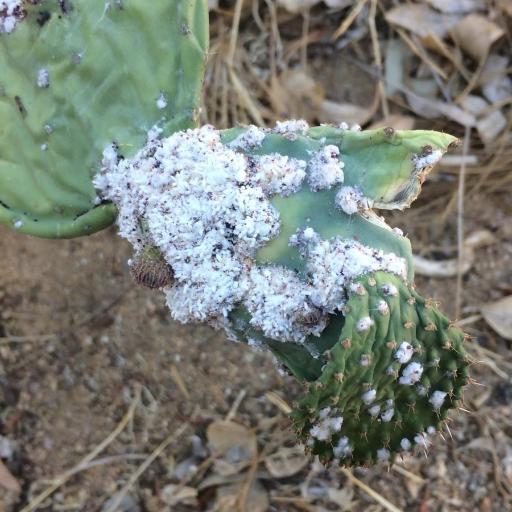
Known globally as the source of carmine dye, the Cochineal is an unassuming scale insect that once fueled empires and funded wars. These tiny creatures spend their lives anchored to Prickly Pear cacti, hiding under a protective layer of white, cottony wax. If you’ve ever worn red lipstick or eaten a strawberry-colored candy, there is a good chance you’ve already encountered the incredible legacy of this "Crimson Gold."
🔍 How to Identify
- ☁️ White Waxy Coating: They appear as small, fluffy white spots or "moldy" patches on the pads of Prickly Pear cacti. This wax protects them from the sun and predators.
- 🥯 Oval Body Shape: Beneath the wax, the females are soft-bodied, wingless, and oval-shaped. They are quite small, usually measuring only about 5mm in length.
- 🎨 The "Squish" Test: If you gently rub one of the white tufts between your fingers, it will immediately transform into a brilliant, deep scarlet-red liquid.
🌲 Habitat & Ecology
- 🌵 Cactus Specialists: These insects are parasitic specialists. They use their needle-like mouthparts to pierce the skin of the Opuntia (Prickly Pear) cactus to drink the nutrient-rich sap.
- 🛡️ Sessile Lifestyle: Once a female Cochineal finds a spot on a cactus pad, she stays there for the rest of her life. The males, however, have wings and fly briefly to find mates before dying shortly after.
⚠️ Safety & Toxicity
- 🛡️ Safe Status: The Cochineal is non-toxic and non-aggressive. They do not bite or sting humans.
- 🧪 Allergy Warning: While the red dye (Carmine/E120) derived from them is FDA-approved for food and cosmetics, a small percentage of people can have an allergic reaction to the proteins in the dye, ranging from hives to, rarely, anaphylaxis.
✨ Fun Fact
In the 16th century, the Cochineal dye was Mexico’s second most valuable export after silver. The recipe for the "perfect red" was a closely guarded Spanish secret for centuries, as it produced a more vibrant color than any European plant-based dye!
More Details








