Info
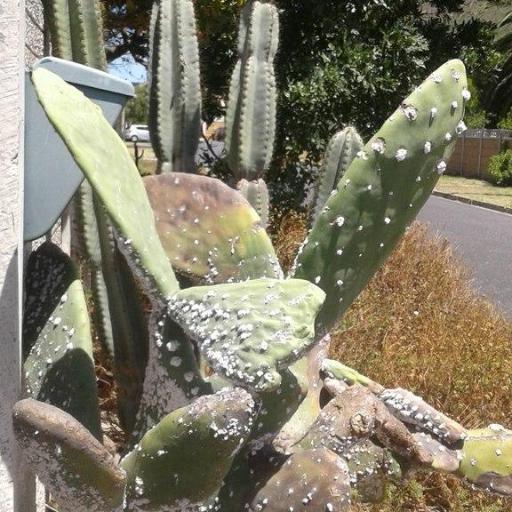
Often mistaken for a strange fungus or a dusting of snow, the Dactylopius opuntiae is actually a tiny scale insect hidden beneath a protective white waxy coat. Known as the "Cochineal of the Prickly Pear," it is a relative of the famous insect used to make red food dye. While it looks like a soft, stationary cotton ball, it is a specialized survivor that thrives in the harsh, arid environments where cacti grow.
🔍 How to Identify
- ☁️ White Waxy Tufts: The most obvious sign is the presence of small, white, cottony or fuzzy lumps clustered on the pads of cacti.
- 🩸 Vibrant Red Interior: If the white fluff is gently crushed, it reveals a deep, brilliant crimson liquid. This is carmine, a pigment the insect produces to deter predators.
- 📍 Cactus Focus: You will almost exclusively find these insects on Opuntia (Prickly Pear) species, though they occasionally appear on other closely related cacti.
🌲 Habitat & Ecology
- 🌵 The Sap-Sucker: These insects spend their entire lives attached to a single spot on a cactus pad. They use needle-like mouthparts to pierce the "skin" of the plant and drink its nutrient-rich sap.
- 💨 Wind-Blown Travelers: While the adult females are stationary, the tiny larvae, known as "crawlers," have legs and can be carried by the wind or hitch a ride on the fur of passing animals to find a new host plant.
- 🌿 Biocontrol Hero: In many parts of the world, this insect was intentionally released as a "biological control agent" to help stop invasive Prickly Pear cacti from taking over native grasslands.
⚠️ Safety & Toxicity
- 🛡️ Non-Aggressive: This insect is completely harmless to humans and pets. It does not bite, sting, or carry any venom.
- 🎨 Staining Hazard: The red pigment is incredibly strong. If you touch them, they will "bleed" a red dye that can permanently stain clothing, garden furniture, or porous patio stones.
- 🥀 Plant Health: While safe for you, they are "foes" to your garden. A heavy infestation can weaken, yellow, or even kill a Prickly Pear cactus by draining its energy reserves.
✨ Fun Fact
In the 1800s, the "carmine" dye produced by cochineal insects was so valuable that it was considered "red gold," and its source was a closely guarded secret of the Spanish Empire!
More Details








